
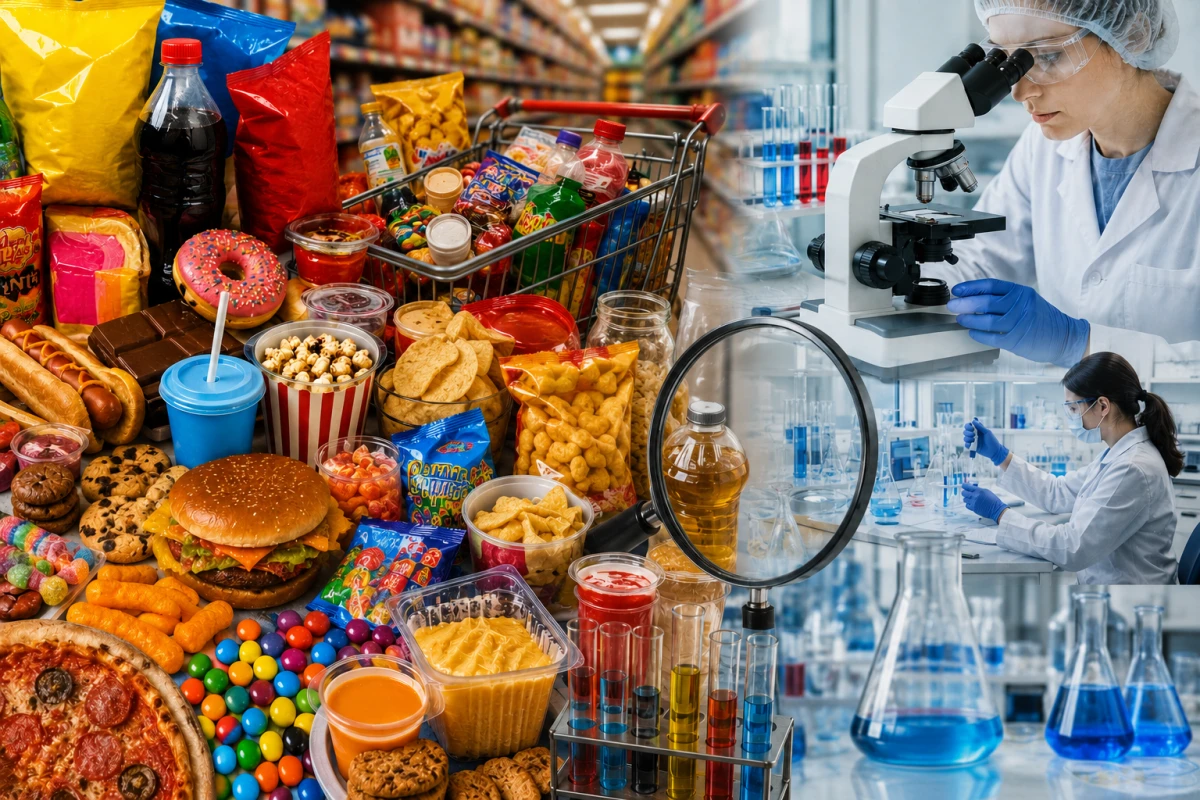
French scientists have presented new studies linking popular food additives — dyes and preservatives — to an increased risk of diabetes, cancer, and cardiovascular diseases. In light of this data, France is once again discussing tightening product labeling rules and possible restrictions for manufacturers.
New studies have been published in France, heightening concerns about ultra-processed foods and food additives.
According to Le HuffPost, researchers from the Institut national de la santé et de la recherche médicale (Inserm) have identified a link between the consumption of certain dyes and preservatives and an increased risk of type 2 diabetes, cancer, hypertension, and cardiovascular diseases. The studies were published in several scientific journals — Diabetes Care, European Journal of Epidemiology, and European Heart Journal.
As part of the project, researchers monitored more than 100,000 people since 2009. Special attention was paid to food additives commonly used in ultra-processed products: dyes from the E100–E199 group, preservatives, and antioxidants.
The researchers concluded that individuals who actively consumed food dyes had a 38% higher risk of developing type 2 diabetes. The risk of cancer in this group was 14% higher, and the risk of breast cancer was 21% higher. After menopause, this figure increased to 32%.
Separately, the researchers studied the impact of preservatives — specifically, potassium sorbate E202 and citric acid E330. Among individuals with high consumption of these substances, the risk of hypertension was 24% higher, and the risk of cardiovascular diseases was 16% higher.
The authors emphasize that the studies do not prove a direct cause-and-effect relationship but add to the already accumulated body of data on the harm of ultra-processed food.
According to the lead researcher Mathilde Touvier, most scientific studies in recent years show similar results.
"Out of 104 studies examining the link between ultra-processed foods and health, 93 show harmful effects," she noted.
The researcher believes that the accumulated data is already sufficient for public health measures. This could involve revising the permissible limits for the use of additives or a complete ban on some of them. This is especially true for dyes, which, according to the researchers, are often used solely to make the product visually more appealing.
In light of the publication of these studies, the discussion about the Nutri-Score labeling system has been revived in France. This system rates products on a scale from A to E based on their composition and nutritional value.
Currently, French lawmakers are discussing a bill that would make the use of Nutri-Score mandatory for producers. Companies that refuse to display such labeling may be required to pay an additional tax.
The issue is becoming increasingly relevant due to the rising number of diet-related diseases. According to the French Senate, obesity and diabetes cost the country's healthcare system approximately 11.7 billion euros annually.
Currently, about 17% of adults in France suffer from obesity — approximately eight million people.
Experts note that ultra-processed foods are taking up an increasing share of the diets of residents in developed countries — primarily due to their availability, long shelf life, and aggressive marketing.
New studies are intensifying pressure on food manufacturers and authorities, who find it increasingly difficult to ignore the potential risks associated with ultra-processed food and food additives.














Leave a comment