Chinese scientists have announced the start of the world's first space experiment with artificial human embryos. The research on the space station is expected to help understand how microgravity affects early human development and whether prolonged human presence in space is possible.
China has started conducting a unique space experiment with artificial human embryos. Samples have already been delivered to the Chinese space station and placed in a special experimental module.
The start of the research was announced by the Technology and Engineering Center for Space Utilization under the Chinese Academy of Sciences.
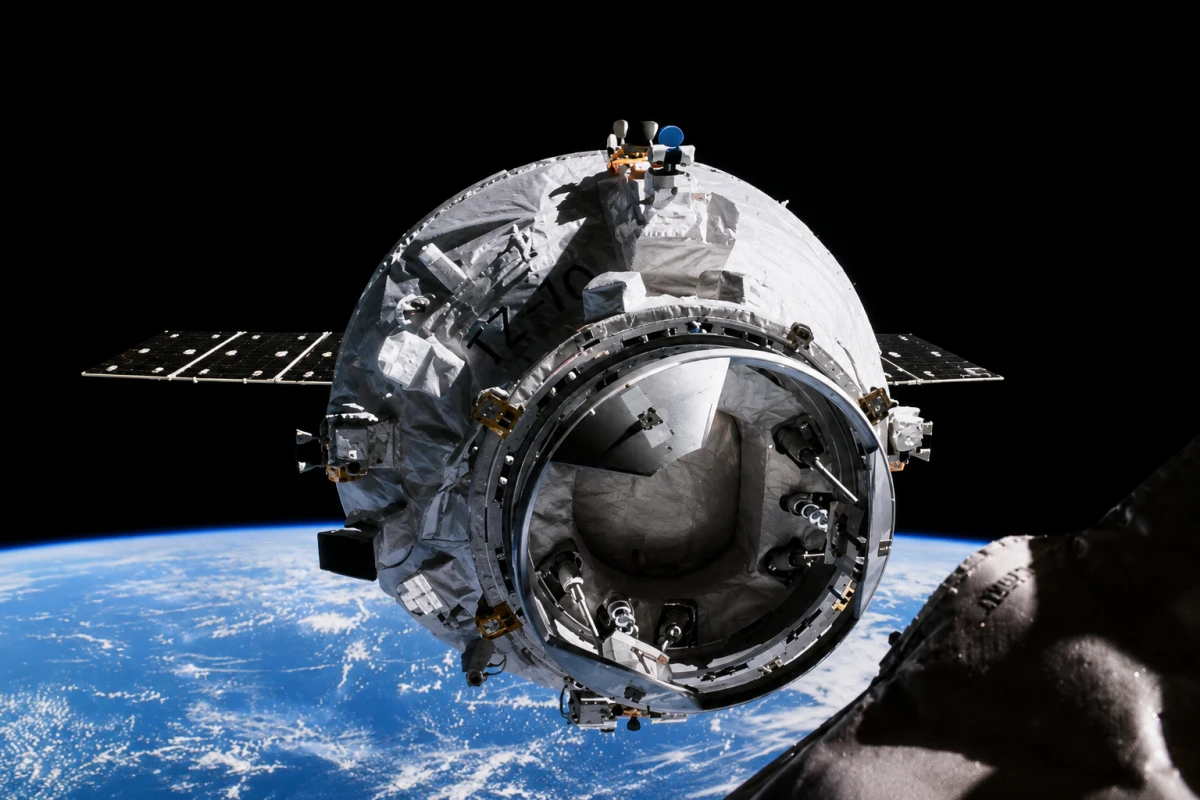
The samples arrived at the station aboard the cargo ship "Tianzhou-10," which was launched earlier this week. According to project leader Yu Leciang, the experiment is currently proceeding successfully.
"The pre-set automated system changes the nutrient medium for the samples every day," the scientist told the Xinhua News Agency.
The main goal of the research is to understand how microgravity conditions affect the early stages of human development.
Scientists emphasize that these are not real human embryos. The experiment uses structures created from stem cells that only mimic the early stages of embryonic development.
"This is not a real human embryo, and it is not capable of developing into an individual," Yu Leciang explained.
Nevertheless, such models allow researchers to study key processes of early organism development without using actual embryos.
The experiment uses two types of models. Some are grown on uterine cells, while others are placed in special microfluidic chips that allow for more precise control of the development environment.
Simultaneously, identical samples are being studied on Earth. Later, scientists will compare the results to determine how exactly weightlessness affects cells and biological processes.
The experiment is designed to last five days. After completion, the samples will be frozen in orbit and then returned to Earth for further analysis.
Researchers hope that the data obtained will help reduce risks for humans during long space missions in the future — for example, during flights to the Moon or Mars.
In recent years, China has been actively expanding its space program and increasing the number of biological experiments on the space station.
In addition to artificial human embryos, the "Tianzhou-10" ship also delivered 41 other scientific projects, including embryos of zebrafish and mice.
The topic of biological research in space is of great interest worldwide, as scientists still do not fully understand how prolonged exposure outside of Earth affects cells, immunity, reproduction, and the development of living organisms.
China's experiment could be an important step toward understanding whether humans can safely live and reproduce during long space missions.