A new study shows that an ancient galaxy is hidden within the Milky Way.
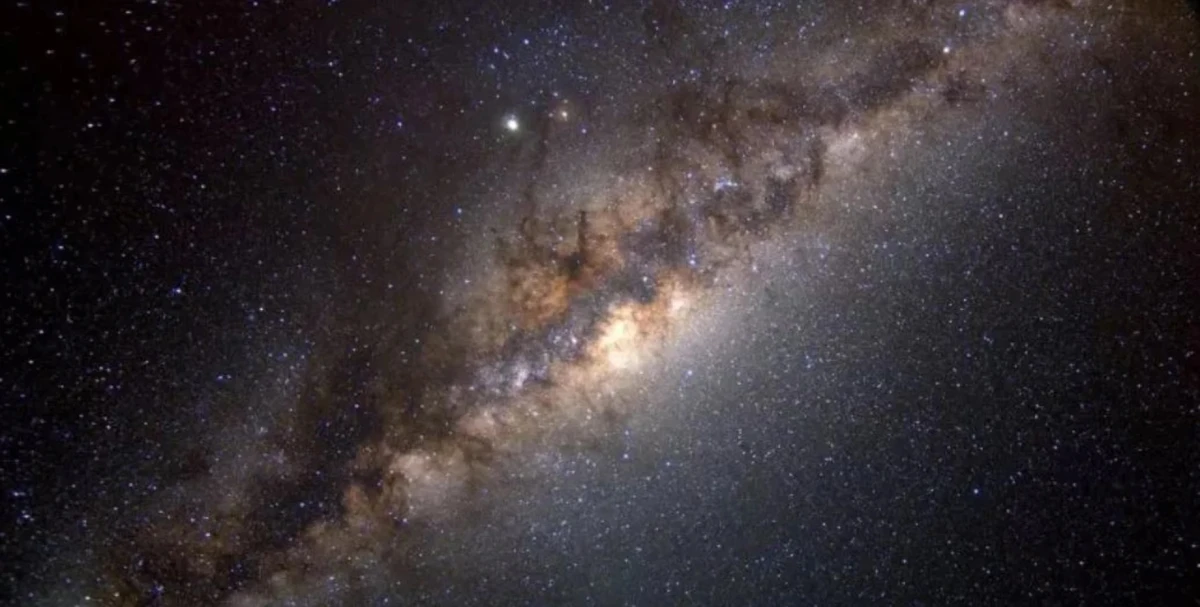
Astronomers have concluded that an ancient galaxy, which they named "Loki" after the Scandinavian god, is hidden within our Milky Way galaxy. Scientists believe that this galaxy was absorbed by the Milky Way as our galaxy grew and expanded in size, writes Focus.
It is believed that the Milky Way formed in its current shape by absorbing smaller dwarf galaxies. Such galaxies contain no more than a few billion stars. Although these are relatively large structures, they are still much smaller than galaxies like the Milky Way, which contains several hundred billion stars.
Dwarf galaxies typically consist of stars with low metal content. Astronomers refer to metals as chemical elements that are heavier than hydrogen and helium. The first stars were made of the latter, which then exploded and filled the cosmos with heavier chemical elements.
Astronomers can determine which stars in the Milky Way belong to another galaxy based on their chemical composition and movement. The authors of the new study examined 20 metal-poor stars in the galactic plane of the Milky Way, the area where most of our galaxy's stars are located. Astronomers concluded that these stars belong to an ancient dwarf galaxy, which they named "Loki." This galaxy was absorbed by the Milky Way during its evolution. These stars differ from the metal-poor stars that can be found on the outskirts of the Milky Way.
It is believed that stars from ancient dwarf galaxies exist in the inner regions of the Milky Way, and now astronomers say they have found one such example. The authors of the study compared the chemical composition of 20 stars with that of other similar stars in the Milky Way, as well as neighboring dwarf galaxies, and found chemical traces of numerous cosmic explosions that released heavy chemical elements.
However, the scientists did not find traces of white dwarf explosions. These are dense cores of dead stars similar to the Sun. Since it takes billions of years for a white dwarf to form, this suggests that the 20 stars emerged from a dwarf galaxy that existed for a relatively short time.
It was also found that the stars in the hidden galaxy do not rotate in the same direction. Eleven of them rotate in the same direction as our galaxy, while nine rotate in the opposite direction. Astronomers believe that this can be explained by the fact that the "Loki" galaxy was absorbed by the Milky Way when it was still very young and when its own orbits were chaotic, leading to the mixing of stars.