
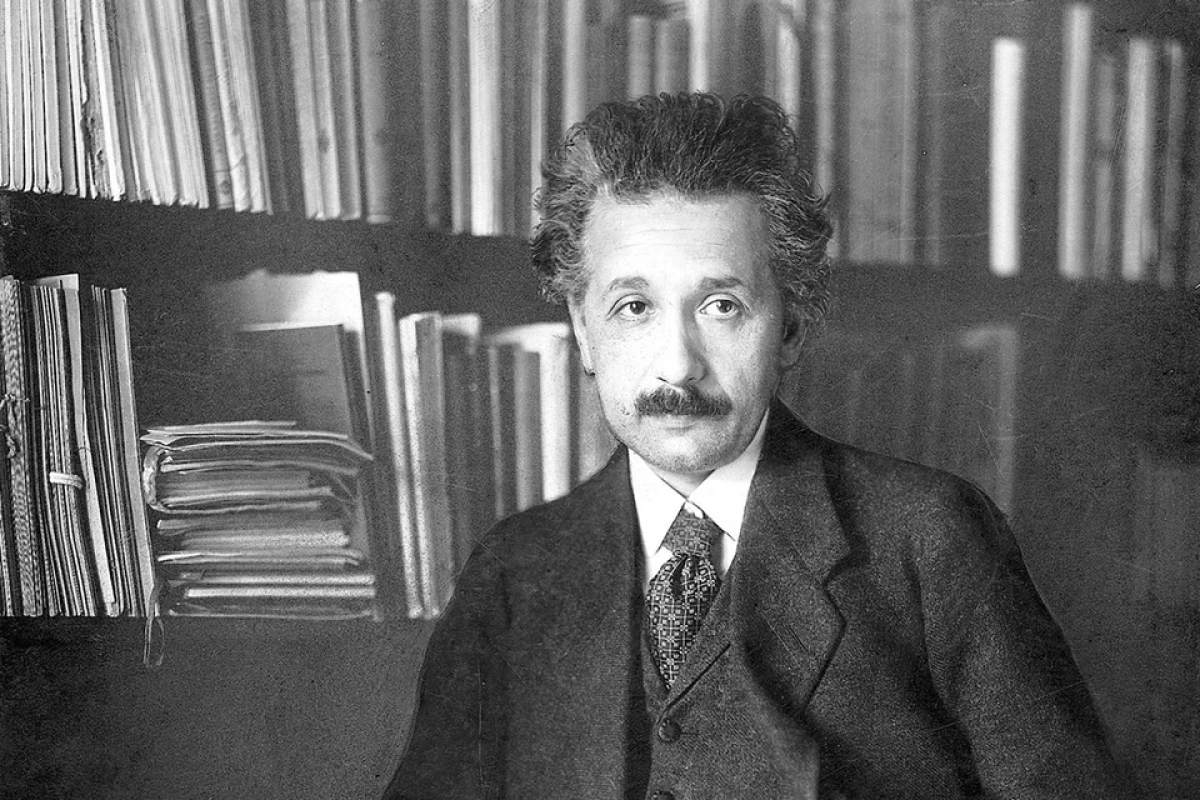
An AI trained on data up to 1930 predicted World War II.
Would you like to travel back to 1930 and talk to your young great-grandfather? What worries him, how does he live, how does he talk? To tell him what will happen – he would be surprised. To show him a computer – would he understand how it works? Dreams become reality. Programmers train AI strictly on historical material, creating a "companion from the past."
The latest model, the Talkie algorithm, forever stuck on December 30, 1930, has astonished even its creators, scientists from the University of Toronto.
TIME MUST BE PURE
A neural network is not just a pile of radio components that need to be assembled according to a schematic with a soldering iron to create a receiver. It already exists. But it represents a blank slate. And it needs to be taught. The training process is the most enormous hassle. Especially if we want to create a "companion from the past."
The lead developer, David Duvenaud, an associate professor in the Department of Computer Science at the University of Toronto, insists that training required sifting through "billions" (this may be an exaggeration) of documents strictly up to 1930. To avoid scattering, only materials in English were used. Some were digitized, but that is a drop in the ocean. They took piles of old archives, books, private letters, films – everything was used, digitized, and "fed" to the machine.
There are a myriad of problems. For example, when digitizing such a large array (you can't check everything by hand), noise and distortions occasionally crept in. Sometimes later materials were accidentally included. All this led to temporal paradoxes: the machine somehow "knew" about events that would occur after December 1930.
Such "knowledge" is carefully identified (including by volunteer testers) and removed. A telling example is with President Roosevelt. He came to power in 1933, but the AI somehow learned about this. However, it did not manage to catch wind of his second presidential term. The machine insisted that Roosevelt ruled from 1933 to 1937 and listed several laws he enacted (in reality, Roosevelt remained in office until 1945, which means over three terms due to wartime).
But the researchers are satisfied with the outcome. The machine speaks with that unmistakable intonation that can only be heard in old films. Sometimes we feel that actors from the 1930s speak "unnaturally." And we wonder: is it because they are actors? Or did people really speak differently? It turns out, they really did.
IT WAS BETTER BACK THEN
And speaking of cinema. In 1930, sound films were just beginning to appear on screens, and the machine was asked what it thought of this innovation.
- They will never replace silent films, but they can complement them, and perhaps in the future, they will be shown in the same cinema simultaneously. For now, they are mainly interesting as something new, - the machine grumbled.
This truly reflects the sentiments of the time: it was believed that sound distracted attention from the picture, providing nothing for understanding the plot. A trend, nothing more. Many actors refused to perform on the sound screen, their roles and fame forever remained in the era of silent cinema.
On the other hand, film is once again in vogue now, and rare aesthetes revisit silent films. Perhaps we are indeed awaiting a renaissance of silent cinema, so is this nothing more than a prediction?
OPEN THE OPEN
Of course, the goal of all these experiments is not to create a funny "grandfather" from the past. The logic is as follows. Today, powerful AIs make predictions about the future, about the development of technology, science, and society. Can we trust them?
Let's build a "historical AI," and let it make predictions forward, but in a time we know. For example, it could try to make a discovery that has already been made in the real world. That’s when we will understand what electronic brains are fundamentally capable of.
But the task is still elusive. In 1930, physicists already understood the principles of quantum mechanics, and the theory of relativity had long existed, but science was just beginning to approach nuclear transformations. Unfortunately, Talkie turned out to be a bit dim for such a task, admits David Duvenaud. Apparently, next time we will have to train the AI directly as a scientist, for example, like Paul Dirac or Enrico Fermi. No matter how hard they tried, Talkie did not make any significant discoveries.
However, the machine quickly figured out how programming works, and, grunting and cursing "newfangled gadgets," managed to write a simple program.
A FRIGHTENING PROPHECY
However, Talkie managed to surprise its creators.
When asked to predict the development of political events, the model confidently stated that in 1936, "another world war" would begin, with "flying machines" playing a key role.
Yes, in reality, World War II began in 1939, but in 1936, its breath was already felt quite distinctly: Germany militarized the Rhineland, formed an alliance with Rome, and the Spanish Civil War began.
And here we can make several assumptions about how Talkie came to such a conclusion. Perhaps it read newspapers: in 1930, there were occasional mentions that the world was on the brink of a world war, and even attempts to guess the date. On the other hand, Talkie could have dismissed all this as "idle journalistic gossip," but it did not, and essentially hit the mark, especially with the airplanes.
But another prophecy from Talkie made scientists scratch their heads. The machine insisted that in 1999, "the Sun will go out." What did it mean?
The fact is that at that time, scientists did not know what made the Sun shine. The prevailing thought was that the Sun was contracting, releasing gravitational energy, and that was it. They had no concept of thermonuclear fusion. But it turned out that the age of the Sun was only about 10,000 years. Perhaps, having read from the Bible that the world has existed for several thousand years, and comparing this with contemporary estimates of the Sun's life cycle, the AI chose a round date in the distant future and confidently scheduled the end of the world for it. This essentially indicates an ability to correlate information and think almost humanly!
Scientists do not intend to stop at what they have achieved: they want to create a "digital Einstein" and ensure that he independently "discovers" the theory of relativity.






Leave a comment