The Curiosity rover has made a breakthrough by identifying over twenty organic compounds, significantly strengthening the hypothesis of possible ancient life on the Red Planet.
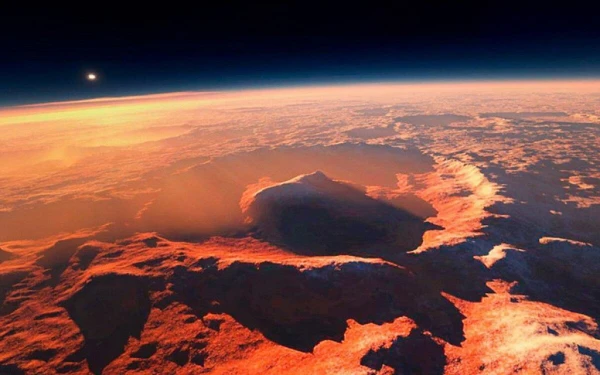
For more than thirteen years, NASA's Curiosity rover has tirelessly explored the Gale Crater on Mars. It ascends the slopes of Mount Sharp, where, according to orbital data, an ancient Martian ocean may have once existed, and thus life could have originated. A recent study published in the prestigious journal Nature Communications presented compelling evidence for this intriguing hypothesis. Scientists discovered over twenty organic molecules in the clay-rich sandstones of the Red Planet.
This astonishing discovery resulted from a unique chemical experiment conducted for the first time beyond Earth. The team applied a special substance — TMAH, or tetramethylammonium hydroxide. This reagent can break down large and complex organic compounds hidden in rocks that standard methods used by Curiosity might miss. The experiment required exceptional caution, as the rover had only two portions of the reagent.
The ideal location for the test was the Glen Torridon area in Gale Crater. This region is rich in clay, known for its excellent properties in preserving organic materials. The analysis was a complete success, yielding astonishing results.
Among the compounds discovered, benzothiophene stands out — a complex molecule with a double ring containing sulfur. Scientists suggest that it may have arrived in our Solar System directly from the interstellar medium, marking the first confirmation of its existence on Mars.
In addition, Curiosity identified a nitrogen-containing molecule resembling indole. Indole is considered one of the most important chemical precursors involved in the formation of DNA-like compounds. "We don’t have DNA, we don’t have nucleobases, but we are seeing this nitrogen heterocycle on Mars for the first time, and it’s very interesting to observe [the precursors] — the building blocks of life as we know it," emphasized Amy Williams. She is the lead author of the study, as well as an astrobiologist, geobiologist, and assistant professor at the University of Florida.
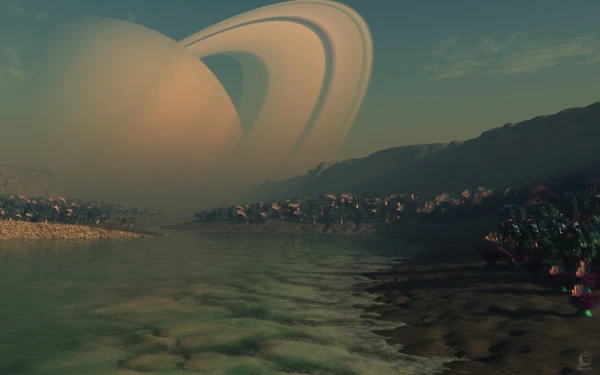
Researchers emphasize that the mere detection of organic substances is not definitive proof of the existence of life on Mars. Further, more convincing evidence is needed for that. Nevertheless, the data obtained by Curiosity significantly heightens interest in Mars from the perspective of its ancient chemistry and potential habitability. In the future, this same analytical method could be successfully applied in other space missions, such as the Rosalind Franklin rover and NASA's Dragonfly mission heading to Titan.