
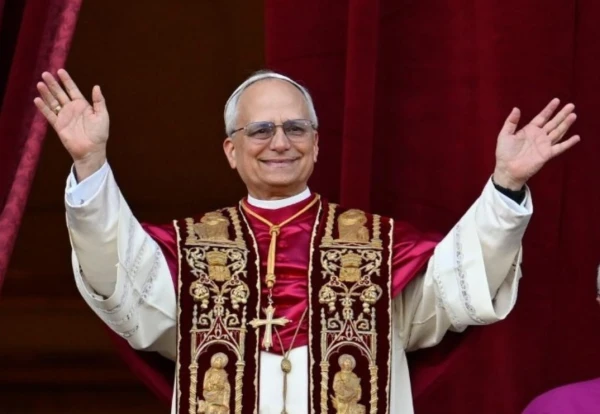
The Pope concludes his tour of Africa in Equatorial Guinea. The president's wife greeted him in a suit adorned with the pontiff's portrait.
Pope Leo XIV arrived in Malabo, the capital of Equatorial Guinea, as part of an 11-day tour of Africa, where he condemned the "colonization" and exploitation of the continent's resources.
He arrived at the presidential palace in an open papal motorcade to the cheers of believers waving flags. "We are very happy, we have been waiting for his arrival for 44 years. This is a blessing for the country. We hope that now much will change and our faith will deepen," said Diosdado Marquez, a senior Catholic official. The country's First Lady, Constancia Mangue de Obiang, chose a suit adorned with portraits of the Pope for her meeting with him. Three-quarters of the population of Equatorial Guinea are Catholic.
On the need to "quench the thirst for resources," which the pontiff considers the driving force behind the bloodiest conflicts, Leo XIV spoke in almost every country on his 11-day route. In Angola, he called for the "creation of a just model of coexistence in the world, free from forms of enslavement imposed by elites."
Observers noted that in Equatorial Guinea, the Pope did not address issues of dictatorship and corruption in the country.
The former Spanish colony on the west coast of Africa is under the control of the continent's longest-serving president, Teodoro Obiang Nguema Mbasogo, who is accused of widespread corruption and authoritarianism.
The discovery of offshore oil fields in the mid-1990s suddenly changed the economy of Equatorial Guinea: according to the African Development Bank, oil accounts for nearly half of the country's GDP and over 90% of exports. However, more than half of the nearly 2 million residents of the country live in poverty.
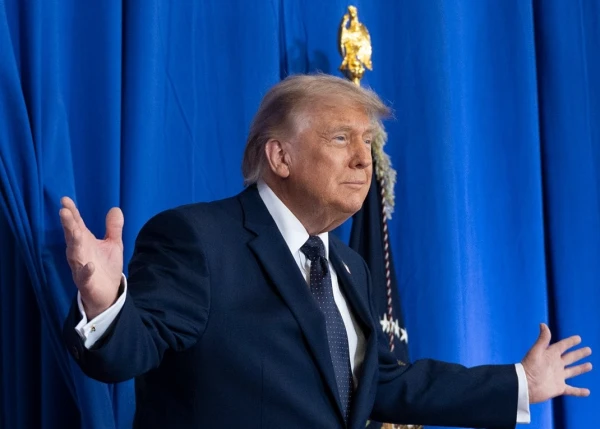
The Pope's visit to Africa took place against a backdrop of international tension. U.S. President Donald Trump had previously criticized the Pope for his stance on the war with Iran. The pontiff condemns the strikes by the U.S. and Israel, stating that "God does not hear the prayers of those whose hands are stained with blood."








Leave a comment