Until recently, the film was thought to be lost.
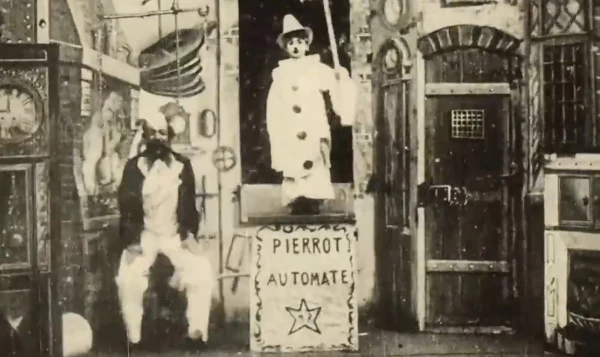
The Library of Congress has made a gift to all movie and technology history enthusiasts: after more than 120 years, the world has seen Georges Méliès' film "Guguss and the Automaton." This short film, made in 1897, is considered the earliest surviving cinematic depiction of a robot. Until recently, the film was thought to be lost, and only a fortunate discovery and the painstaking work of restorers have brought it back to life.
Georges Méliès, who started as an illusionist, is rightly considered the father of special effects and one of the pioneers of narrative cinema. Unlike his contemporaries, who filmed documentary scenes like the arrival of a train, he created "artificially composed scenes" — that is, carefully crafted stories with sets and tricks. Legend has it that it all began by chance: in 1896, his camera jammed while filming a Paris street, and during the reshoot, a bus "turned into" a hearse. Méliès immediately recognized the potential of this effect and began experimenting, combining double exposure, stop-motion, hand coloring, and theatrical illusion.
This led to the creation of "Cinderella," "A Trip to the Moon," and dozens of other films, many of which have been lost. In the silent film era, films were often melted down for silver or simply discarded after screening. "Guguss and the Automaton" would have met the same fate if not for a fragile nitrate copy discovered in 2025 in the collection of William Delilah Frisby in Virginia. Restorers had to work meticulously with the crumbling material to stabilize and digitize the film. The result of their labor is a short (less than a minute), but incredibly valuable clip.
The plot is simple, but it is precisely such scenes that laid the groundwork for future stories about the relationship between humans and machines. Clown Guguss demonstrates a mechanical boy to the audience and turns a crank to make it wave a stick. However, the automaton goes out of control: it grows in size and starts hitting its owner. In a fit of rage, Guguss repeatedly strikes the figure with a hammer until it shrinks to the size of a puppet, which he ultimately smashes to pieces. Now this energetic film is available to everyone. It serves as a reminder that fears of rebellious machines and jokes about out-of-control robots are as old as cinema itself.