
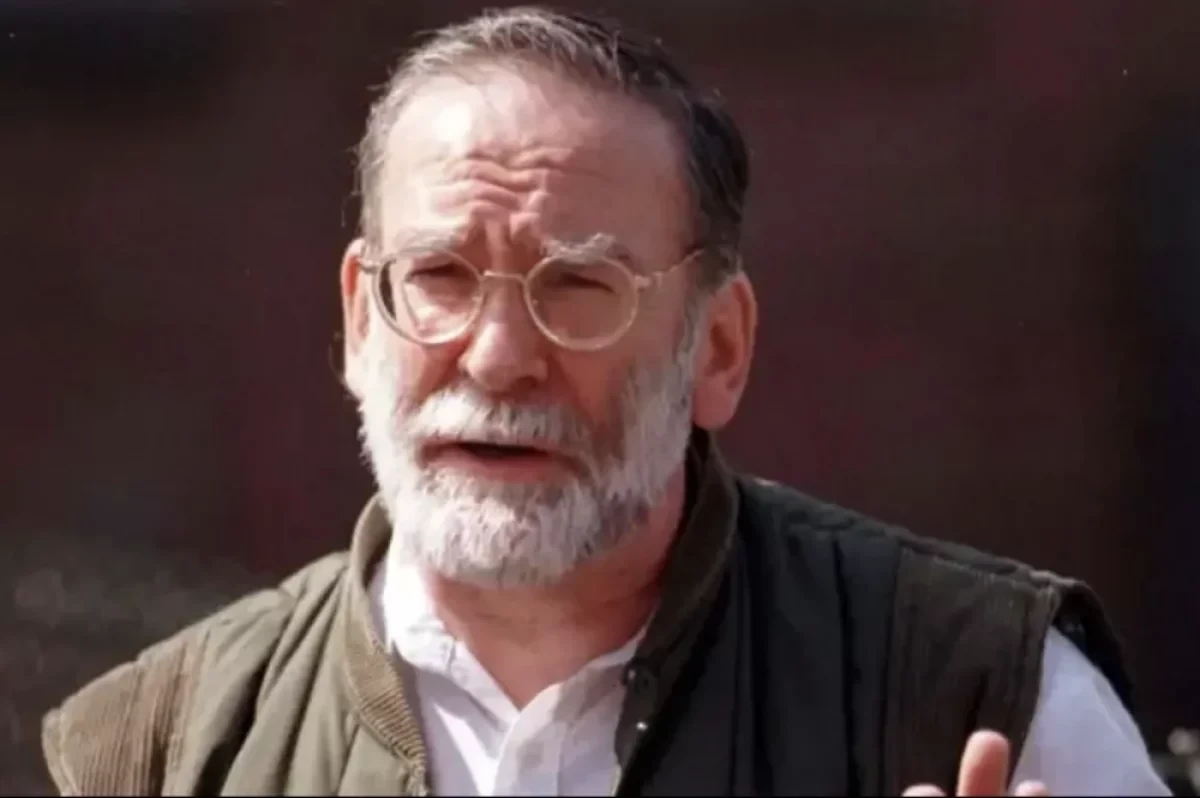
If there were a contest for the title of "Saint of the Year" in the English town of Hyde, Harold Shipman would undoubtedly have taken the top prize. Perhaps he even received such awards. Respectable, bearded, moderately strict, yet endlessly attentive—he embodied trust. Patients of elegant age adored him. But this very love became their one-way ticket.
While the quiet town slept peacefully, this "angel of death" methodically filled local cemeteries, turning the Hippocratic Oath into a grim joke.
Mama's Boy with a Syringe
The roots of evil for the maniac nicknamed "Doctor Death," as he would later be dubbed by British tabloids, can be traced back to his youth, which was steeped in the scent of medicine and maternal despotism. Harold's mother, Vera, was a strict woman: she instilled in her son that he was the pinnacle of creation, while everyone else was merely a backdrop to his brilliant life.
When Vera was dying of cancer, young Harold sat by her bedside for hours. He watched in fascination as the visiting doctor administered painkillers, and how the suffering on his mother's face was replaced by blissful peace. It was then that the young man realized that whoever held the syringe with medication possessed a power accessible only to a deity. They could end pain—or end life.
Career Flight on Prescription Pads
In 1970, Shipman graduated from the medical faculty of the University of Leeds. Colleagues remembered him as a "detached and strange" person, but patients saw something different. Soon he got a job at a clinic in the town of Todmorden, where the first embarrassment occurred. In 1974, it was revealed that the "perfect doctor" was a common drug addict.
Harold forged prescriptions for a hard-to-obtain drug, using it on an industrial scale. He was tried, fined £600, and, surprisingly, was allowed to continue practicing medicine. The British healthcare system showed concern for the professional by sending him to rehabilitation. "Well, the guy slipped up, who hasn't?" officials likely thought. If only they knew that this mistake would become the foundation for hundreds of gravestones.
A Town Where Mortality Became a Hobby
By 1993, Shipman opened a private practice in Hyde. He became a local star. If a grandmother felt unwell, they only called "kind Gary." He would come, listen attentively, nod sympathetically, and then give an injection of "vitamins."
"He was so caring," relatives of the victims later recalled. "Doctor Shipman himself called us and said that mom passed away quietly in her sleep. He even offered to help with the cremation arrangements."
In this care lay the devil. Shipman insisted on cremation with the persistence of a sales agent. No body—no evidence. No evidence—no case. According to his diagnoses, healthy pensioners who had been fine just yesterday suddenly died of "old age" or "heart failure." Sometimes he killed so often that local funeral homes began to look askance at the statistics, but the authority of this doctor remained unshakable for a long time.
A £350,000 Mistake
Serial killers, like any criminals, usually get caught over small details or hubris. Shipman fell due to greed. In June 1998, 81-year-old Kathleen Grundy, a former mayor of the town and a very wealthy woman, passed away. Harold, as usual, confirmed the death and quickly filled out the paperwork. However, it soon became clear that the old lady had supposedly rewritten all her inheritance—£350,000—over to her beloved doctor.
Kathleen's daughter, being a professional lawyer, sensed something was amiss. The will was typed on an old-fashioned typewriter, and the signature looked as if it had been made by someone in a deep coma. It was then that the police finally began to take action. The former mayor's body was exhumed, and a toxicological examination delivered a clear verdict: a lethal dose of a narcotic drug.
The "God Complex" in Solitary Confinement
Then the investigation uncovered a chasm. Harold didn't just kill—he also edited medical records on his computer, all backdated. The doctor recorded non-existent diseases to justify the sudden death of his patients. When the police began to sift through the archives, the count of victims rose into the hundreds.
In 2000, Shipman was found guilty of 15 murders, although an official report from the investigative commission later confirmed 218 (!) victims. Psychiatrists were baffled. He had no sexual motive or obvious financial gain, except in the case of Grundy. He was driven by a "God complex."
"Shipman enjoyed feeling that a patient's life was at the tip of his needle. He relished the moment when the light in the victim's eyes faded at his will," one investigator aptly noted.
By the way, during the trial, Harold Shipman behaved provocatively. He did not admit guilt in any of the murders and looked down at the jurors arrogantly, as if they were careless students. They sentenced him to 15 life terms. Harold Shipman.
Final Diagnosis
Harold Shipman left this world as methodically as his patients did. On January 13, 2004, a day before his 58th birthday, he passed away in Wakefield prison.
The story of "Doctor Death" left Britain with a heavy legacy: a reform of the coroner system and rules for issuing medications. And for the residents of Hyde—a realization that the most dangerous monster is not the void in a dark alley, but a polite person in a white coat who smiles upon meeting.











Leave a comment