
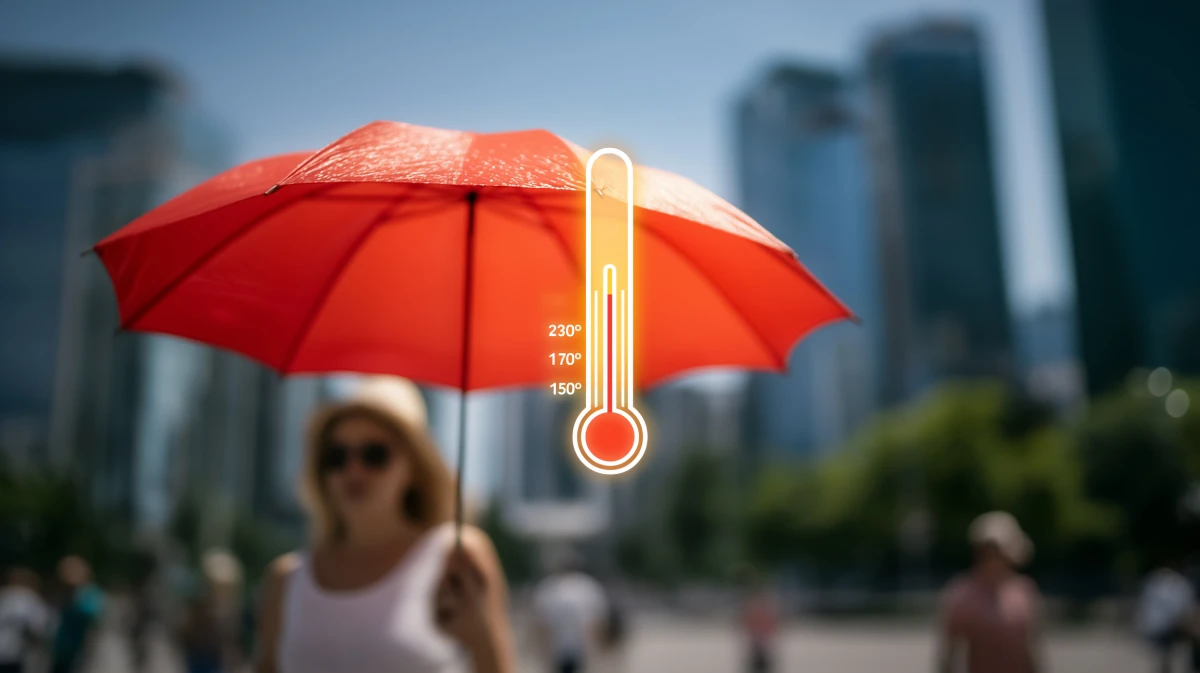
Europe remains the fastest warming continent in the world, and the consequences of climate change are increasingly manifesting in the form of heatwaves, droughts, wildfires, and rapid reductions in snow and ice cover.
The recently published European Climate Report 2023, prepared by the European Centre for Medium-Range Weather Forecasts (ECMWF) and the World Meteorological Organization (WMO), provides a detailed overview of the impact of climate change on nature, society, and the economy of Europe.
According to the report, in 2023 at least 95 percent of Europe experienced average air temperatures exceeding the norms of the 1991–2020 period. A record heatwave stretched from the Mediterranean to the Arctic, and European marine waters recorded the highest average surface temperature in history, while wildfires destroyed over one million hectares of land—the largest area ever recorded. At the same time, glacial mass decreased in all glacial regions of Europe, and the Greenland ice sheet lost about 139 gigatons of ice in just one year.
According to the Environmental Agency, the report's findings confirm that climate change is not a distant and abstract problem of the future, but a current reality in Europe.
"We often tend to think that climate change primarily concerns remote regions, such as drought-stricken Africa or Asia facing extreme heatwaves. In reality, we are increasingly seeing the impact of climate change even in Estonia: winters have become noticeably warmer, heatwaves have become more frequent, and the risk of heavy rainfall and local flooding is rising. In 2023, we and our closest neighbors in Finland were hit by an exceptionally long and intense heatwave, the effects of which reached the Arctic Circle. In other words, the changing climate is already shaping our living and natural environment, and adapting to it is not a question of the future, but a necessity of today," said Taimer Ala, director of the Environmental Agency.
The rapid warming in Europe is clearly reflected in observational data from Estonia. The year 2023 became one of the warmest in the history of continuous observations in Estonia, with the average air temperature exceeding the average for the 1991–2020 period by 1.6 degrees. The year ranked third among the warmest on record. The five warmest years in Estonia's observational history have occurred since 2015. Winters have warmed the most in Estonia, which confirms the overall trend for Central and Eastern Europe. Extreme weather events are also becoming more frequent. For example, the summer of 2023 in Estonia was particularly rainy: the average summer precipitation was 299 millimeters, nearly a third above normal. Intense rains caused local flooding in several areas and damaged agricultural lands and gardens. At the same time, two heatwaves were recorded in July.
The report emphasizes that the consequences of climate change extend far beyond weather phenomena, directly affecting biodiversity and the functioning of ecosystems in Europe. Marine heatwaves, droughts, wildfires, and changing precipitation patterns are putting pressure on both terrestrial and marine ecosystems, reducing species habitats and weakening nature's ability to adapt to climate change.
The Environmental Agency's assessments are based on long-term and extensive meteorological and ecological monitoring data. They believe that climate change mitigation and nature conservation should be viewed as a whole, as resilient ecosystems, such as forests, wetlands, bogs, and coastal ecosystems, help sequester carbon, mitigate flooding impacts, and generally enhance society's climate resilience.
The European Climate Report 2023 clearly confirms that climate change is already transforming the natural environment, economy, and everyday life.















Leave a comment