Researchers found that tiny RNA molecules in the blood, known as piRNA, better predict short-term survival than age, cholesterol levels, or lifestyle.
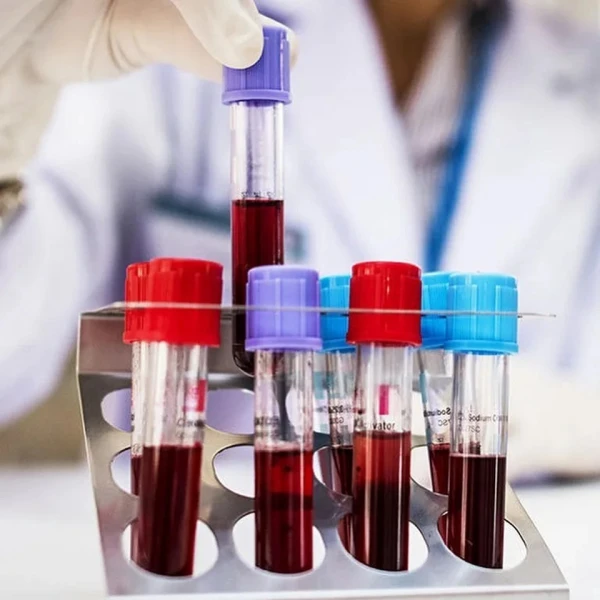
A simple blood test may help identify which elderly individuals are at an increased risk of dying within the next two years, according to a new study.
The study, conducted by Duke Health in collaboration with the University of Minnesota, shows that tiny RNA molecules found in the bloodstream may offer a new way to assess short-term mortality risk in people aged 71 and older.
The researchers focused on small fragments of RNA known as piwi-interacting RNAs (piRNA), which are involved in regulating development, regeneration, and immune system function. By analyzing blood samples from more than 1,200 elderly individuals, the researchers found that lower levels of certain piRNA are associated with longer survival.
"The combination of just a few piRNA turned out to be the strongest predictor of two-year survival in older adults - more reliable than age, lifestyle habits, or any other health indicators we studied," said Virginia Byers Kraus, one of the senior authors of the study and a professor in the departments of medicine, pathology, and orthopedic surgery at Duke University School of Medicine.
"What surprised us the most was that we obtained this powerful signal from a simple blood test," Kraus added.
How was the study conducted and what were its findings? Using artificial intelligence and machine learning methods, the team analyzed 187 different health indicators along with 828 small RNAs.
Advanced modeling showed that just six piRNA could predict two-year survival with an accuracy of up to 86 percent. These results were confirmed in a second, independent group of elderly individuals.
In terms of predicting short-term survival, piRNA outperformed age, cholesterol levels, physical activity, and more than 180 other clinical indicators.
Participants who lived longer consistently exhibited lower levels of certain piRNA - a pattern that resonates with findings from experiments on laboratory organisms. For example, in the nematode C. elegans (a tiny roundworm), a decrease in overall piRNA levels has been shown to double lifespan.
"We know very little about piRNA in the blood, but what we see suggests that lower levels of some of them is better," Kraus said. "When these molecules are more abundant in the body, it may indicate that something is going wrong. Understanding the reasons could open new opportunities for therapies that promote healthy aging."
Can these molecules in the blood be altered through treatment?
The team now plans to determine whether therapeutic interventions, lifestyle changes, or medications, including new classes of drugs such as GLP-1 class medications, can alter piRNA levels.
The researchers also intend to compare piRNA levels in the blood with those found in tissues to better understand how these molecules function.
"These small RNAs are like micromanagers in the body: they help control numerous processes that affect health and aging," Kraus said. "We are just beginning to realize how powerful they are. This study shows that we can determine short-term mortality risk with a practical, minimally invasive blood test - with the ultimate goal of improving health as we age."