The only question remains - where will they put the relict diseases.
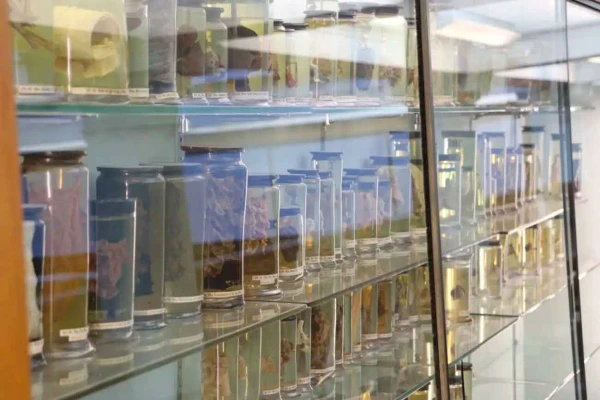
In an anatomical museum, among old medical specimens, scientists discovered traces of a virus that infected a London resident nearly 250 years ago. Researchers were able to reconstruct its genome. They claim that this is the oldest reconstructed genome of an RNA-containing virus in humans to date. The finding will allow for a molecular comparison of the ancient strain with modern ones, trace its evolutionary connections, and identify any associated infections if possible.
Scientists have long learned to extract DNA from ancient bacteria and viruses from the bones and teeth of people who died thousands of years ago. Using genetic analysis, such material is found in skeletons up to 50,000 years old. For example, there have been reports of findings of genetic fragments of viruses in the bones of Neanderthals. However, with rhinoviruses, which cause acute respiratory viral infections (ARVI), as well as with influenza or measles viruses, it is different. Their genome consists not of DNA, but of RNA.
RNA (ribonucleic acid) is a biological macromolecule that is a linear polymer made up of a single chain of nucleotides. It plays a key role in the cell: it carries genetic information from DNA, participates in protein synthesis, and regulates gene activity.
Unlike DNA, RNA typically breaks down faster under normal conditions: within a few hours or days after death. RNA quickly degrades under the action of a group of enzymes (nucleases) and chemical processes. However, under favorable conditions, such as low temperatures, it can be preserved for significantly longer.
For a long time, scientists believed that the chances of finding ancient RNA viruses were virtually nonexistent. But in recent years, this perception has changed. Researchers have learned to extract ancient RNA from exceptionally well-preserved samples — for example, from mammoth tissues that have been frozen in permafrost for 40,000 years. But what about ordinary hospitals and morgues of the past, where storage conditions were far from Siberian cold?