An intelligent system will be required for the safe operation of the aircraft.
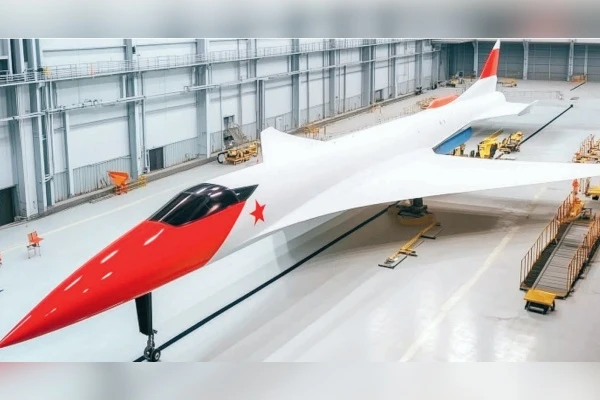
Comac has revealed details about the supersonic airliner C949, which will be able to fly at a speed of 1.6 Mach, cover up to 11,000 km without refueling, and create a sonic boom 20 times quieter than the Concorde. The airliner will include innovative aerodynamic solutions, intelligent control, and an adaptive fuel system to enhance flight stability and safety. The aircraft, designed for 28–48 business class passengers, will allow crossing the Pacific Ocean in five hours. Comac plans to put the C949 into operation by 2049.
The Comac research team presented in a scientific article their goal to increase the flight range of the supersonic passenger aircraft by 50% compared to the Concorde, from 7,500 km to nearly 11,000 km. It is also planned to reduce the sonic boom to 83.9 decibels — a noise level comparable to that of a hairdryer. If supersonic aircraft indeed become 20 times quieter than the Concorde, they will be able to fly over cities without issues. The C949 will compete with developments from NASA and Lockheed Martin, including the X-59.
The C949 design employs new solutions to reduce sonic boom. The variable geometry fuselage is equipped with a special curved section that dampens shock waves and prevents them from turning into loud bangs. The long pointed nose cone divides the main shock wave into several weaker ones. Additional aerodynamic elements at the tail disperse turbulent flows from the engines, further reducing noise levels.
For the safe operation of the aircraft, an intelligent fly-by-wire electronic control system with artificial intelligence elements will be required. This solution should monitor the aircraft's behavior — compensating for complex aerodynamic effects and preventing loss of stability at extreme angles of attack.
The adaptive fuel system can quickly redistribute up to 42 tons of fuel among seven different tanks. This allows for maintaining the optimal center of mass position and ensures necessary balancing of the aircraft at all stages of flight.
According to industry estimates, the annual passenger traffic on supersonic airlines could reach 45 million people — about 1% of the global air transport volume.
The C949 is designed for 28-48 business class passengers. Its capacity is significantly less than the 100-seat Concorde. With the increased flight range, the aircraft can make a direct flight from Shanghai to Los Angeles in about five hours. Initially, the airliner will focus on trans-Pacific routes to minimize noise complaints.
Comac intends to launch the wide-body C929 into the market by 2027 as a competitor to the Boeing 787, and by 2039 to introduce the 400-seat C939 weighing 300 tons, which will occupy the niche of the Boeing 777X. This lineup will be completed by the supersonic C949, whose entry into service is planned for 2049 — marking the centenary of the People's Republic of China. At the same time, the company is developing the concept of "hybrid aerospace vehicles."
<iframe width="560" height="315" src="https://www.youtube.com/embed/cH6zdXWofi0?si=yxRpv1Var41ziquX" title="YouTube video player" frameborder="0" allow="accelerometer; autoplay; clipboard-write; encrypted-media; gyroscope; picture-in-picture; web-share" referrerpolicy="strict-origin-when-cross-origin" allowfullscreen></iframe>