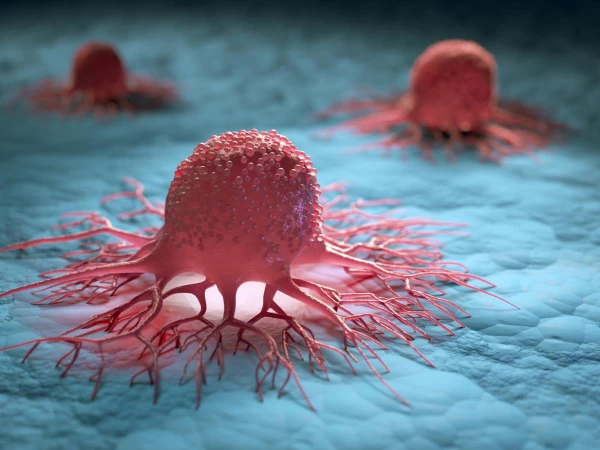
The fungus Candida albicans enhances the aggressive properties of melanoma.
The fungus Candida albicans, which is usually part of the normal human microbiota, can enhance the aggressive properties of melanoma — one of the most dangerous forms of skin cancer. This conclusion was reached by scientists who studied how the contact of tumor cells with this microorganism affects their behavior. The work was published in Scientific Reports (Sci Rep).
During experiments, it was found that when interacting with Candida albicans, melanoma cells begin to move more actively, adhere more easily to other tissues, and create an environment conducive to the growth of blood vessels within the tumor. This creates conditions under which cancer cells receive more oxygen and nutrients, as well as increasing the likelihood of their spread throughout the body. Meanwhile, the rate of cell division did not change significantly, indicating an increase in tumor aggressiveness rather than an acceleration of its growth in size.
Molecular analysis showed that the fungus triggers several signaling cascades in tumor cells related to inflammation, hypoxia, and metabolic reprogramming. In particular, the p38-MAPK and HIF-1α pathways are activated, which are known for their role in metastasis formation and tumor viability maintenance. Additionally, the metabolism of the cells changes: they switch to a more "economical" mode of energy production, characteristic of malignant neoplasms.
The authors emphasize that the results obtained do not mean that Candida albicans causes skin cancer. However, the data indicate that the presence of the fungus may contribute to a more severe course of the disease.