Scientists considered several scenarios taking into account solar activity.
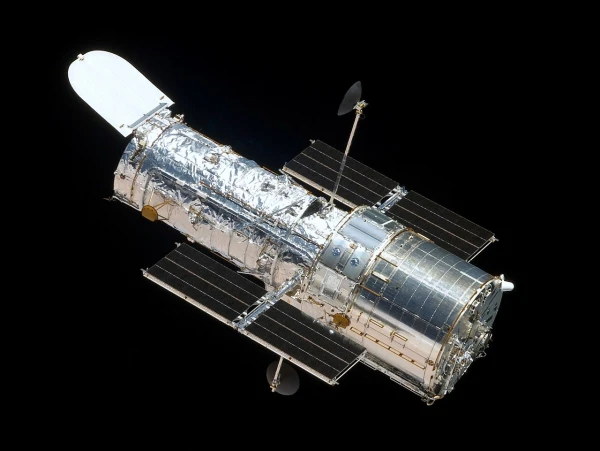
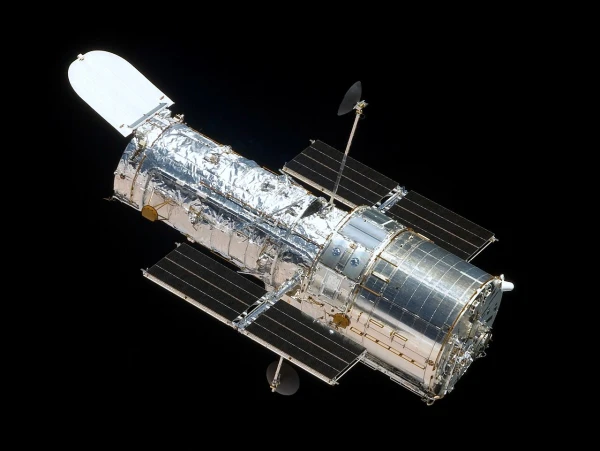
The Hubble Space Telescope has been in orbit for over 35 years and during this time has become one of the most significant scientific instruments in the history of astronomy. Since its launch in 1990, it has conducted over 1.7 million observations and radically expanded scientists' understanding of the structure of the universe. However, age is taking its toll: the equipment is gradually wearing out, and the conditions in low Earth orbit are inexorably bringing the telescope closer to the end of its mission.
A new study published in the NASA Technical Reports Server shows that Hubble's deorbiting may occur sooner than previously thought. Atmospheric drag plays a major role: even at high altitudes, the sparse layers of the atmosphere continue to slow the spacecraft, causing its orbit to gradually descend.
Over the years of service, the telescope has been raised to a higher orbit multiple times. From 1993 to 2009, several missions of the Space Shuttle program adjusted its flight trajectory, extending its operational life. Later, the possibility of an additional lift using SpaceX's Crew Dragon was discussed, but this option is no longer being considered. Initially, it was assumed that at the end of Hubble's life cycle, it would either be returned to Earth or deorbited in a controlled manner. The design did not take into account that the telescope would outlive the shuttle program itself.
In the absence of new missions, the orbit will continue to gradually decline. Ultimately, the spacecraft will enter the atmosphere uncontrollably. The most likely scenario is a fall into the ocean; however, the study also indicates a potential threat to populated areas. The telescope was designed with the possibility of retrieval in mind, rather than a controlled descent, so part of the structure may not burn up completely in the dense layers of the atmosphere.
The authors of the study considered several scenarios taking into account solar activity and changes in the aerodynamic characteristics of the spacecraft. In the most favorable case, Hubble could remain in orbit until 2040. The most pessimistic forecast allows for atmospheric entry as early as 2029. The researchers identify 2033 as the most likely date. In this case, the debris fall zone could extend from 350 to 800 km along the trajectory of movement.
The exact entry point into the atmosphere cannot be determined in advance, so the team assessed the risks using computer modeling. The average probability of human casualties across the entire area of the telescope's flight path is approximately 1 in 330.
For the least populated regions, including the southern part of the Pacific Ocean, this figure drops to 1 in 31,000. Formally, such values are considered low; however, they do not meet NASA's standards, where the acceptable risk for uncontrolled descent is set at no more than 1 in 10,000.
Scenarios of falling over densely populated areas are considered separately. In the worst-case scenario, if debris falls in Macau, calculations show a probability of two to four casualties. At least one injured person is expected in a similar scenario over Hong Kong or Singapore, which is related to the high population density in these regions.
The authors of the study recommend continuing the analysis as the telescope approaches its final flight stage. In particular, they suggest considering the impact of geomagnetic storms, which could accelerate the descent of the orbit. Given Hubble's scientific legacy, it is important for NASA to ensure that one of the most iconic telescopes in history is remembered not for a disastrous fall over inhabited territory, but for its groundbreaking discoveries.