To travel faster than the speed of light, energy greater than that of the Sun is needed.
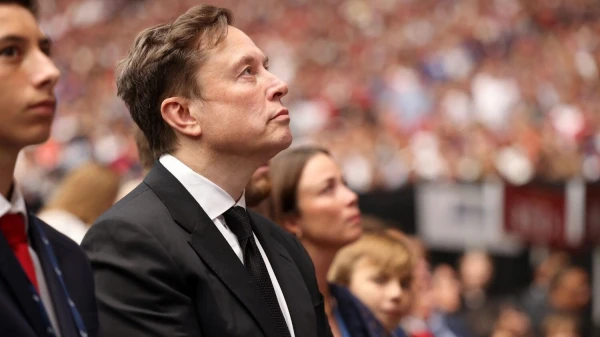
Elon Musk stated that the main goal of SpaceX is to go beyond the Solar System, explore other planets, and meet extraterrestrials. His company aims to make the fantastic saga of "Star Trek" a reality. Let’s examine how realistic Musk's dreams are and what threat they pose to humanity.
Why We Are Trapped
Theoretically, leaving the Solar System is not a problem. Accelerate a spacecraft to the third cosmic velocity (16.65 km/s), and just wait until you fly beyond the system's borders.
The main problem is that such a speed is very small by cosmic standards. You have probably heard that the American spacecraft "Voyager 1" and "Voyager 2", launched in 1977, have left the Solar System.
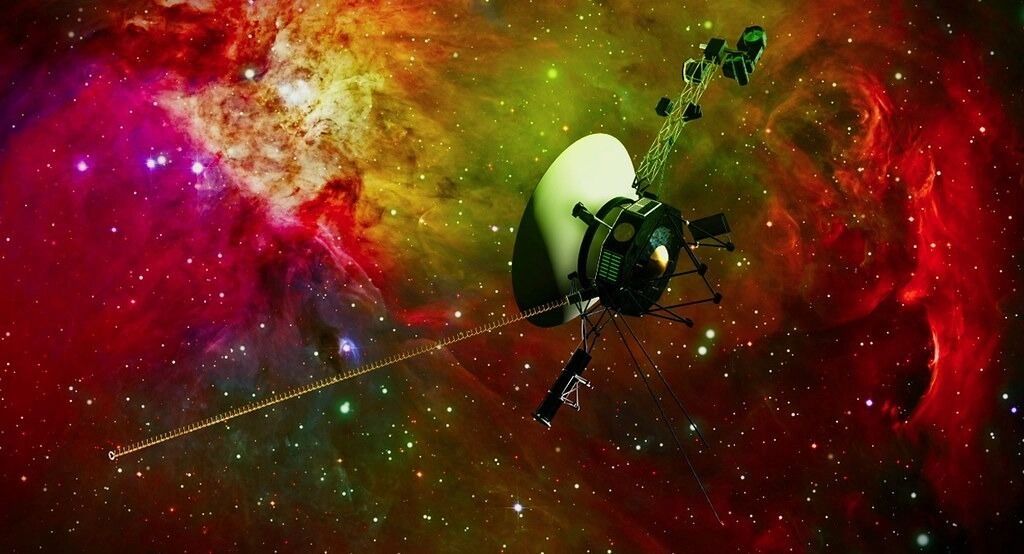
But this is a media-exaggerated error. In 2018, these spacecraft only left the heliosphere — the space where the flow of particles from the Sun exceeds the flow of particles from other stars.
The Solar System itself is the space bounded by all the objects that orbit our star. Where exactly it ends is still unknown to science. Presumably, the outer edge of the Oort cloud (a cluster of small objects at the edge of the Solar System) is located 15 trillion km away, or 19 light months. At their current speed, the "Voyagers" will reach the edge of the Solar System in… 30,000 years.
Unfortunately, humanity currently knows very few ways to accelerate spacecraft. Initially, chemical rocket engines burn fuel to accelerate the technology, and then gravitational maneuvers near planets and their moons are used to gain speed. That is, spacecraft are specially directed closer to planets so that they, roughly speaking, start to fall towards them and accelerate as a result. However, the trajectory is calculated so that they ultimately fly past the planets and moons.
More economical ion engines can be used (Roscosmos had a project for a nuclear tug called "Zeus" with such engines, but it was canceled due to lack of funding), but they will not fundamentally change the situation: due to low thrust, spacecraft take a very long time to accelerate, and their gas supplies for operation are not infinite. With current technologies, even the Solar System is unreachably vast.
Is a Warp Drive Real?
In the universe of "Star Trek," which Elon Musk referred to, exploring the universe became possible thanks to the creation of a warp drive that allows travel significantly faster than the speed of light.
Simply accelerating a physical object beyond the speed of light is impossible — this was proven by Albert Einstein. However, the creators of "Star Trek" elegantly circumvented this limitation back in 1966: warp drives are installed on spaceships that do not accelerate the ship but warp the space in front of them. Such drives do not require a transition to some "hyperspace," as in many other works of fiction, and do not contradict the laws of nature.
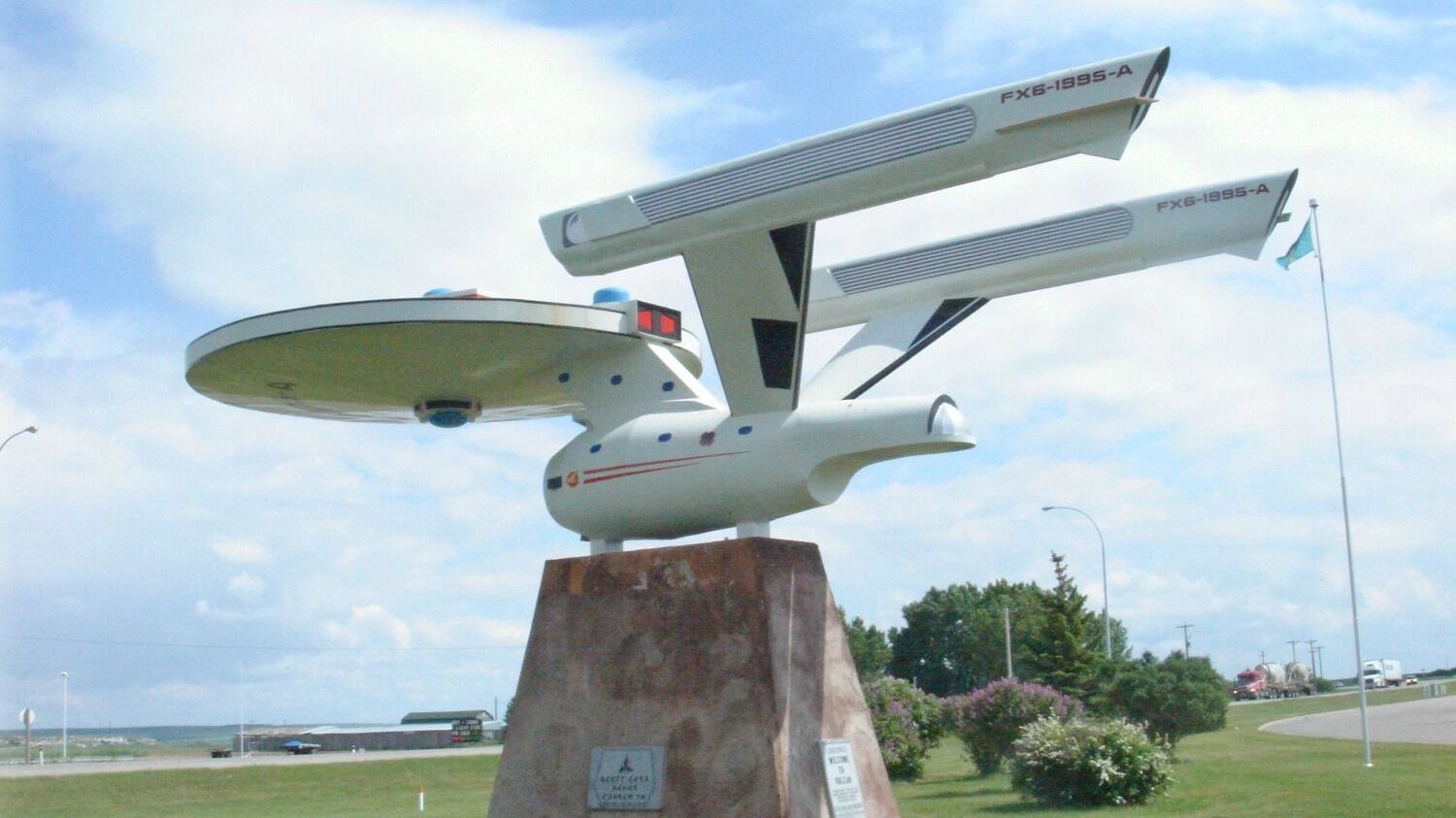
Scientists became interested in this idea: the first model of a warp bubble was proposed by physicist Miguel Alcubierre in 1994. However, creating a bubble just a few meters in size would require energy equivalent to that contained in the entire Sun. Additionally, "negative energy" (the energy of dark matter, which mostly makes up the universe, but such energy does not interact with ordinary matter) is needed, which has not yet manifested itself in the universe.
Last year, scientists proposed a new model of a warp bubble that includes a habitable zone unaffected by the warping of space-time and does not require "negative energy."
By the way, in the world of "Star Trek," humans first tested the warp drive on April 5, 2063. This event became a prerequisite for the first contact with extraterrestrials. Well, the wait is relatively short.
What Risks Does Potential Contact with Extraterrestrials Pose?
In the world of "Star Trek," Earth is fortunate to be in the control zone of the United Federation of Planets — an alliance of advanced civilizations. Like in the "Noon Universe" by the Strugatsky brothers, the Federation is depicted as a wonderful world of the future, where there are no wars, mindless pursuits of personal wealth, and brave people selflessly work, explore space, and help other worlds for the common good.
If the fantasies of the creators of "Star Trek" turn out to be true, it explains why there are still no confirmed facts of extraterrestrial visits to Earth. There have not even been any signals received from space. In the sci-fi series, Federation members are prohibited from interfering in the development of civilizations until warp technology is discovered. First contact is only possible after society is ready for interstellar travel.
And if there is no such benevolent Federation nearby, then Elon Musk's aspirations could pose a significant threat to all humanity.
Physicist Enrico Fermi once formulated an important paradox. The universe has existed for billions of years (the observable part alone is 13.8 billion years old), and according to some estimates, it contains up to 2 trillion galaxies with countless stars and planets. If intelligent life originated on Earth, it could also have formed and spread to other corners of our universe. Yet, there have been no signs, even the slightest, of extraterrestrial civilizations.
The reason for such global silence was described by another science fiction writer — Chinese author Liu Cixin — in his trilogy "The Three-Body Problem." Unfortunately, his ideas seem more realistic than the utopian world of "Star Trek."
The essence of Liu Cixin's idea is that as soon as any civilization makes itself known, it is immediately destroyed by more advanced species — competitors are not needed.
— The universe is a dark forest, and every civilization in it is an armed hunter, sneaking through the trees.
— The affairs of humanity indeed resemble a child in a dark forest who, instead of hiding, screams at the top of his lungs: "I’m here! I’m here!"
For now, all this is fiction and purely speculative reasoning, infinitely far from reality. But the progress of humanity is accelerating, including through the efforts of Elon Musk. Sooner or later, it will indeed face the question: is it worth revealing itself to the rest of the world?
<iframe width="560" height="315" src="https://www.youtube.com/embed/IuQ8ylAnC0M?si=HPrdVHj13R7GavE4" title="YouTube video player" frameborder="0" allow="accelerometer; autoplay; clipboard-write; encrypted-media; gyroscope; picture-in-picture; web-share" referrerpolicy="strict-origin-when-cross-origin" allowfullscreen></iframe>