
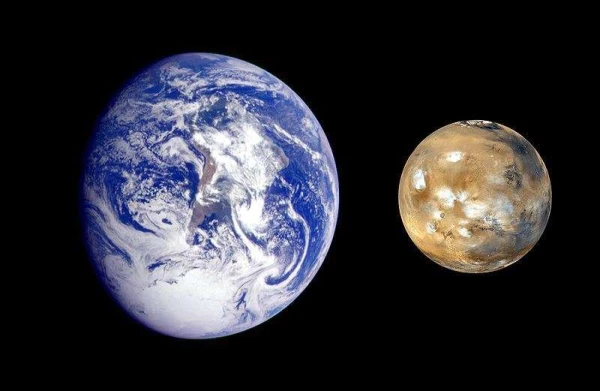
Experiments and models show that only extremely resilient microorganisms can survive in interplanetary space.
Life on Earth may not have originated on our planet but could have been brought here from Mars by meteorites. This conclusion is drawn by researchers analyzing data about the early history of the Solar System, conditions on ancient Mars, and the timing of the emergence of the first organisms on Earth. This is reported by The Conversation portal.
Mars formed about 4.6 billion years ago, while Earth formed approximately 4.54 billion years ago. In the first hundreds of millions of years, both planets were molten, but then they began to cool. According to modern understanding, early Mars had a dense atmosphere and liquid water—rivers, lakes, and possibly oceans. This made it potentially suitable for the emergence of life, comparable to early Earth.
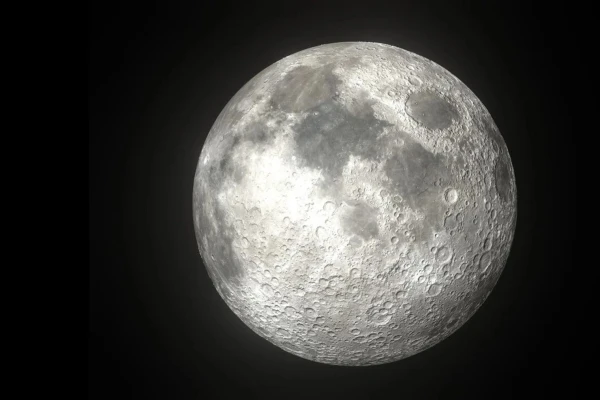
The situation on Earth is complicated by the fact that around 4.51 billion years ago, a giant collision with the protoplanet Theia occurred, resulting in the formation of the Moon. Scientists believe this event completely melted the planet's surface, and if life existed by that time, it likely could not have survived. Mars, unlike Earth, did not experience such global catastrophes, so hypothetical early life could have developed there more continuously.
Interest in the Martian origin of terrestrial life has increased following recent estimates of the age of the last universal common ancestor of all living organisms—LUCA. According to reconstructions, it existed about 4.2 billion years ago, just 290 million years after the formation of the Moon. This means that life on Earth emerged and managed to become complex in a relatively short geological timeframe.
Proponents of the "Martian hypothesis" suggest that microorganisms could have reached Earth via meteorites ejected from the surface of Mars and established themselves here when conditions became favorable. However, this scenario requires that life survive several extreme stages: a powerful impact, ejection into space, prolonged exposure to radiation, and then entry into Earth's atmosphere and landing on its surface.
Genetic data from LUCA indicate that it was adapted to hot and aggressive environments like hydrothermal vents, but there are no signs of adaptation to conditions in space. Experiments and models show that only extremely resilient microorganisms, such as spore-forming ones, can survive in interplanetary space, and even then only with protection inside a large meteorite.
Most specialists believe that while the idea of transferring life from Mars to Earth does not contradict the laws of physics and chemistry, it is less likely than the independent emergence of life on our planet. In their opinion, several hundred million years is quite sufficient for complex chemical processes on early Earth to lead to the emergence of the first living systems.











Leave a comment