
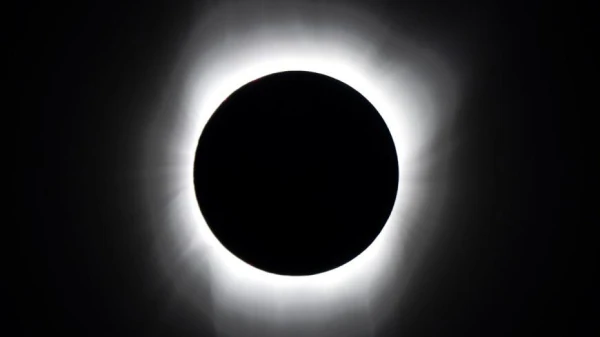
In August next year, one partial solar eclipse and one partial lunar eclipse will be well observed in Latvia, the Latvian Astronomical Society (LAS) reported to the LETA agency.
Next year, two solar and two lunar eclipses will be observed in different parts of the world.
On August 12, a partial solar eclipse will be visible in Latvia — in Riga, it will begin at 20:06 and end with sunset around 21:11. At the peak of the eclipse, more than 80 percent of the solar disk will be obscured, and observers on the coast will be able to see the crescent of the setting sun. A total solar eclipse will be observed on the same day in Spain — this will be the first total solar eclipse in continental Europe since 1999.
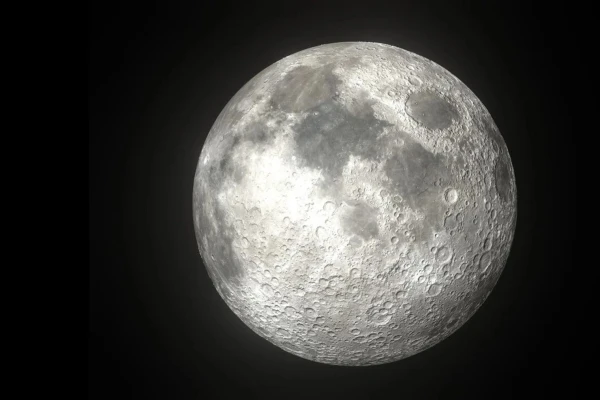
On August 28, a partial lunar eclipse will also be visible. In Latvia, its beginning will be visible — in Riga, it will start at 5:34, and at 6:22 the moon will set, with about half of its disk being obscured.
Astronomers predict that 2026 will be one of the most impressive years for astronomical events in the last decade. Bright planets, a planetary parade, and meteor showers will be visible in the sky over Latvia.
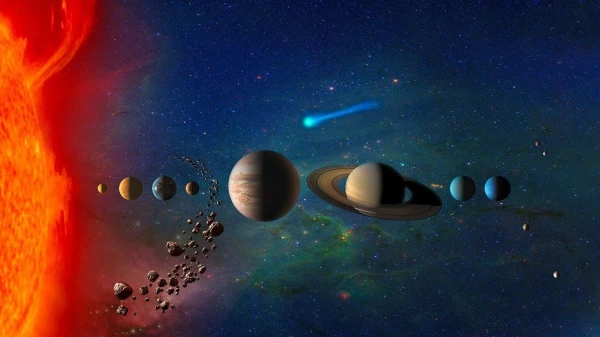
In February and early March, the so-called planetary parade will be visible in the evenings — four of the brightest planets will be visible in the western part of the sky at a small distance from each other. Throughout the year, all five of the brightest planets in the Solar System — Mercury, Venus, Mars, Jupiter, and Saturn — will be observable.
The brightest of them — Venus — will be visible in the evenings from February to mid-August, and at the end of the year, in November and December, it can be observed in the mornings before sunrise. On June 9, after sunset, Venus will be very close to Jupiter, forming a bright pair of celestial bodies in the evening sky.
Mars will be visible in the mornings in June and July, in late summer — in the second half of the night, and from October until the end of the year — all night long. Meanwhile, on November 16, Mars and Jupiter will be very close to each other in the constellation Leo.
Jupiter will be visible in the evenings during the first half of the year, in the mornings and at night in the fall, and all night long in December. Saturn can be observed in the evenings from January to mid-February, as well as from November until the end of the year, and during the summer and fall — also at night.
The closest planet to the Sun, Mercury, will be visible in the evenings in the second half of February, and in the mornings in the second half of November.
Throughout the year, several meteor showers are expected to peak — the Quadrantids in early January, the Perseids in mid-August, and the Geminids in mid-December. Additionally, despite the fact that 2026 will be the last year of the current active solar cycle, there remains a high probability of observing the northern lights in Latvia, especially near the beginning of astronomical spring and autumn.
Astronomers note that in April there may also be an opportunity to see the comet "C/2025 R3," but binoculars will likely be needed for observation.
At the same time, experts remind that the night sky is increasingly filled with communication satellites, which may interfere with quality astronomical observations.
The Latvian Astronomical Society (LAS) unites professionals and amateur astronomers to promote this science. Society members participate in the creation of the magazine "Starry Sky," conduct sky observations at the Astronomical Tower of the University of Latvia, and organize regular informational meetings.











Leave a comment