According to scientists, this means a 30 percent chance of one or more satellite collisions within 24 hours.
It has long been said that with each new satellite launched, we are approaching a serious deterioration of the orbital environment and even catastrophic consequences. However, today scientists assessed how much time it would take to prevent an emergency, and the answer turned out to be extremely discouraging.
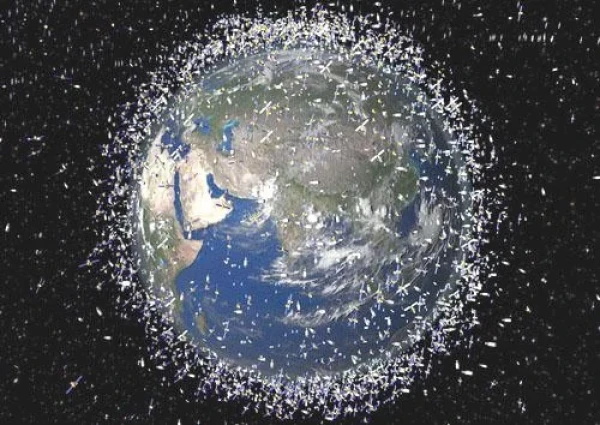
The rapidly growing constellation of satellites in low Earth orbit is becoming increasingly vulnerable to space weather events. According to scientists' calculations, the devices will begin to collide within just 2.8 days if they lose maneuverability during a solar storm or another failure.
"Even a single collision can have catastrophic long-term consequences," experts explain, warning that preventing such incidents is becoming increasingly difficult.
Over the past seven years, the number of satellites has increased dramatically: from four thousand to nearly 14,000. Of these, ten thousand are expected to be Starlink devices by the end of 2025.
Such a sharp increase means that the devices must constantly maneuver to avoid colliding with each other. Otherwise, metallic debris scattered after an accident could render parts of low Earth orbit unusable.
The authors of a new study, examining the orbits of satellite mega-constellations around the Earth, concluded that humanity may be dangerously close to a catastrophic phenomenon known as the "Kessler Syndrome."
This refers to a situation where one event (such as a satellite explosion) in low Earth orbit triggers a chain reaction: debris destroys other devices. All of this could ultimately make low Earth orbit (LEO) unusable for generations.
In the worst case, as some scientists suggest, it could effectively "lock" us on the planet, depriving us of the ability to explore the Solar System.
In 1978, when NASA expert Donald Kessler first proposed such an idea, it seemed very distant. Now, however, it is turning into a grim reality. Today, such concerns are only growing stronger — in recent years, geomagnetic storms have frequently knocked satellites off their orbits.
In their study, the team of scientists attempted to assess the danger of collisions and determine how much time satellite operators would have to adjust their courses and prevent a disaster in the event of losing control due to solar storms.
They proposed a new metric — the CRASH Clock (Collision Realization And Significant Harm) — to quantitatively assess this risk.
It turned out that if all satellites in orbit in 2018 — before the first Starlink launch by SpaceX in 2019 — suddenly lost their maneuverability, a collision would occur in 121 days. Today, however, this figure is just 2.8 days due to the large number of satellites in orbit.
"We were shocked that it was so little," said Sarah Tille, a researcher at Princeton University who participated in the study.
According to scientists, this means a 30 percent chance of one or more satellite collisions within 24 hours if the devices remain "motionless." Further growth in orbital traffic could shift the collision risk from the "warning zone" to the "danger zone," meaning a 50 percent chance of at least one collision within 24 hours.
Moreover, the researchers' calculations did not account for the effects of atmospheric drag (the force that slows down air movement and changes its direction), which could further complicate the problem, leaving very little time to prevent a space emergency. In the coming years, tens of thousands of new satellites from SpaceX, Amazon, and several Chinese companies are planned to be launched. This means that the CRASH Clock figure is likely to decrease even further, increasing the likelihood of collisions.
"It's scary to think about," Tille added.