
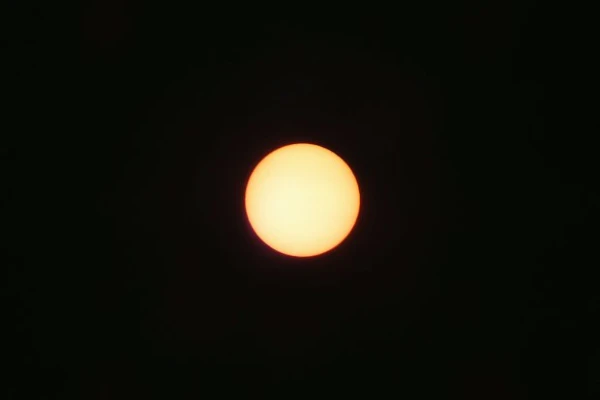
ApJ: changes in plasma composition and its rapid cooling cause 'solar rain'
Solar rain is a phenomenon where dense and cold plasma droplets appear during solar flares in the Sun's corona and fall back to the surface of the star. Essentially, it is a 'rain of fire': plasma heated to millions of degrees first rises to the upper layers of the corona, cools rapidly, condenses, and returns downward under the influence of gravity. A study of this phenomenon has been published in The Astrophysical Journal.
For a long time, it remained unclear why this process occurs so quickly — in just a few minutes. Scientists from the University of Hawaii have shown that the composition of the solar atmosphere plays a crucial role. The concentrations of elements, such as iron, are not constant and can change rapidly during a flare. These fluctuations accelerate the cooling of the plasma and its transformation into denser clumps resembling 'droplets'.
Thus, solar rain is the result of a combination of three factors: intense heating during a flare, a sharp change in plasma composition, and rapid cooling. This chain of events explains why 'droplets' appear almost instantaneously.
The authors of the study emphasize that understanding solar rain helps to better comprehend how the Sun's corona behaves — its temperature, density, and chemical composition. This knowledge is also important for practical purposes: processes in the corona are related to solar storms, which can affect the operation of satellites, communications, and power grids on Earth.













Leave a comment