
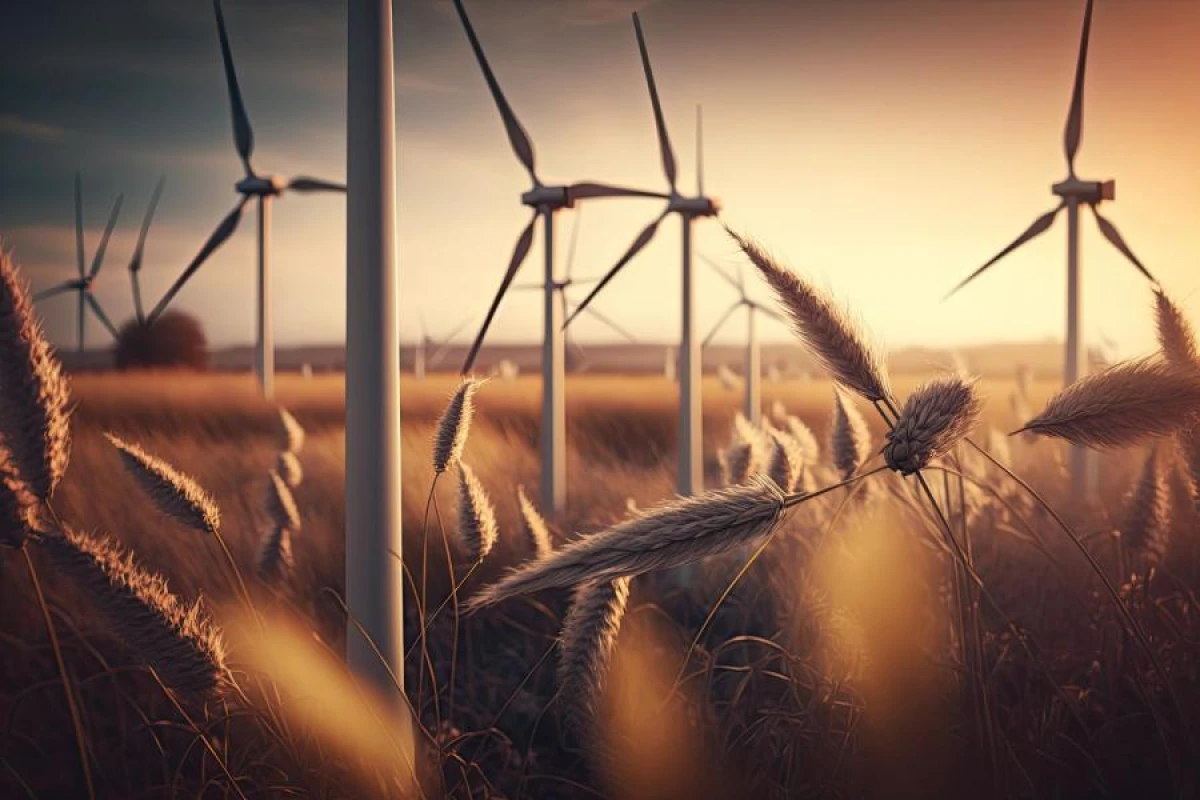
The wind turbine in the South Kurzeme region likely fell on Sunday, April 26, due to wear and strong winds, the Construction Control Bureau reported.
The bureau admitted that the object had not undergone proper inspection, which is why the damages caused by corrosion went unnoticed. As a result of the incident, no one was injured, and there was no damage to third-party property. On Monday, April 27, the object was inspected by the Minister of Climate and Energy, Kaspars Melniņš (Union of Greens and Farmers), along with experts, as reported by Latvijas Radio.
The wind farm manager stated that the turbine fell due to strong winds. Power supply was immediately shut off at the site of the incident.
"Yesterday at around 1:30 PM, I received information from Sadales tīkls that a wind generator had broken in the Priekule municipality during the wind. I responded promptly, inspected the site, and received confirmation from a representative of Sadales tīkls that the electricity was turned off. There was no threat to anyone," said Andris Razma, head of the Priekule municipality association.
The wind farm consists of five small-capacity turbines. Each turbine has a capacity of 200 kilowatts, and the total capacity of the farm is one megawatt. The turbines are not new—they were manufactured back in the 1990s; however, the current owner purchased them five to six years ago.
Jānis Meisters, the owner of the Jaunmiki enterprise, which owns this wind farm, acknowledged that the turbines had previously experienced technical problems and were not operational.
Significant investments would be required to restore the wind farm, so its sale was planned, and an agreement with a potential buyer was scheduled for May of this year, 2026.
Experts from the State Construction Control Bureau also participated in the inspection of the turbine on Monday. The bureau's director, Baiba Vitoliņa, explained that a crack caused by corrosion was found in the turbine's support, which likely led to the turbine's fall during strong winds.
"It is also possible that the fact that the installation was not in operation affected the stability of the structure. The main conclusion is that the equipment was worn out. It is likely that it was not adequately maintained. But, of course, to more accurately determine the causes, the owner of the park needs to conduct a technical inspection of the structures," noted Vitoliņa.
She also explained that oversight of such a wind farm was under the jurisdiction of the local building inspection.
Currently, there are no regulations defining how often inspections of such facilities should be conducted; however, the owner is obligated to ensure that they do not pose a danger. Vitoliņa also reported that changes to the regulations are currently being developed to address this issue.










Leave a comment