
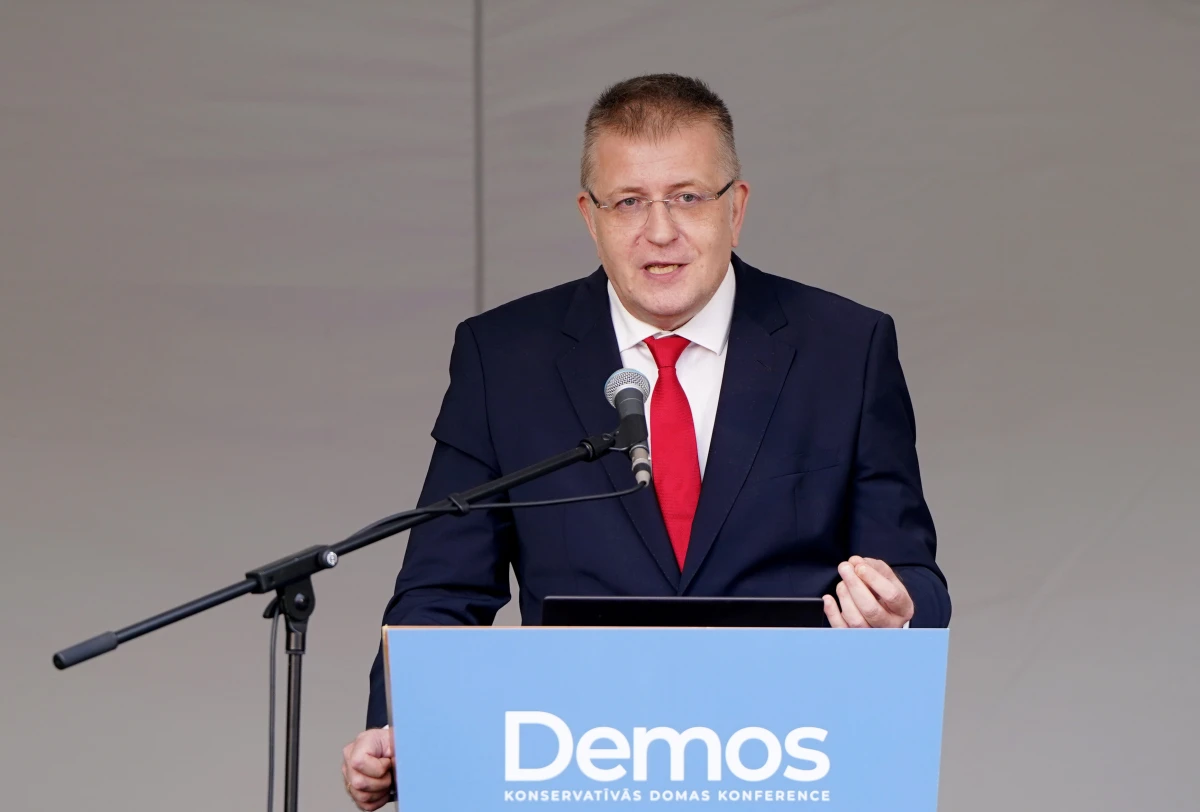
The new advisor to the finance minister on the budget deficit and whether it can be fought.
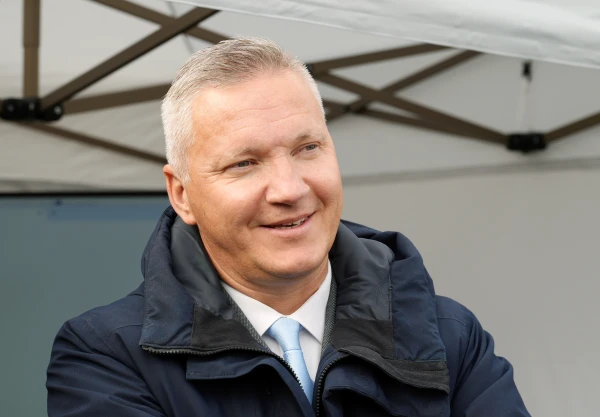
Economist Guntars Vitols has relentlessly criticized the Silinie government for its handling of the economy and finance. And now Vitols himself has found himself in power - he has become an advisor to Finance Minister Maris Kucinskis (United List). On the social network X, he shared his opinion on the budget deficit and whether it can realistically be reduced, and if so, at what cost.
"You have known me for a long time. I believe that the budget deficit needs to be sharply reduced, to achieve a balanced budget within 2 or 3 years. Otherwise, the debt continues to grow, and by 2030 we will have serious problems. This has been said for years by business and employer organizations.
And now I will explain why it seems that we will not be able to get rid of the deficit. Most likely. Only through another terrible crisis, because...
Of course, there are many inefficient expenditures in the budget. One person is sitting on the council with a high salary, while a nurse or teacher is scraping by. It’s unfair. The research on salad is also an incredibly irritating phenomenon. But this has no direct relation to the deficit.
Deficit. Tax revenues - 16 billion, expenses - 18. A two-billion gap, which is causing our country's debt to grow rapidly, and we are heading for a cliff in the coming years. This is not news for my followers.
But. The budget already consists of funding sectors, all important. What are these 18 billion expenditures? They are like separate blocks, funding for sectors. When you add all the blocks together, you get those 18 billion.
For example, one block - 6 billion for pensions and benefits. It is indexed, and next year it will be more. Show me one political force that will oppose almost a third of the country’s population? Yes, it is possible to reconsider who deserves more and who deserves less, to improve the efficiency of social budget redistribution, but this block, one of the largest budget expenditures, will not become smaller overall. In Germany, Merz is currently trying to reform it, but good luck to him.
And then at least the healthcare sector - 1.9 billion. There is much that can be improved, no doubt. Inside the block. But... try to reduce the block, to not give more tomorrow than yesterday. You will be buried. By the voter. The idea that we must give more every year is present in every block, and it is the main law of the political space in Latvia.
And the same goes for education, 1.3 billion, not to mention defense - 2.2 billion. Show me one serious political force that promises not to increase funding for this sector?
If someone here thinks trivially that we can only fight with the salaries of officials, then I have to disappoint you. You can and should fight against the feeding troughs in councils, at least with a hammer (I would recommend a cast-iron frying pan), but you will not save those 2 billion there. Every billion is a thousand million, and cutting salaries in different areas will yield tens of millions. Well, okay, maybe just 100, to make it 150, but that does not solve the shortfall, the budget deficit of 2000 million, the main topic of this entry. The hypothetical cancellation of RailBaltica does not solve this either. There is already more money in the annual budget than a couple of hundred million.
Once defense funding was raised by 400 million, no other grand blocks were reduced by such an amount anywhere. Because that is considered political suicide. Germany did it, but because the constitution prohibits budget deficits. And suicide is not excluded either.
Today's conclusion - do not confuse the efficiency of spending with the budget deficit.
You can create the best and most efficient government management, and we should strive for that, but it does not reduce the size of the blocks - the voter will demand that they be increased in size. If you do not provide more next year, that’s it - buy rope and soap," Vitols noted.










Leave a comment