
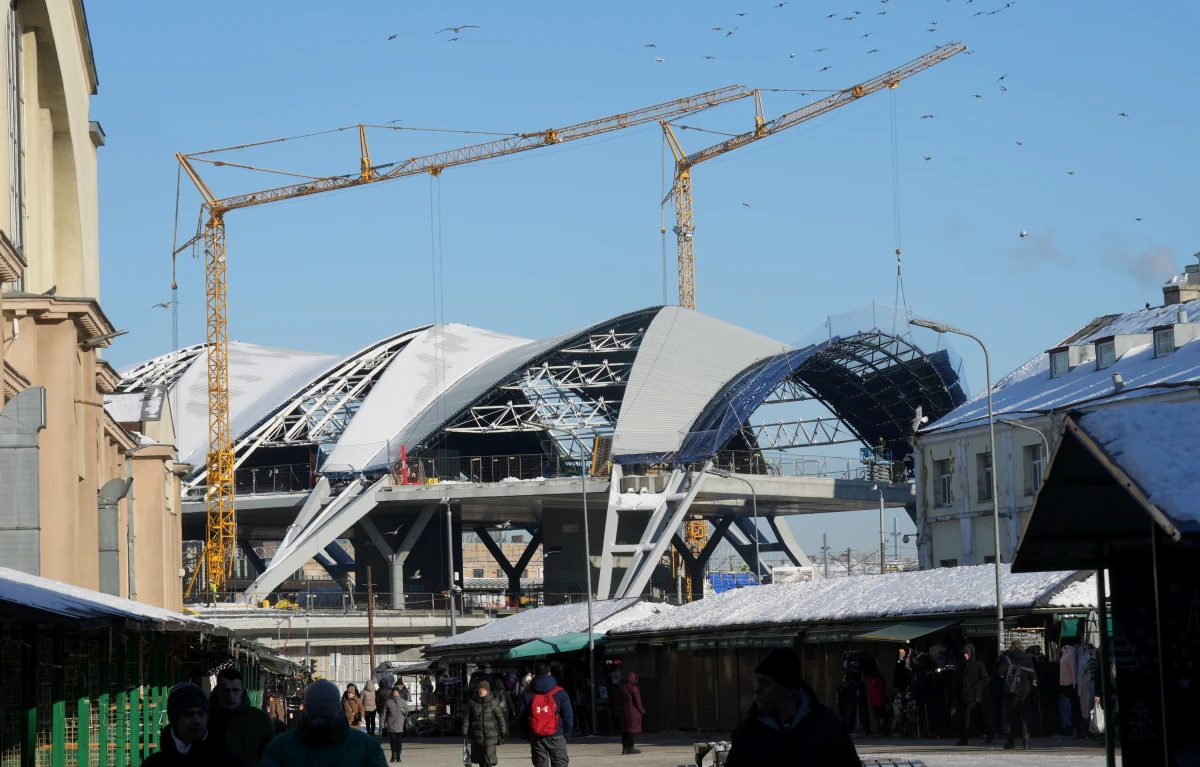
The construction of the Rail Baltica railway line is only possible with continued funding from the European Union. This was stated by Minister of Transport Rihards Kozlovskis, emphasizing that the future of the project will depend on both the results of the audit and the ability of the Baltic states to act together.
The future of the largest infrastructure project in the history of the Baltic states is still directly linked to the support of the European Union. Minister of Transport Rihards Kozlovskis stated that it is practically impossible to implement Rail Baltica without European funding. According to him, EU funds remain the main source of financing for the construction of the new railway line, which is supposed to connect the Baltic states with the European railway network.
Kozlovskis also emphasized that the project can only be successful with close cooperation between Latvia, Lithuania, and Estonia. The European Commission views Rail Baltica as a single regional project, so the actions of each country will determine the receipt of further financial support.
The minister acknowledged that the volume of the next funding will be directly related to how successfully the project participants fulfill their commitments.
Currently, an international assessment of the cost of the main route and the actual construction timelines is ongoing. After the audit is completed, the government will be able to make decisions about the next steps. In fact, the results of this review should show how realistic the current plans are and what additional resources will be needed to complete the project.
The issue of the cost of Rail Baltica is becoming increasingly sensitive. According to the latest estimates, the first phase of the project in the Baltic states could cost 14.3 billion euros. Latvia's share is about 5.5 billion euros, and taking into account inflation and expense indexing, the amount could approach six billion euros.
For comparison, in a cost-benefit analysis prepared in 2017, the total cost of the project was estimated at around 5.8 billion euros. Thus, over a few years, the estimated cost has increased more than fourfold.
Additional questions arise regarding the adherence to construction timelines. Recently, Estonia's state auditor Janar Holm stated that Latvia has virtually no real opportunities to complete its section of the line by 2030 without a significant increase in the pace of work and funding. In his opinion, any potential delays by one country will inevitably lead to additional costs for the other project participants.
Rail Baltica involves the construction of a new railway line of European gauge approximately 870 kilometers long from Tallinn to the Polish border. Trains on certain sections will be able to reach speeds of up to 240 kilometers per hour.
For the Baltic states, the project is viewed not only as a transportation initiative but also as strategic infrastructure that should strengthen the region's ties with the rest of Europe.
Final decisions on the further implementation of Rail Baltica are expected after the completion of the international audit. However, authorities already acknowledge that without stable support from the European Union, the construction of the line will be seriously questioned.












Leave a comment