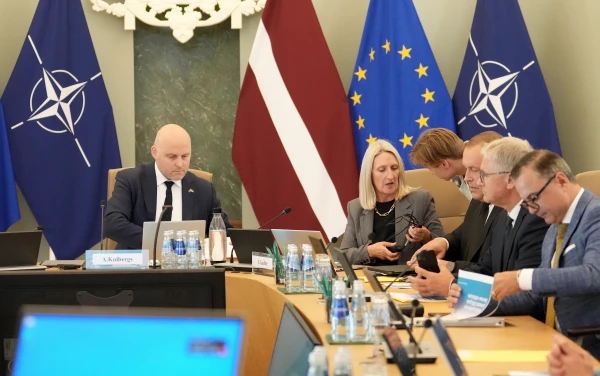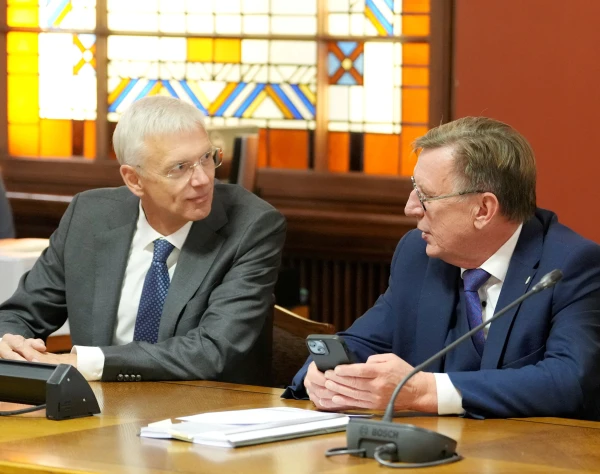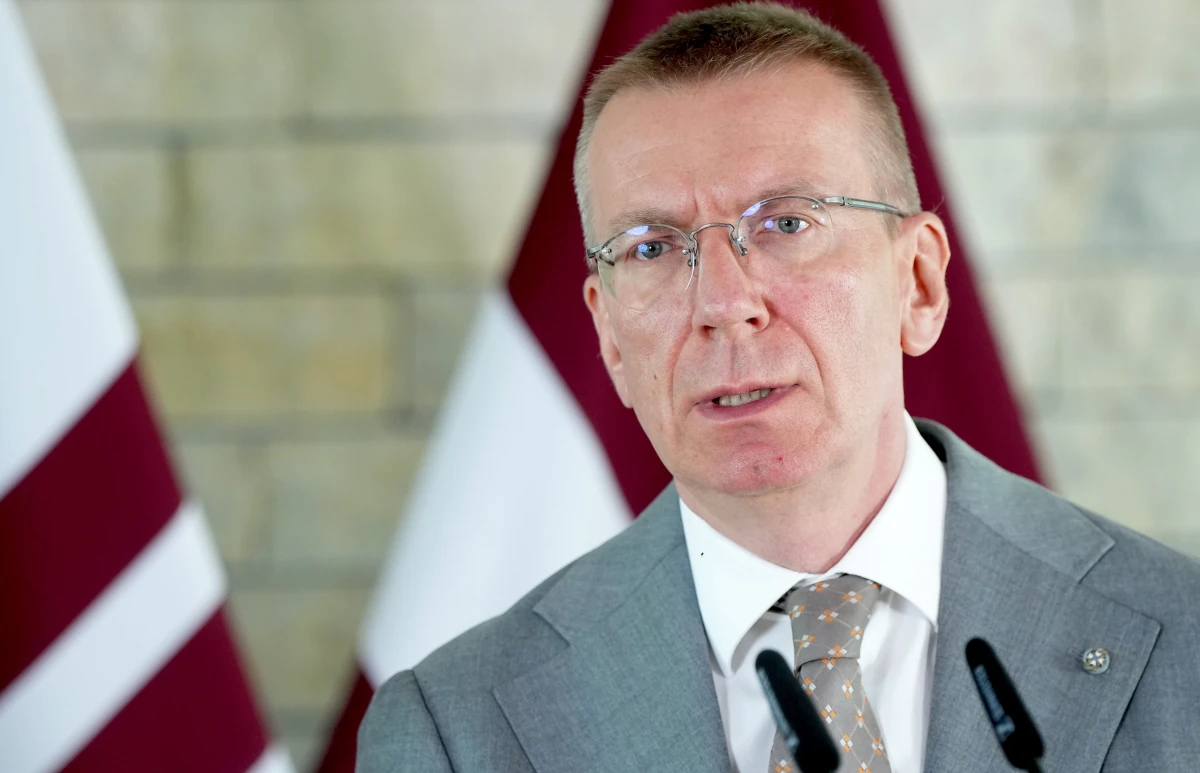
The security situation in Latvia is not improving but is becoming increasingly complex and unpredictable. This was stated by President Edgars Rinkēvičs, urging state structures and residents to prepare for new challenges related to Russia's war against Ukraine and the growing threat from drones.
The President of Latvia, Edgars Rinkēvičs, believes that there are no grounds for complacency regarding security at the moment. According to him, Russia's war against Ukraine continues, and its consequences are increasingly felt not only on the front lines but also in countries located on NATO's eastern flank.
Rinkēvičs noted that Ukraine has managed to maintain its ability to resist and strike targets on Russian territory, including oil and gas industry enterprises and military production facilities. However, at the same time, the unpredictability of Moscow's actions is growing.
In the president's opinion, the Russian authorities are facing increasing difficulties in explaining to their society the protracted war and the lack of promised results.
“We see signs of despair, an increase in disinformation campaigns, and attempts to find scapegoats outside of Russia, including among the Baltic states,” emphasized Rinkēvičs.
Therefore, he stated that Latvia needs to be prepared for various provocations and unconventional situations.
The president paid special attention to the issue of drones. He noted that residents' concerns exist not only in Latgale but throughout the country. Similar incidents are also occurring in other countries in the region — Estonia, Lithuania, Finland, and Romania.
It is important to know: Latvia views the threat of drones not as a local problem but as part of the overall security situation on NATO's eastern flank. According to the president, modern drones are developing so rapidly that detection and response systems often cannot adapt to new threats in time. This is why state structures must constantly revise and improve existing action algorithms.
Rinkēvičs acknowledged that after the incident with a military drone in the Gaiļezers municipality, previously developed procedures had to be changed.
“It must be acknowledged that we are lagging behind in both information exchange and coordination,” noted the president.
One of the steps to improve the system was a new model for warning the population. There are now two levels of alerts. The yellow level indicates a potential threat without the need to change everyday behavior, while the orange level implies the necessity to seek shelter or adhere to the principle of the so-called two walls.
The president also reported that he discussed possible actions during mass events in the event of an air alert with the Minister of Culture, Nauris Puntulis. According to Rinkēvičs, it is now important to prepare clear instructions for both event organizers and the public.
At the same time, the head of state did not make overly optimistic predictions. He emphasized that until the end of Russia's war against Ukraine, such threats will remain part of everyday reality.
In the near future, Latvia intends to expand cooperation with Ukraine in the field of security, create joint expert groups, and develop systems to counter drones.
In the president's opinion, adapting to new conditions will become one of the most important tasks for both state institutions and society as a whole.