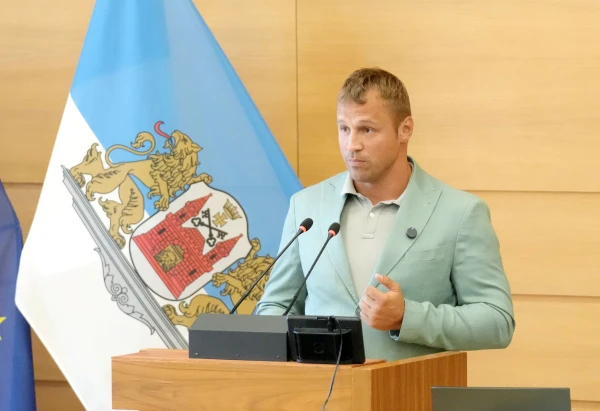
Artificial intelligence is increasingly influencing the information space, and a significant portion of internet content is already being created by non-humans. This was stated by Janis Sarts, the director of the NATO Strategic Communications Centre of Excellence, warning of the growing risks of disinformation and public opinion manipulation.
Artificial intelligence, algorithms, and technologies for creating fake content are rapidly changing how people receive information and form their opinions.
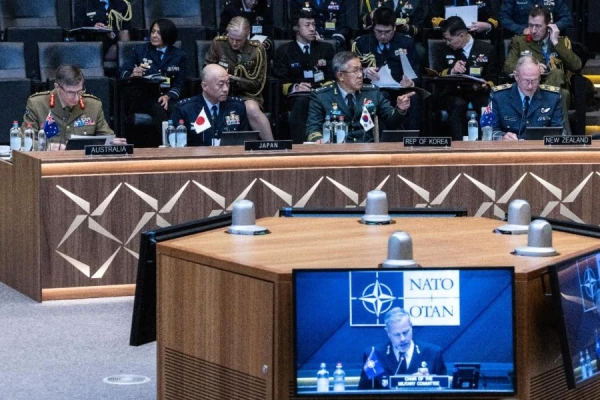
These issues became one of the central topics of the international conference "Riga StratCom Dialogue," which is taking place in Riga and gathering experts in security, communications, and information policy.
According to Janis Sarts, the director of the NATO Strategic Communications Centre of Excellence, attempts to influence public opinion have always existed; however, today the scale and tools of such influence have become significantly more powerful.
"The influence on public opinion has been happening for many years. The very fact that we are aware of it is already good news," the expert noted in an interview for the program "900 seconds" (TV3).
Experts are particularly alarmed by the rapid development of generative artificial intelligence. According to Sarts, AI-generated virtual personalities are increasingly appearing, which are almost impossible to distinguish from real people.
"We are seeing AI-created human personalities more frequently, where it is already impossible to determine that this is not a real person," he said.
Another trend is the rapid growth of content volume created by algorithms without human involvement. Citing research, Sarts noted that today, 40% to 50% of internet content may already be generated by non-humans. Many users are even unaware that they are reading or watching materials generated by artificial intelligence.
The conference also discusses issues of information security in the context of the war in Ukraine, crisis situations, and elections. According to the expert, it is during periods of heightened public tension that people become particularly vulnerable to manipulation and disinformation.
In such conditions, the speed and quality of official communication become crucial.
"Honesty and the fastest, most accurate information," Sarts formulated the main principles of effective public information during crises.
Experts also pay special attention to the influence of artificial intelligence on electoral processes. Modern technologies allow for the rapid creation of persuasive texts, images, and videos that can be used to influence public opinion.
Experts note that as technology develops, the ability to distinguish real content from artificially created content will become an increasingly important skill for both individual users and society as a whole.