
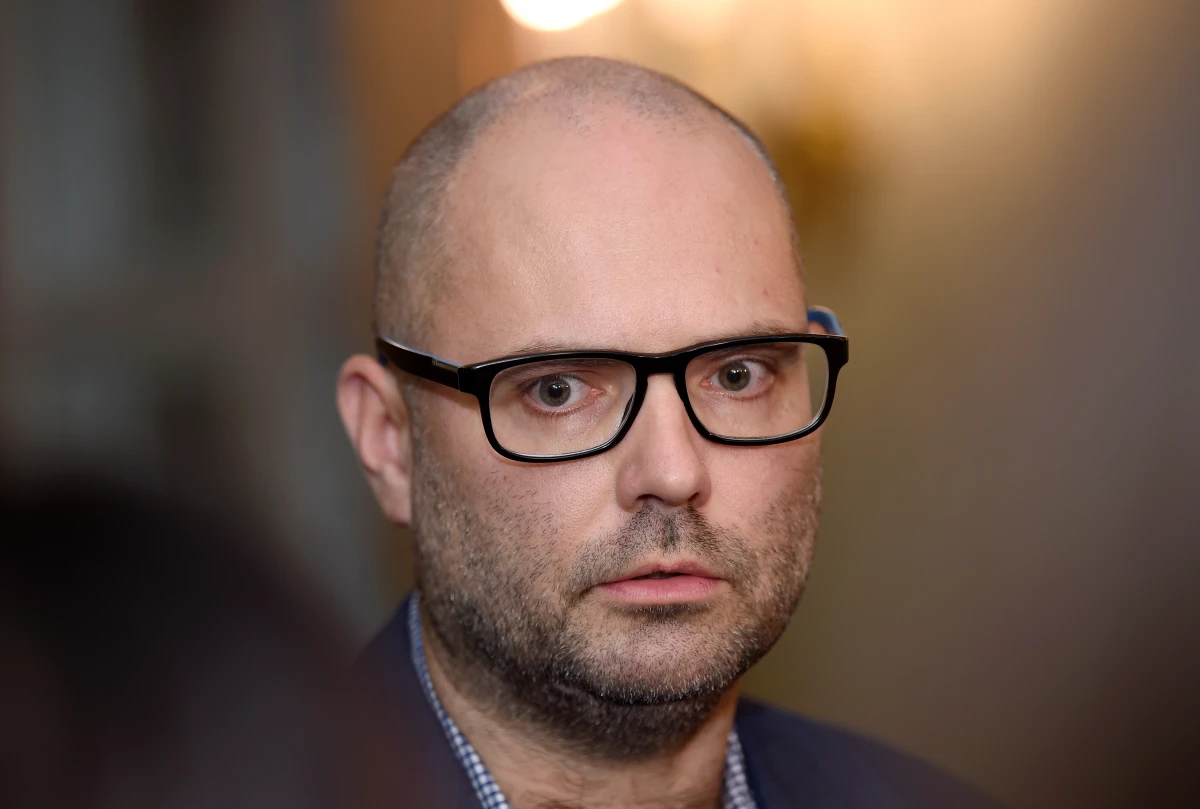
The Chairman of the National Council for Electronic Media, Ivars Abolins, has decided to leave his post and move to work at the Ministry of Culture. After leaving the NCEM, he will become the Parliamentary Secretary of the ministry — the second political figure in the department after the minister.
The Chairman of the National Council for Electronic Media (NCEM), Ivars Abolins, is concluding nearly a decade of work at the media regulator and moving to the government. He announced his decision on social media, noting that the new Minister of Culture, Nauris Puntulis, offered him the position of Parliamentary Secretary of the Ministry of Culture.
The Parliamentary Secretary is the second political official in the ministry after the minister and is responsible for the department's interaction with the Saeima and parliamentary committees.
Until the Saeima makes a decision to relieve Abolins of his position as a member of the NCEM, he will not participate in decision-making and the day-to-day operations of the council.
Abolins has worked at the NCEM for almost ten years. Since 2019, he has headed the council, and prior to that, he served as the deputy chairman.
Summarizing his work, he highlighted several decisions that he considers the most significant. Among them are the ban on the retransmission of Russian TV channels in Latvia, the cessation of activities of the First Baltic Channel and "Radio PIK," as well as measures to strengthen the country's information security.
According to Abolins, important decisions were also made during his tenure in the area of language policy for public media. In particular, the principle was included in the National Security Concept that content for public media must be created only in the Latvian language or the languages of the European Union.
Furthermore, the Constitutional Court confirmed that public media are not obliged to produce content in the Russian language.
What is important to know: Abolins' transition to the Ministry of Culture means his move from an independent regulatory body to the political system of the executive branch.
Abolins himself stated that in his new position, he intends to focus on issues related to the preservation and development of the Latvian language, culture, and national identity.
"We need to move forward," he noted, commenting on his decision to change fields.
Abolins' departure means that the NCEM will need to find a new leader at a time when issues of media regulation, information security, and digital platforms remain among the most sensitive in the public agenda.
Thus, one of the most prominent leaders of the Latvian media regulator in recent years is transitioning to political work within the new government.











Leave a comment