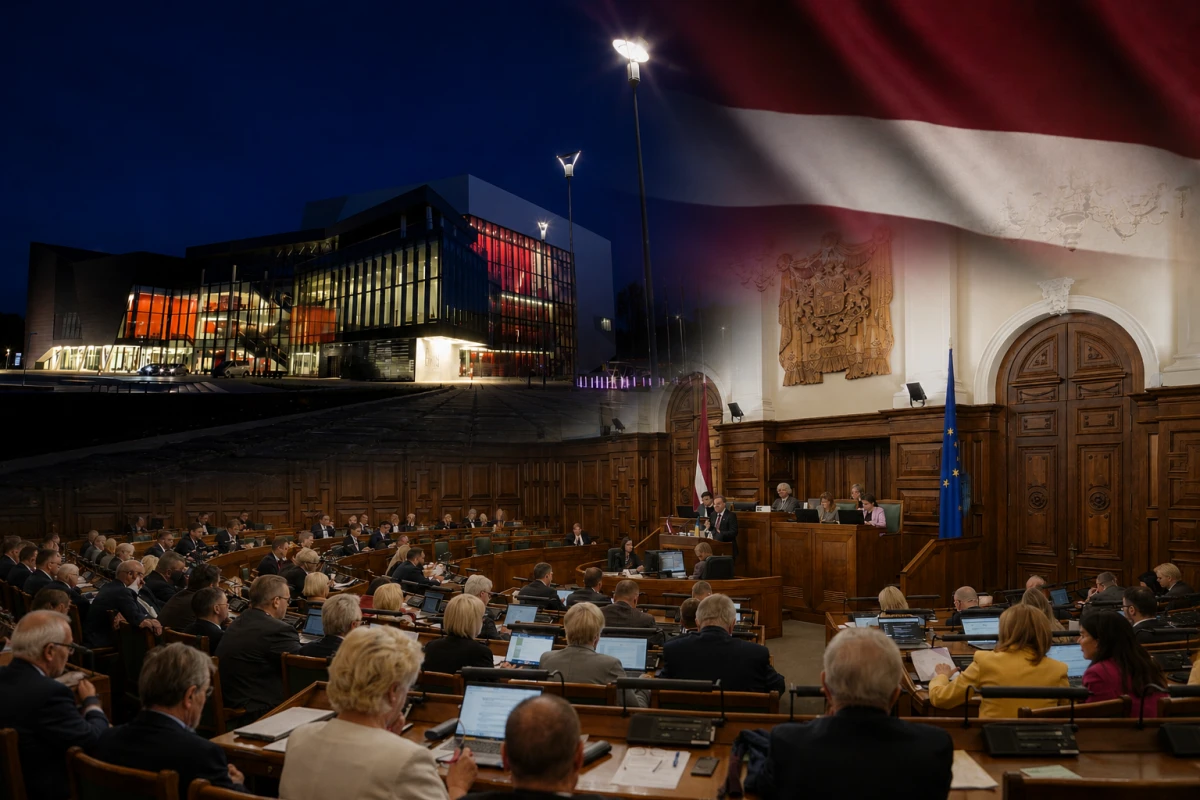
The decision about the future of the Latgale Embassy 'Gors' is once again being postponed. The draft law on a new management model for the concert hall is stuck in the Saeima, and the institution's management warns of growing uncertainty.
The question about the future of the 'Gors' concert hall in Rezekne is once again in a state of limbo. Despite public pressure and a draft law prepared by the Ministry of Culture, the Saeima has yet to make a decision regarding a new management model for the Latgale Embassy.
At 'Gors' itself, they warn that the delay creates serious uncertainty for planning operations for the upcoming year.
"We need to work on the program already now, and without understanding what will happen next, it is very difficult to do this," said the director of the concert hall, Ilona Rupaine.
The story surrounding 'Gors' has become one of the most discussed cultural topics in Latgale after more than ten thousand people signed against the possible transfer of the concert hall into private hands at the end of last year.
Following this, the Ministry of Culture developed a new management model for the institution. The government supported the initiative and submitted the draft law to the Saeima.
The plan provides for the creation of a special fund that will be responsible for both the building itself and the development of the cultural program. Representatives from the state, municipalities, and the cultural sector should participate in the management.
However, this is where the main conflict has arisen.
Particularly sharp disputes were triggered by a clause allowing the transfer of property to the fund by a separate law if an agreement cannot be reached with the Rezekne City Council regarding the use of the building.
The municipality opposes such a model. The Rezekne City Council believes that the new mechanism overly restricts the rights of local authorities. Municipality representative Natalia Yupatova stated that the development of 'Gors' is possible without creating a new structure — through delegation of powers and cooperation mechanisms. Supporters of the reform, on the other hand, believe that without changes, the situation may repeat itself in the future.
"There may again be a desire to transfer everything to a private investor or interfere with the content," noted deputy Leila Rasima.
In fact, the dispute is not only about the legal model but also about who will control one of the main cultural centers in Latgale in the future. At 'Gors', they emphasize that the issue concerns not only culture but also regional policy and the sustainable development of Latgale.
Against the backdrop of political instability and upcoming elections, there are concerns in the region that the decision may again be postponed indefinitely. For cultural workers and part of society in Latgale, maintaining the status of 'Gors' as a national and regional center remains a fundamental issue.