
A Law on the Development of Eastern Border Territories is being developed in our republic. The issue was discussed in the Saeima, where a subcommittee on Latgale is already operating, chaired by Edmunds Teirumnieks (National Alliance).
The chairman of the Latgale Planning Region Development Council, Aldis Adamovics, and the chairman of the executive council of the Latgale Congress, Agris Bitans, also spoke in parliament.
The Brussels Pact — and Our Outskirts
"The European Eastern flank protects all of Europe," said the head of the European Commission, Ursula von der Leyen, recently, recalling, apparently, her time as the Minister of Defense of Germany.
On February 18 of this year, a "Communication on the Regions of the Eastern Border of the EU, Bordering Russia, Belarus, and Ukraine" was adopted at the headquarters of the European Union. As for Russia mentioned in the title, Finland has the longest border with it, while Estonia, Latvia, Lithuania, and Poland have comparable lengths of borders. Latvia, Lithuania, and Poland border Belarus; Poland, Slovakia, Hungary, and Romania border Ukraine.
In our border area, Brussels has identified the following sad socio-economic trends:
-
Increased security risks;
-
Economic decline and uncertainty;
-
Depopulation and low birth rates;
-
Aging and emigration of the population;
-
Outflow of young, educated, and qualified people;
-
Lack of investment and labor;
-
Weakening of public funding, reduction or cessation of essential services;
-
Threat to the information space.
From the EU's perspective, Latgale is expected to provide:
-
security and defense;
-
investment guarantees;
-
utilization of local advantages of the region;
-
improved connectivity (in transport and communication terms – with the rest of Latvia);
-
focus on human resources.
The Clouds Are Gloomy at the Border
The Eastern border area, which includes both the Latgale Planning Region and the Alūksne municipality (which belongs to Vidzeme), should receive a "special legal status," its own legislative framework, which will allow municipalities to gain "legal foundations for ensuring regional growth and attracting investments, increasing the resilience and welfare of residents."
Meanwhile, a slide was presented at the Saeima during the presentation, demonstrating the hostile intentions of neighboring states. We will not present and discuss it here, only noting that the closure of agricultural and industrial enterprises, schools, cultural houses, and post offices, as well as the outflow of the population from Latgale, were characteristic in the 1990s, 2000s, and 2010s — when relations between the former Soviet republics were quite pragmatic, and with Belarus, they were even friendly.
From Taxes to Culture
In the vision of Latgale activists, who are currently actively supported by the Saeima (how could it be otherwise in the run-up to parliamentary elections?), thanks to the "status of a strategic territory" of the EU, funds will flow into the region from the state budget and EU subsidies. They will be spent on:
-
Entrepreneurial activities and attracting investments;
-
Development of transport and logistics (the European TEN-T network, roads, bridges);
-
Accessibility and sustainability of education and vocational training;
-
Social care and health services;
-
Simplified tax policy;
-
Preservation of cultural identity, including the development of the Latgalian language and heritage.
Regarding the latter direction, it should be noted that, to no lesser extent, for multicultural Latgale, it is worth considering Old Believers, Jewish settlements, and the Inflants of Poland as beacons of cultural tourism. All of this could become, with proper branding, quite profitable items for the local budget.
The development of all the above is expected to be achieved through "priority access to the European Union's cohesion policy programs and other financial resources." The government of Evika Silina ("New Unity") has, for the first time in the recent history of Latvia, formed a Thematic Committee for Socio-Economic Development and Strengthening Security of the Eastern Border of Latvia (order ** 2024/1.2.1-158 dated April 30, 2024). The committee is firmly led by the Prime Minister herself, and there is also a bureau of 3 local representatives.
In Anticipation of a Special Fund
The Eastern Border Development Fund, which will start simultaneously with the adoption of the regional law, will "provide targeted financial support to entrepreneurs, startups, and investors conducting business activities in the Eastern border area."
The government still needs to approve the operational procedures of the Fund, the conditions for allocating funds, and priorities. The Fund will be formed from state budget funds, EU fund financing, and other international financial instruments.
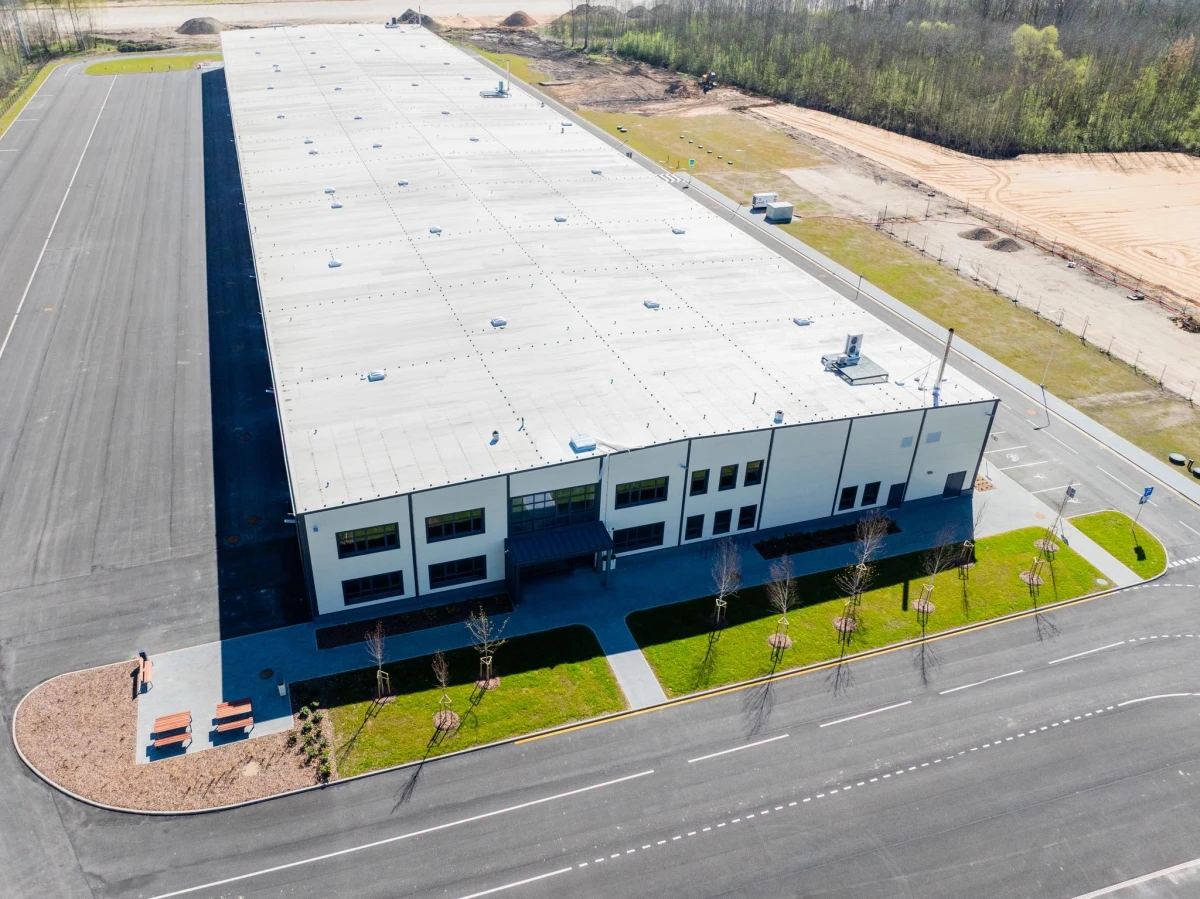
The fund's money could be spent on strengthening special economic zones. Let us remind you: the Latgale Special Economic Zone has been operating since 2017 and covers the entire territory of Latgale. Its peculiarity is that the entrepreneur chooses a suitable location in the region, which is then granted the status of a SEZ.
In turn, the Rēzekne Special Economic Zone has been operating for more than 20 years, covering the territory of the city of Rēzekne and the surrounding area. Enterprises that have received the status of SEZ participants receive significant tax discounts: up to 80% on the corporate income tax, as well as benefits on property tax.
The Fund could also form initial startup capital for enterprises; support the attraction of human resources for enterprises, including housing construction for workers; invest in innovations, the development of export-oriented industries, and products with high added value.
Bank guarantees and risk coverage instruments are also planned. So, in the coming years, with such a "safety cushion," if not Elon Musk, then local business visionaries will invest in Latgale!
UTILIZATION OF FUNDS
According to the Central Finance and Contracts Agency, Latgale has become a regional leader in the number of infrastructure development projects — 12 applications out of 31 across the country. The region is ready to utilize 16.2 million euros.



Leave a comment