
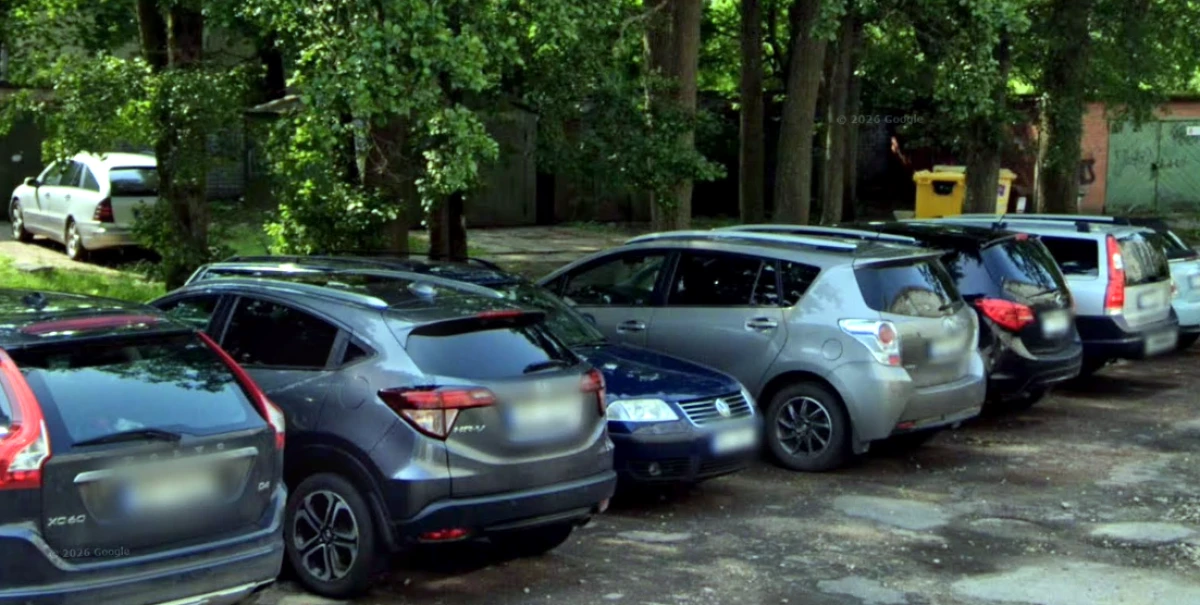
The Department of Environmental and Mobility of the Riga City Council, according to activists led by Aleksejs Lacis, introduced paid parking in zones C and D without proper analysis of transit traffic in the blocks of streets near 1905 Park, as well as considering accident statistics and other modeling, limited speed to 20-30 km/h, installed a concrete "modal filter" against car passage on Varna Street, and prohibited parking on sidewalks.
There Is No Such Right!
"The benefit to society from the restrictions imposed on the addressee must outweigh the limitation of their rights or legitimate interests," stated the golden words of Article 13 of the Administrative Procedure Law, as residents of the historic microdistrict Grizinkalns protested the actions of the capital's authorities.
Meanwhile, according to the "Procedure for Prohibiting or Restricting Traffic" (Regulations No. 42) adopted by the Cabinet of Ministers in 2016, prohibitions are introduced only "to prevent damage to the road or safety risks." "Data on traffic flow prior to the changes, the impact on adjacent streets, and ensuring access for emergency, utility, and delivery vehicles has not been provided."
Residents of the surrounding houses, who have parking permits and encountered signs for paid parking since April 20, also found themselves in a conflicting situation. According to the authors of the protest letter, this "qualifies as an unlawful factual action without proper legal grounds."
Strange Logic
During the same days, your author received a response from the head of the aforementioned Department – Kristaps Kauliņš, to a request made on behalf of the residents of Dubulti Street in Imanta.
They have repeatedly asked the authorities to install prohibitory signs to curb the arbitrary placement of cars in green zones. Parking near garbage containers complicates waste collection. In several places, the asphalt has already sunk. K. Kauliņš confirms: "We have received numerous complaints about the organization of traffic..."
But: "The Department currently sees no legal or objective grounds for installing traffic signs that restrict movement at the specified address."
The authority responsible for transport issues in Riga also believes: "The demand for parking vehicles near residential areas is high. Decisions or actions that significantly reduce the number of available parking spaces usually cause dissatisfaction among most residents."
In other words, here is the logic: where residents do not want restrictions – we impose them. And where such restrictions are requested – we prefer complete freedom. As if Grizinkalns and Imanta live in different legal fields...













Leave a comment