
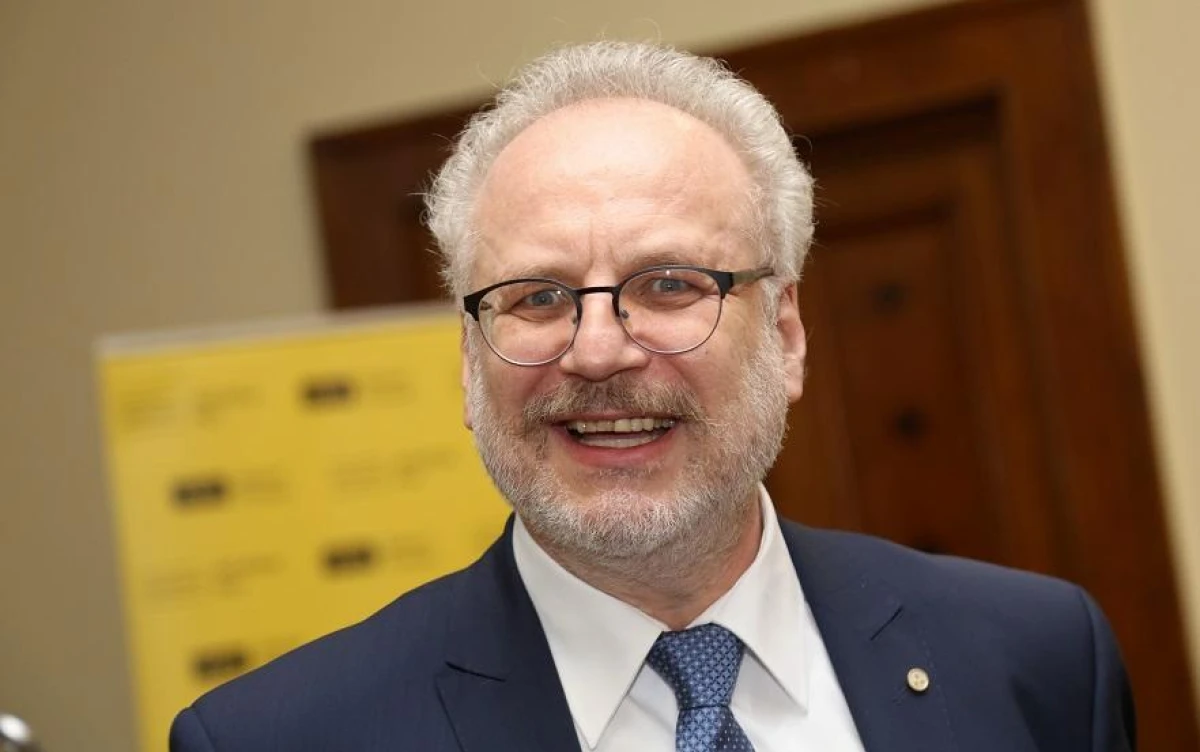
Colonialism can manifest in various forms, and the experience of the Baltic countries differs from classical examples, believes former president Egils Levits.
At the conference "Russification and Soviet Colonialism in Latvia," which took place on Tuesday in the Saeima, Levits noted that colonialism is usually associated with territorial control, economic exploitation, and cultural dominance; however, in the case of the Baltics, the situation was different, as the level of development in the region did not lag behind that of the metropolis.
This is one of the reasons why this region has been analyzed less in international studies of colonialism for a long time. Until now, in international law, the situation in the Baltic countries has been assessed mainly in the context of occupation.
However, Levits reminded that in 1983, the European Parliament, in a resolution on the Baltic countries, mentioned aspects of colonization and called for this issue to be considered in a broader context.
At the same time, Levits asserts that during the Soviet era, cultural and linguistic marginalization manifested in Latvia, which corresponds to the signs of ideological colonialism.
Levits admitted that there are no documents that explicitly set the goal of Russifying society. However, in the opinion of the former president, "the system was moving in that direction," diminishing the role of the Latvian language. According to him, similar trends are observed in other parts of Russia, where the languages of other nationalities have significantly weakened or even disappeared.
He also noted that in colonial studies, Western researchers have traditionally dominated, often using the Russian language and information space, as local languages and sources were less accessible. As a result, the Baltic countries and Ukraine are often interpreted through a Russian perspective.
"Ukrainians are beginning to worry that when it comes to Ukraine, it is actually represented in academia through the lens of the Russian viewpoint," Levits noted. He added that recently, international research initiatives have been created with the aim of "decolonizing colonial studies" and broadening the view of the history and experiences of the region.
Speaking about the present, Levits emphasized the importance of post-colonialism - a perspective on how the influence of former power can persist even after independence is restored. In the Baltic countries, this is most evident in the information space and language issues, as well as sometimes in the thinking and perceptions of society.
According to Levits, the concept of colonialism is not an end in itself but an analytical tool that helps to better understand historical processes and their long-term impact on society.














Leave a comment