
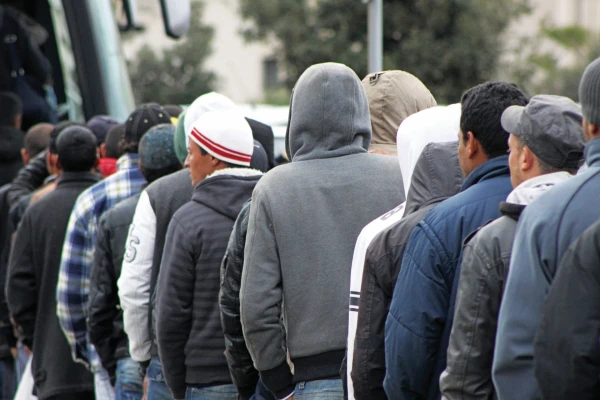
The fight against migration, or rather – the restriction of migration, is gradually becoming a pan-European trend. This is understandable: if the European Parliament must adopt a resolution instructing the European Commission to develop a regulation on the expulsion of illegal immigrants, then we see to what level of absurdity old Europe has reached!
In a normal situation, no resolutions, regulations, or directives are needed to expel those who have no right to be here – every EU country has a law regulating the expulsion of illegal migrants. However, it seems that in certain EU countries – primarily the very wealthy ones – migrants are already dictating their terms to authorities and politicians, rather than the other way around...
In any case, the topic of the "invasion" of third-country nationals has become relevant for Latvia – especially in light of the upcoming elections.
Three Challenges in Migration
As is known, the issue of possible restrictions on the entry of third-country nationals has been taken up by the parliamentary investigative commission created for the elections. Additionally, a new immigration bill has arrived, which deputies, ministers, and non-governmental organizations have literally bombarded with proposals and amendments.
Moreover, there were so many who wanted to contribute their two cents to this bill that the Saeima had to extend the deadline for submitting additions for the third (final) reading. Now that this deadline has passed, preliminary results can be summarized. Latvian politicians in the field of migration regulation are facing three main challenges or, if you will, three dilemmas.
-
The first – on one hand, there is a shortage of labor. Moreover, it is evident that considering demographics, the labor shortage will only increase.
-
The second – on the other hand, the arrival of guest workers, even under the guise of studying, carries negative consequences: there is always a risk that migrants will stay here under various legal (or illegal) pretexts. Additionally, the mentality and lack of knowledge of Latvian only exacerbate the negative attitude of locals, primarily Latvian residents...
-
The third – the necessity of attracting investments into the economy. One simple option is to attract wealthy foreigners to the country. This way, several birds can be killed with one stone: by attracting affluent foreigners, stimulate business and create jobs, which generates additional taxes, and earn extra funds for the budget through one-time payments and special taxes in exchange for residence permits. Not to mention that these investors and their families, living in Latvia, even if not year-round, will spend money on housing, purchases, and service personnel...
It is logical that deputies, depending on their ideology, have proposed two types of amendments: 1) to restrict migration and even ban it, 2) to attract wealthy foreigners...
Student or Guest Worker? It’s Time to Decide!
Thus, the deputies of the National Alliance want to discourage foreigners from coming to Latvia for work under the guise of students. Parliamentarians propose to prohibit foreign students from registering business activities, as well as being employed by foreigners who have work rights. The goal is to force foreign students to be employed only under a labor contract and within permitted hours: 20 hours a week during studies, 40 hours a week during vacations.
Several deputies have submitted amendments that prohibit issuing visas and residence permits to family members of foreign students.
Politicians from the National Alliance believe that mass migration to Latvia has already begun and it is necessary to provide in the law the possibility to temporarily suspend the issuance of visas and residence permits to third-country nationals.
Foreigners Don’t Walk Here
An amendment by National Alliance deputy Janis Dombrovskis stipulates that the Cabinet of Ministers must suspend the issuance of new residence permits and long-term visas to third-country nationals if the number of third-country nationals exceeds 5% of the number of Latvian citizens residing in the country. Currently, this is around 80,000 people.
Additionally, deputies will attempt to limit the issuance of visas and residence permits to individuals from certain countries – primarily Islamic ones.
His party mate Edvins Snore proposed articles that restrict the entry of citizens from certain countries into Latvia. “The Cabinet of Ministers may establish restrictions on the entry for employment or study for citizens of certain third countries. The Cabinet of Ministers may set a maximum number of foreign citizens from these states who may enter Latvia for work or study within a calendar year,” states Snore's amendment, which reminds: “Latvia was founded to ensure the existence of the Latvian nation, not to become a small Uzbekistan or Russia.”
Let the Rich Come
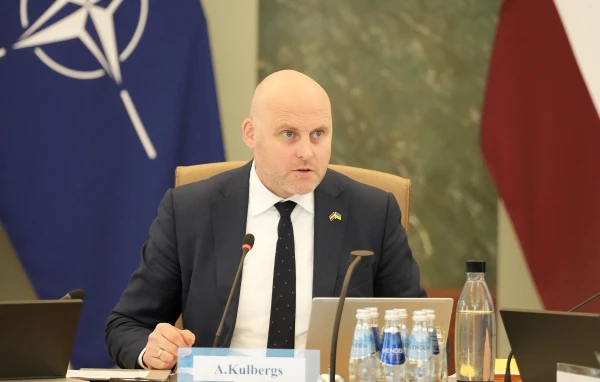
In turn, United List deputy Andris Kulbergs, with his amendments, wants to stimulate the inflow of investments into the country and the arrival of wealthy foreigners for permanent residence.
A candidate for a 5-year residence permit must
- either create a company with real employees and make a payment to the state budget, as well as ensure tax revenues of a certain amount,
- or invest money in state zero-interest bonds for a sum of 150,000 euros,
- or make a fixed tax payment...
“The proposals have significant international and fiscal context. Given the deteriorating geopolitical situation and increasing demands for defense and security funding, Latvia will need additional, long-term sources of public revenue in the long run. Currently, the main identified sources of funding are EU funds and state loans.
The proposals offer an additional solution – attracting wealthy foreigners by providing them the opportunity to become taxpayers in Latvia by making a fixed tax payment of 60,000 euros per year, with a mandate for the Cabinet of Ministers to prepare and submit a bill on fixed tax payments for foreigners to the Saeima by December 31, 2026. It should be noted that similar fixed tax systems for attracting wealthy foreigners are already in place in several EU countries,” explained A. Kulbergs.
Old Songs About “Residence Permits in Exchange for Investments”
Since the original version of the new law no longer provided the right to apply for a residence permit in exchange for purchasing real estate, the Ministry of Economics proposed to effectively transfer the “residence permit in exchange for investments” program from the current law to the new one.
To be eligible to apply for a residence permit, a foreigner must, for example, purchase real estate in Riga or Jurmala for at least 250,000 euros.
It is expected that the commission will begin reviewing all amendments for the third reading next week. It is quite possible that the new law will be adopted this month or immediately after the May holidays.











Leave a comment