
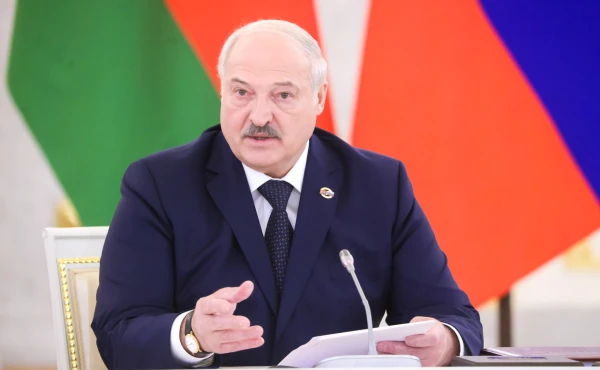
The ports of Latvia and Lithuania, before the full-scale war in Ukraine, served not only Russian but also Belarusian cargoes. One of the export products of Alexander Lukashenko's regime is mineral fertilizers, which help plants grow faster and yield more.
The administration of U.S. President Donald Trump believes that American farmers could benefit from cheap Belarusian fertilizers. Therefore, the Lithuanians recently received an unequivocal signal to sit down at the negotiating table with the dictatorial regime and begin discussions about business. It is likely only a matter of time before the Americans make a similar offer to Latvian officials, reported the program "Nothing Personal" (TV3).
U.S. Special Envoy for Belarus John Cole has met with Alexander Lukashenko multiple times. He publicly stated that before Trump offered him this job, he didn’t even know where Belarus was or who led the country. At their first meeting, Cole brought Lukashenko a letter from Trump and a birthday gift — cufflinks featuring the White House.
Cole's task is to broker deals, and he tries to do this in Trump's style. Lukashenko found a way to "sell" Cole and Trump the release of political prisoners in exchange for lifting sanctions. Restrictions have already been lifted from the airline "Belavia." But the most important issue remains the fertilizers.
The U.S. Secretary of Agriculture told Cole that it would be very beneficial for Americans to receive mineral fertilizers from Minsk, especially now when fuel prices and other farmer expenses have sharply increased. While in Lithuania, Trump’s envoy suggested that Vilnius start negotiations with Belarus and restore the transit of fertilizers, which historically was carried out through the port of Klaipeda, making it clear that the American side is very interested in this.
It is likely only a matter of time before Latvia receives a recommendation from the Trump administration to cooperate with the Belarusians. In the past, Belarusians transported these goods through the Ventspils company "Kālija Parks." Theoretically, this could also be done through the Riga port — at the terminal that belonged to the sanctioned Russian fertilizer producer "Uralchem" Dmitry Mazepin.
As previously reported by the program "Nothing Personal," among the terminal owners were the families of Andris Škēle and Ainars Šlesers, as well as Rietumu banka shareholder Leonid Estherkin. Additionally, former U.S. Ambassador to Latvia Charles Larson was planning to invest in the company. The Minister of Economy indirectly confirms that there are enterprises in Latvia waiting for a signal to resume the transit of Belarusian goods. Port managers diplomatically evade answers.
"As far as everything is within the law and under sanctions control, everything can happen," noted Ansis Zeltins, manager of the Riga Free Port.
Igor Udodov, manager of the Ventspils Free Port, added:
"If the government decides that this can be done, then who are we in the port to not do it?"
"Belarus is still our adversary, so I don’t see this happening right now. But if politicians decide to open the border, of course, it can be done," said Aigo Gutmanis, deputy chairman of the Ventspils City Council.
"Currently, no one has approached us with such proposals. We know entrepreneurs who are conducting various analyses of the potential market. But our position is very clear. Everything that falls under sanctions is absolutely excluded. If something is transported outside of sanctions, that is already a matter of the entrepreneurs’ good faith and risk. And then cooperation with the state in such a case will be significantly limited. These are the consequences they will have to bear," explained Minister of Economy Viktor Valainis.
The full-scale war in Ukraine has halted most cargo flows from Russia and Belarus. European sanctions still apply to potash producers. However, given Trump's impulsive behavior, it is necessary to be prepared for any scenario, including possible cooperation with Minsk. Margarita Šešelgytė, director of the Institute of International Relations and Political Science at Vilnius University, notes in an interview with "Nothing Personal" that very complex decisions face politicians.
"If the U.S. persistently pressures Lithuania to start negotiations with Belarus, they have the means to do so. They have military personnel in Lithuania, and we value them highly," she explained.
Several entrepreneurs in Latvia confirm in informal conversations that discussions about a possible easing of sanctions against Belarus and potash cargoes have been ongoing for about a year. Former politicians advise tactics on how not to irritate Trump.
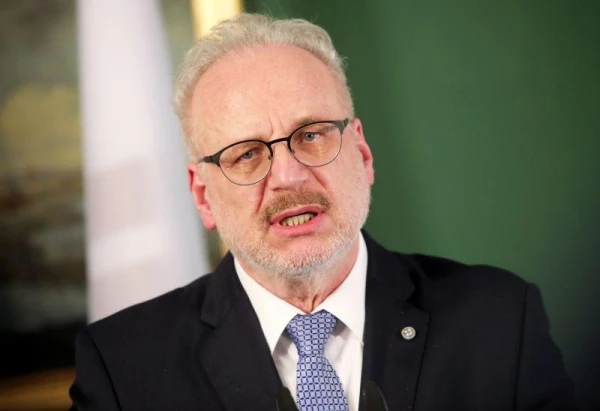
Egil Levits, former president of Latvia, explained:
"Of course, not only now but always there should be a unified position of all of Europe. The European Union. NATO. European partners should have a common position. Only then will our position be strong enough. (NP: What happens in a situation where Trump says — we need this, and Europe takes the position — no, we won’t give this?) First, this position needs to be developed, and the common position of Europe should strengthen the security of Europe."
"The U.S. has no border with Belarus, and they want to teach us how to live here. Then they will leave, and we will have to deal with the consequences ourselves. Belarus is an aggressive state as it allows Russia to use its territory for military purposes. And that is the main fact. And this must always be taken into account when we think about negotiations with Belarus. Negotiations themselves are not bad. They may even need to be supported. But, for God's sake, we should not blindly follow the Americans just because they need mineral fertilizers," added another former president of Latvia, Valdis Zatlers.
"I have great concerns that in Belarus, Lukashenko and Putin will deceive the Americans. (NP: And what should Latvia and Lithuania do if we receive such a request?)
Do the classic — buy time. Nothing else can be done.
At the same time, emphasize how important it is to maintain relations with America, because that is also the right thing to do," outlined the strategy of the founder of the Latvian Institute of International Affairs, former politician Aitis Leiniš.
All ministries direct the question of a possible "unfreezing" of relations to the Minister of Foreign Affairs. She states that cooperation with an aggressor is not on the agenda, and this has already been clearly communicated to the American side.
Baiba Braže, Minister of Foreign Affairs:
"(NP: Doesn’t this threaten that we might anger Trump?) You know, I was in Washington right after the four-year anniversary of aggression — on February 24 and 25. I met with Mr. Cole and colleagues from the State Department. We discussed all these issues. They know our position.
(NP: So, do you think such proposals to Latvia may not follow?) I don’t want to speculate on what may or may not happen. Every day brings something new. But I think that for our American colleagues, our position is not a secret at this point.





Leave a comment