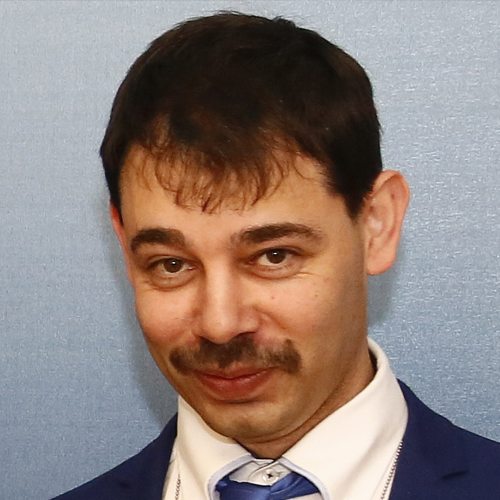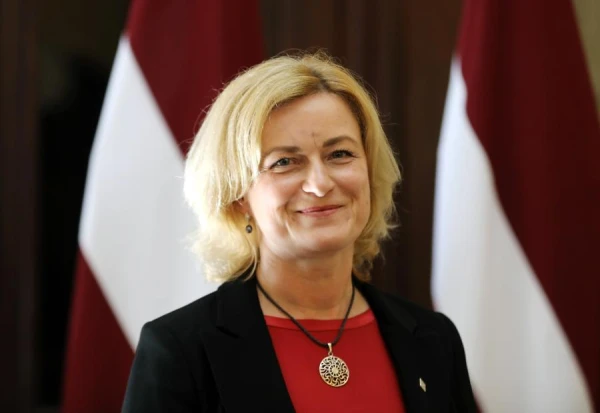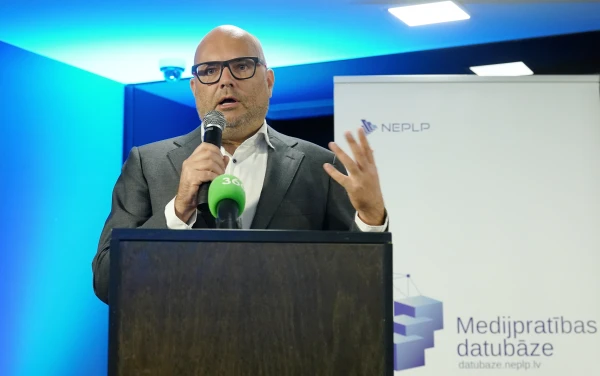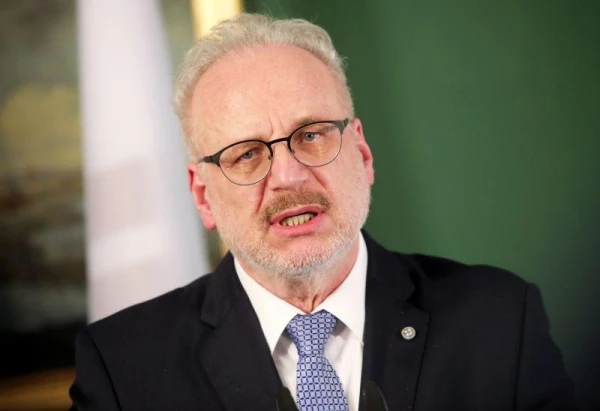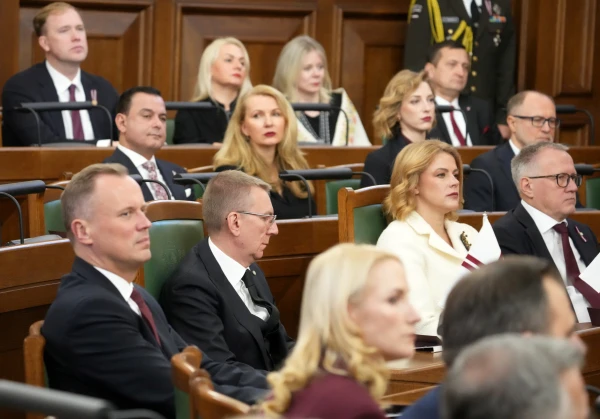
"We need to think not about Easter gifts, but about creating a transitional government," said the leader of the opposition faction in the Saeima, Edgars Tavars, reacting to the latest popularity rating of political forces. His address was directed to his namesake – Edgars Rinkēvičs, who, ironically, had just gone on a ten-day vacation.
It’s Too Late to Change the Government
It is quite obvious, including to the author of the idea, Tavars, that there will be no "transitional" government.
Firstly, the president in Latvia does not form the government and certainly does not dismiss the previous one (the head of state does not have such powers). Moreover, the possible candidate for prime minister is usually chosen by the president from those characters proposed by parliamentary parties.
Secondly – there are about 6 months left until the elections, and even if the current cabinet of Siliņa were to collapse, by the time a new one was created and approved, there would only be about 4 months left until the elections. Considering the summer holidays as well, this is utterly pointless. In general, everything indicates that Siliņa and Co. will have to "drink the bitter cup to the dregs": that is, work until the very elections and answer for everything before the voters.
At the same time, it seems that some ruling politicians are beginning to realize that they may become... political suicides, meaning their chances of being elected to the next parliament are rapidly decreasing day by day. And fresh ratings clearly confirm this. Judge for yourself.
Lost the Remnants of Trust
If the elections to the parliament were held last March, the main ruling party – "New Unity" – could expect support from only 11% of voters, which would place it in only 4th place in the popularity ranking.
For comparison: in November, 16.5% of respondents were ready to vote for Siliņa’s party, giving it the first place among the most popular political forces!
Even worse is the situation for the Union of Greens and Farmers: if in November, that is, 5 months ago, the "green farmers" could count on the votes of 8.1% of voters, then in March this political force with the support of 7.4% of voters found itself last in the list of those forces overcoming the five percent barrier.
The "Progressive" Phenomenon
In the battle for survival, the "Progressives" feel the best among the ruling forces, having even strengthened their position compared to November – if five months ago 11.8% of voters were ready to vote for this party, now it is 12.6%. This can be explained by two reasons:
- first – the presence of a stable, loyal electorate;
- second – the willingness of this electorate to "close their eyes" to certain actions (or even inaction) of their political favorites!
Yes, this is a certain phenomenon: the problems of airBaltic and Rail Baltica fall under the responsibility of the "Progressives" (the Minister of Transport is a member of the "Progressives" party), while the anger of voters, including for this, has fallen on "New Unity" and the Union of Greens and Farmers.
However, it is clear that the decline in popularity of these two political forces is explained not only by the failure to implement Rail Baltica and the financial situation in airBaltic. There are several reasons here.
Siliņa is Struggling
If we take "New Unity", part of the electorate is surely disappointed in the prime minister – Siliņa has recently shocked with her public statements and inability to make quick, effective decisions. Moreover, it seems that even officials – a stable part of the electorate of "New Unity" – intuitively feel that the time of this political force is rapidly running out, and it is time to look for new favorites (a new ruling party).
As for the "green farmers", they are clearly doomed, firstly, by inconsistency and lack of principles, and secondly – at some point, they found themselves in the shadow of their partners in power and... completely lost their way.
Where are the loud and important initiatives for voters? How could they vote differently on one principled issue three times?! First, they voted for the Istanbul Convention, then against it, and then – after the president's intervention – the "green farmers" did not participate in the vote at all.
It is obvious that the voter of the "green farmers" has well remembered and evaluated this somersault.
The Opposition is Not Sinking
Yes, the right opposition in the form of the National Alliance and the United List also did not behave in the best way for its electorate in this saga with the Istanbul Convention, but
- firstly, the National Alliance has a very stable part of the electorate,
- secondly, the opposition always has the opportunity to earn points on other issues.
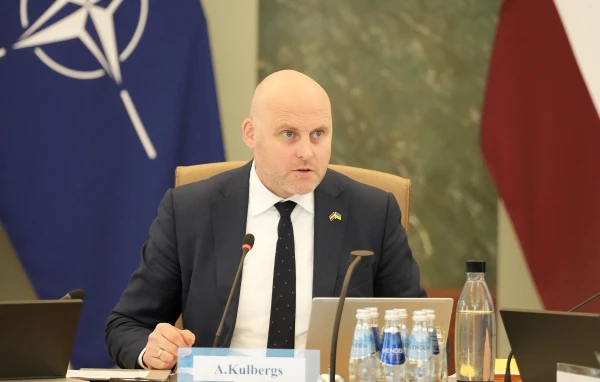
The same candidate for prime minister from the United List, Andris Kulberģs, skillfully gains political dividends through parliamentary investigations – both on Rail Baltica and on heating tariffs.
Šlesers is on the Rise
By the way, Kulberģs ranks second in the same SKDS survey – in the section of popular candidates for prime minister, only behind Ainars Šlesers. Šlesers' popularity helps his party – "Latvia First" (LPV) – gain points, which leads in the list of popular political forces. Today, 14.6% of voters are ready to vote for LPV.
It is noteworthy that LPV is supported by both Russian-speaking and Latvian voters. This means the party still has room to grow.
The rapidly gaining popularity of the "Sovereign Power" party, which is supported by 10.6% of voters, is vying for the second main part of the non-Latvian electorate.
It is clear that both "Stability!" (currently at 4.7% support) and the "Harmony" party, which is still quite far from the coveted five percent barrier, will try to intervene in the battle for Russian-speaking votes.
The Protest Party Has Not Been Appreciated Yet
Interestingly, the new party of Alvis Hermanis – "We Change the Rules" – is also far from 5% at the moment. It was predicted to have explosive popularity as a new party of popular protest.
Such a modest result at the moment (3.7%) can be explained by:
- firstly, a serious delay at the start, which clearly confused voters (Hermanis quarreled with his previous allies and changed his team),
- secondly – voters have not yet "got used" to the new name of the party – "We Change the Rules". They would like to support the controversial director, but do not know how.
It can be assumed that Hermanis still has the opportunity to gain a significant part of the electorate – including or even mainly at the expense of the undecided, the number of which has even increased since November: if five months ago 22.2% of voters did not know who they would vote for, then in March this number was already 26.1%. Surely many of them will join the ranks of the protest electorate on October 3 and vote by intuition.
Hoping for a Miracle
If we return to the ruling parties, they need to try to perform a miracle in the remaining six months: convince voters that they... are the lesser evil, are predictable, and that under them... it won’t be worse.
But will voters believe this?