

Last week, immediately after the Constitutional Court's ruling on the use of the Russian language in public media, a two-year study was completed, the results of which show a fundamental divide in the audience, writes Ir.
This study from the University of Stradins in Riga examines the attitudes of residents of Latvia and Estonia towards the media, reaffirming the already known discrepancies in opinions between people who speak Latvian or Russian at home. However, unexpected conclusions were also drawn.
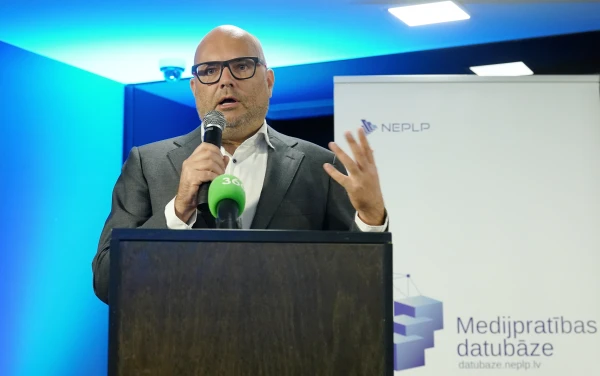
"There are issues on which both language groups converge," says the head of the study, Janis Yuzefovich.
For example, both groups share criticism of the media's performance during the pandemic. The differences between the assessments of residents of Latvia and Estonia regarding media freedom and trust in it are also interesting.
"Attitudes towards the media and perceptions of it do not form in a vacuum - they are largely connected to state policy and the broader social context," emphasizes Yuzefovich.
The study was conducted not only based on a survey but also on in-depth essays in which respondents were asked to reflect on their lives, the state, and the media, allowing researchers to see how societal perceptions of the media's role are formed.
"We saw very different attitudes - people not only think differently but also live in different informational realities," says Yuzefovich.
Most residents believe that there is freedom of speech in Latvia, but not everyone thinks so - there is a deep divide in society. Among those who speak Latvian at home, 54% believe that freedom of speech exists, while among Russian speakers, 64% are convinced otherwise.
"This is not an objective assessment of whether there is freedom of speech in Latvia - it is people's perception," emphasizes researcher Olga Zhabko.
She notes that such sentiments have intensified after Russia's full-scale invasion of Ukraine, when state policy became stricter and society became more sensitive to the limits of the acceptable. But even among those in society who believe that freedom of speech exists, trust in the media is not taken for granted: 51% of Latvian speakers and 73% of Russian speakers agree with the statement that the media is under government control.
"People often perceive the media and politics as a single interconnected system. And this affects the extent to which they trust what they see and hear," explains Yuzefovich.
In Estonia, a comparatively smaller portion of society believes that the government controls the media - the researcher explains this difference by a higher level of trust in state institutions overall.







Leave a comment