Latvia lacks a coordinated and targeted policy to achieve climate goals in the transport sector, the State Audit Office reported to LETA, citing the audit "Achieving Climate Goals in the Transport Sector."
The State Audit Office concluded during its audit that unclear cost-effectiveness and fragmented management threaten the achievement of climate goals in the transport sector.
Latvia risks failing to meet its climate goals in the transport sector by 2030, as 66% of the 35 planned measures do not have defined impacts on reducing greenhouse gas (GHG) emissions, 69% have a high or medium-high implementation risk, and 31% have not been initiated.
At the same time, approximately €2.9 billion is required to implement the planned measures, but currently, only 41% of the necessary funding has been identified. Furthermore, some of the limited funds are directed towards measures that do not contribute to achieving climate goals, auditors emphasize.
The audit also found that Latvia is unprepared for changes in the fuel sector, and the expected rise in prices could significantly impact the population. European Union requirements have been implemented late, there is a lack of clear tax and decarbonization policies, and the development of biofuels and alternative fuels is still insufficiently coordinated and strategically directed.
The State Audit Office also points out that the electric vehicle support policy in Latvia lacks a clear overall vision and is inaccessible to socially vulnerable groups. Approximately €31 million has been spent on electric vehicle purchase support programs, while other state and municipal support mechanisms have cost over six million euros.
The State Audit Office notes that Latvia risks not achieving its climate goals in the transport sector by 2030, as policy coordination is fragmented, support tools are disjointed, and public resources are not sufficiently targeted towards measures with proven effects and high economic efficiency.
In particular, significant funding has been directed towards electric vehicle support and related charging infrastructure for a long time without a unified and clear long-term vision. In turn, the state has not adequately prepared for changes in the fuel sector, has not facilitated the transformation of the industry, and EU requirements have been implemented late. Additionally, climate policy is being implemented without sufficient assessment of the social impact of changes, as the potential rise in fuel prices will affect all residents, especially vulnerable groups, yet targeted compensatory support measures have not been introduced, the audit states.
Martin Abolins, a member of the State Audit Office, noted that this audit shows that the problem lies not in individual measures but in the overall approach, as Latvia's climate policy in the transport sector is currently being implemented without a unified direction and clear priorities.
"This means that with the current approach, it is difficult to achieve results. Moreover, changes, especially in the fuel sector, will inevitably affect all residents. Without targeted support for the most vulnerable, there is a risk that the implemented climate policy will not only be ineffective but also socially unjust," Abolins added.
The State Audit Office emphasizes that the transport sector in Latvia generates about 31% of total GHG emissions. Latvia, as an EU member state, has committed to achieving enhanced climate goals set at the end of 2020. However, the audit revealed shortcomings even in the prerequisites for achieving these goals.
The National Energy and Climate Plan (NECP) includes 35 measures in the transport sector until 2030, but there is no clear main direction that contributes to reducing GHG emissions. The economic efficiency of those measures that are expected to impact emission reductions varies significantly. According to the State Audit Office, this indicates insufficient prioritization of measures and assessment of their economic efficiency to achieve goals with minimal costs.
At the same time, this is particularly important, as only 41% of the necessary funding of €2.9 billion has been identified for implementing the measures. Additionally, part of the previously identified funding has been redistributed to measures that do not contribute to achieving the goals. For example, over €100 million has been allocated to the railway project "Rail Baltica," which is not included in the NECP and does not contribute to achieving the 2030 goals. Furthermore, at least two measures will lead to additional costs for the population — the obligation for fuel suppliers to reduce GHG emissions intensity and the introduction of the "polluter pays" principle in tax policy.
The audit states that progress towards the goals is complicated by fragmented institutional responsibility for related policies — climate, energy, transport, and tax — as well as the implementation of key measures and available funding. Responsibility is mainly divided between the Ministry of Climate and Energy and the Ministry of Transport, with the Ministry of Finance and the Ministry of Economics playing important roles. At the same time, the main coordinator in the transport sector — the Ministry of Transport, which has created a new structural unit since 2026 — lacks sufficient tools for the practical implementation of policy.
The State Audit Office indicates that Latvia is insufficiently prepared for significant changes in the fuel sector. Although the NECP includes 35 measures in the transport sector, 86% of the planned reduction in GHG emissions is based solely on one of them — the obligation for fuel suppliers to reduce emissions intensity. However, transport energy in Latvia is almost entirely based on fossil fuels. Thus, significant changes are required in the fuel sector to achieve climate goals — fuel must become greener, and the share of renewable energy in transport must significantly increase.
In the field of transport fuel, Latvia needs to implement significant EU requirements — by 2030, ensure at least a 29% share of renewable energy or at least a 14.5% reduction in emissions intensity, as well as increase the use of modern biofuels, biogas, and other renewable fuels. In 2028, an emissions trading system (ETS 2) will be introduced, which means that the costs of CO2 emissions will be included in the price of fuel.
The audit established that although EU requirements in the fuel sector have been known for several years and their implementation in Latvia began earlier, they have been fully adopted late — only at the end of 2025. There is also a lack of an integrated vision for the decarbonization of transport and the necessary changes in tax policy, although taxes account for about 50–55% of the price of fuel.
Auditors emphasize that the implementation of these requirements directly affects the price of fuel. Although the overall impact of the expected changes on prices has not yet been assessed, the anticipated rise may cause a price shock for socially vulnerable households. Among all EU countries, Latvia ranked sixth in 2024 in terms of the share of the population at risk of poverty or social exclusion. Currently, about 243,000 households face transport poverty, and rising prices could significantly worsen the situation.
However, Latvia has not yet developed sufficient and targeted support mechanisms to mitigate this impact. Although funding of €217 million from the Social Climate Fund is available for the purpose of reducing the social impact of the introduction of ETS 2, auditors estimate that the proposed measures will not provide sufficient impact on the issue of transport poverty, and other alternative support mechanisms have not yet been created. This, in turn, creates a risk of increasing social inequality and decreasing public support for climate policy.
Additional challenges are posed by the development of alternative fuels. Although significant increases in the use of biofuels are necessary to reduce emissions, Latvia's share is below the EU average — in 2024, it was 8.8% compared to about 11% on average in the EU. At the same time, the development of the industry is hindered by low levels of local production and a high share of imports, a lack of clear and coordinated policy, as well as the limited and selective nature of existing support measures.
The State Audit Office also concluded that the electric vehicle support policy lacks a clear vision and is inaccessible to socially vulnerable groups. Increasing the number of electric vehicles is one of the key directions of state policy for decarbonizing transport. In recent years, significant state funds have been invested in this area. From 2020 to 2025, the number of electric vehicles in Latvia increased approximately 21 times — from 658 to around 14,000.
At the same time, approximately €31 million has been spent on electric vehicle purchase support programs, while other support measures — such as free initial vehicle registration, issuance of license plates, free parking in Riga and Liepaja, as well as entry benefits in Jurmala — have cost over six million euros.
In turn, the NECP plans to increase the number of zero-emission vehicles by 20,000 by 2030, continuing existing and introducing new support programs, which will require about €600 million, including private financing.
Despite significant investments, the audit revealed that electric vehicle support measures are being implemented inconsistently and without coordination: support tools operate disjointedly, without centralized control and a common coordination mechanism. Additionally, a unified policy linking electric vehicle purchase support with charging infrastructure development and financial incentives has not been created. Furthermore, expenditures on these measures are not accounted for, conditions for reviewing and gradually reducing support in line with market development have not been established, and a comprehensive assessment of support effectiveness has not been conducted, including regarding plug-in hybrids, whose support poses risks in terms of actual impact on reducing GHG emissions, auditors note.
A significant problem, according to auditors, is also the accessibility of support for various population groups. Support for electric vehicle purchases mainly reaches residents with medium and high incomes. This is evidenced by the profile of purchased vehicles, such as Tesla, Volkswagen Tayron, Audi e-tron. At the same time, for vulnerable groups, such support often remains inaccessible even with state co-financing. However, the introduction of an increased support rate for electric vehicle purchases by "honorary families" from 2024 is positively assessed.
Auditors note that from 2026, funding of €70 million is planned for the purchase of electric vehicles for about 4,000 socially vulnerable transport users. However, the audit revealed significant risks, as the target group is not clearly defined and the needs and financial capabilities of these residents have not been adequately assessed. Thus, support may not reach those who need it most. Additionally, it will only cover about 3% of the intended target group.
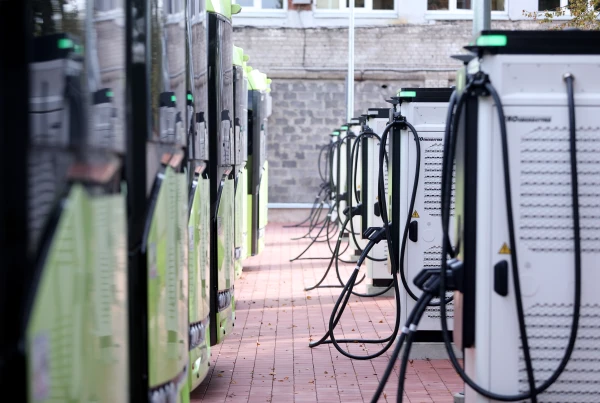
Auditors emphasize that the management of electric vehicle charging infrastructure in Latvia is not sufficiently targeted, and the planning of industry development is not consistent and data-driven. The state has created a foundation for covering the charging station network across the country — 139 stations. At the same time, the electric vehicle charging network incurs an average annual loss of about €380,000, maintaining significant dependence on state funding: from 2020 to 2025, the state covered €2.37 million. Furthermore, due to deficiencies in tariff calculations and cost accounting over five years, the state budget has borne a burden of at least €722,000.
In the audit, the State Audit Office provided nine recommendations to the Ministry of Transport, the Ministry of Climate and Energy, and the Road Traffic Safety Directorate. Implementing these recommendations by 2030 will allow for the inclusion of economically effective measures with real impacts on achieving the transport sector's goals in the NECP while improving coordination between institutions.
Also, when implementing the recommendations, if funding for NECP measures is redistributed, the impact on achieving the goals will be assessed, and compensatory mechanisms will be created in a timely manner, support measures for the development of modern biofuels and alternative fuels will be implemented, a unified state policy for increasing the number of electric vehicles will be established, charging infrastructure will be planned purposefully, subsidies from the state budget for the charging network managed by the Road Traffic Safety Directorate will be reduced, and solutions will be implemented to ensure a just transition with targeted support for socially vulnerable groups.
The State Audit Office will appeal to the Cabinet of Ministers with a proposal to create a unified state support system to mitigate the impact of rising fuel prices on households affected by transport poverty, and will also call for an assessment of the impact of redistributing EU fund financing on achieving the climate goals of the NECP.