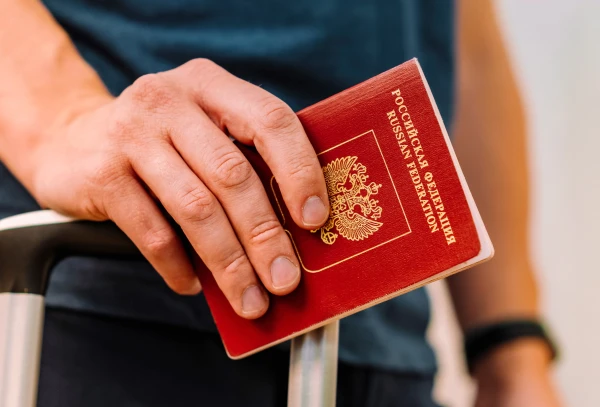
It remains unclear in the country how many people, alongside Latvian citizenship, have secretly obtained or retained a Russian passport.
Since the beginning of Russia's aggression against Ukraine, this group of residents has attracted increased attention. Although the law generally does not allow dual citizenship for Latvia and Russia, it is difficult for security services to monitor this. On Tuesday, lawmakers questioned Latvian security services about this issue, reports TV3 News.
Latvian laws do not permit a person to be a citizen of both Latvia and Russia simultaneously. However, in practice, it is extremely difficult to verify whether a person has secretly obtained a second passport. The state largely relies on the good faith of individuals, and this is currently viewed by politicians as one of the main risks.
Although the Ministry of the Interior indicates that nearly 2,500 individuals with dual Latvian and Russian citizenship reside in Latvia, this number does not cover all cases. Some of these individuals are so-called historical cases, where the second citizenship was acquired before 2013, when different regulations were in place.
Currently, dual citizenship most often arises for children who acquire it at birth — in families where one parent is a Russian citizen. Notably, the number of Latvian-Russian dual citizens has increased fourfold among children, especially after the war in Ukraine was initiated by Russia. In 2014, there were 1,309, while this year there are already 4,231.
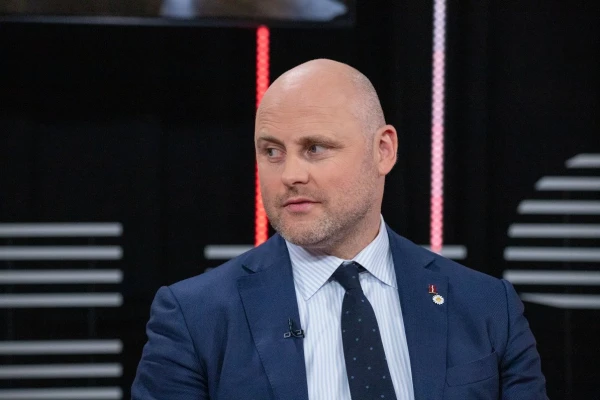
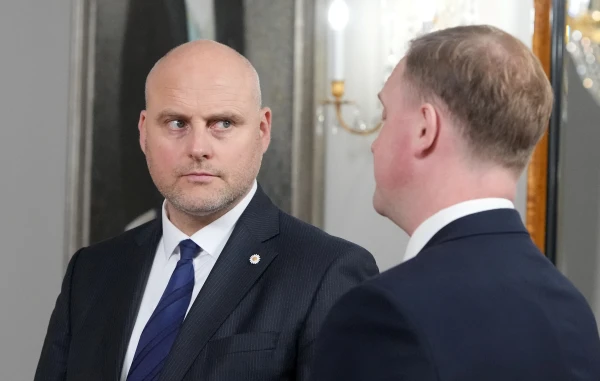
"This issue obviously concerns children, because being born into such families, they acquire dual citizenship until the permissible age of 25," said Vilnis Vitolins, Deputy State Secretary of the Ministry of the Interior, in response to a question from Edvins Snore, Chairman of the Saeima Subcommittee on Internal Security.
The law stipulates that this situation is permissible until the age of 25. After that, a young person must choose only one citizenship. Young people with dual citizenship are not called up for the National Defense Service; however, it cannot be ruled out that among the conscripts there may be a Latvian citizen concealing their Russian citizenship. Therefore, security services check each conscript's actual connections to Russia — for example, whether they studied there or lived with relatives.
"We are asking to involve the Military Intelligence and Security Service for assessment. So far, we have had six cases related to various circumstances in the Russian Federation. In all these cases, it was concluded that the young person does not meet Latvia's security interests," noted Kristers Grauze, Director of the National Defense Service Department of the Ministry of Defense.
However, the main problem remains control. In practice, it is also difficult to verify whether a person has secretly obtained Russian citizenship because Russia does not provide such data to Latvia. The Ministry of the Interior declined to publicly disclose how exactly the services identify cases of dual citizenship, so the meeting continued behind closed doors.
Afterward, Snore noted that dual citizenship is often identified indirectly: "They enter Latvia through Estonia. The crossing point of the Russian border is in Estonia, and from there Latvia receives quite a lot of reports about cases where it turns out that a Latvian citizen also has a Russian passport, of which Latvian institutions were not even aware. Such cases exist, and in fact, all services have acknowledged that this is very problematic."
The actual number of people with dual Latvian and Russian citizenship may be higher, as some individuals simply do not report this fact, and the state is not always able to verify it.
"Since the war has been ongoing and Russia is the aggressor that attacked Ukraine and does not hide that it could also attack other countries, one effectively needs to choose whose side you are on. If you simultaneously hold Latvian and Russian citizenship, then, as the services say, the situation has changed, and there are serious suspicions regarding loyalty risks," explained Snore.
In a situation where Russia continues the war in Ukraine and the security situation in the region has changed, the issue of concealed dual citizenship has shifted from a legal matter to a security concern, journalists clarify.