
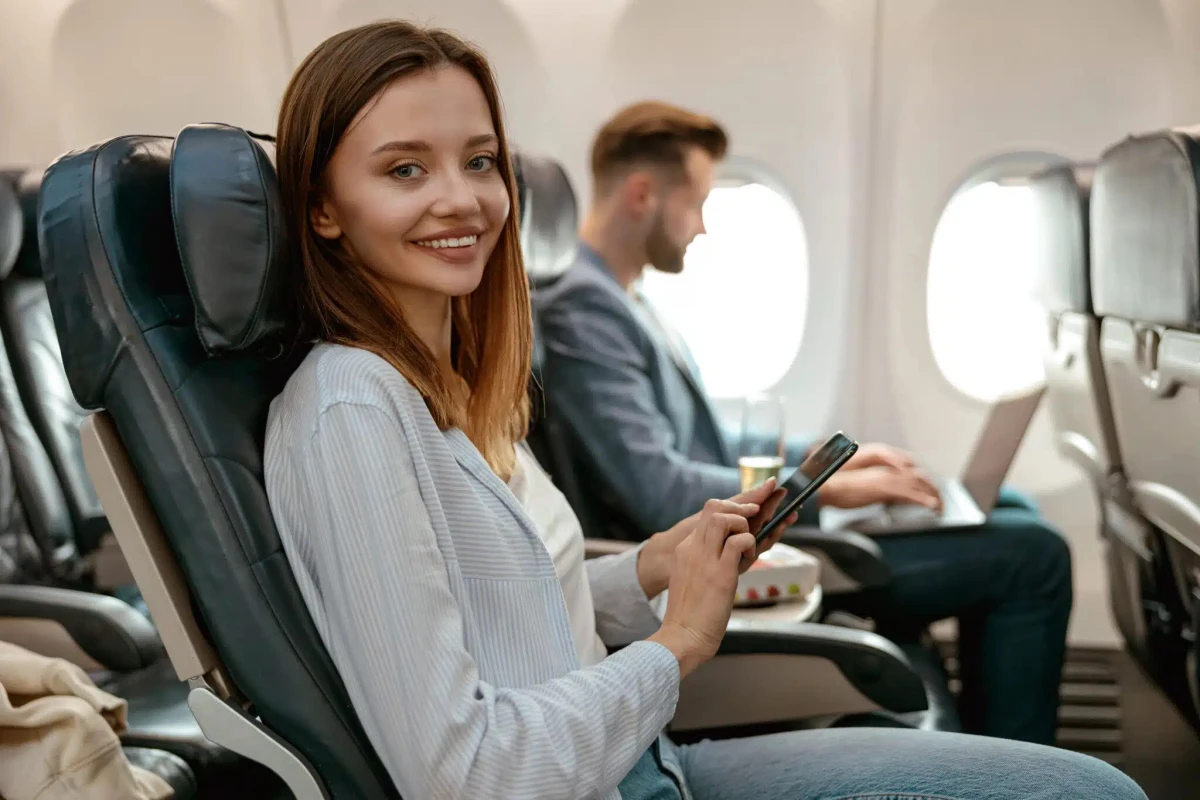
Even an expensive ticket does not guarantee a comfortable flight if the passenger has chosen a poor seat in the cabin. Aviation travel experts have shared which mistakes most often turn a flight into a real ordeal.
Aviation travel experts and frequent flyers say that many inconveniences during a flight are not related to the airline itself, but to mistakes that people make even before boarding the plane. This is reported by Travel + Leisure.
Travel and Transportation
Experts have identified seven common mistakes when choosing a seat that can lead passengers to noisy areas, without adequate space, or even without the promised window.
One of the biggest mistakes experts point out is when a passenger allows the airline to automatically assign a seat. This seems like the easiest option, but it is often the case that people end up with middle seats, near restrooms, galleys, or at the back of the plane.
Travelers note that many passengers do not even attempt to check the seat map before booking. At the same time, a few minutes of browsing can help find quiet rows, avoid areas with constant foot traffic, and choose a more comfortable seat for a long flight.
Experts also advise not to ignore the details on the seat map. It is there that one can notice that some seats have limited recline or are located next to restrooms. Jesse Neugarten, founder and CEO of Dollar Flight Club, explained that the seat map is one of the most useful tools before a flight that can significantly affect comfort during the journey.
According to travel expert and loyalty program specialist at point.me, Jimmy Yoon, passengers often book window seats without knowing that in some planes the window may be misaligned or partially obstructed by the cabin structure. As a result, a person is actually sitting against a wall instead of a window.
Another common mistake is checking in online too late. Experts explain that many airlines open access to additional or previously blocked seats right after check-in starts. Sometimes, the best rows or seats closer to the front of the plane become available then. Jimmy Yoon noted that most airlines open online check-in about 24 hours before departure, and at that moment, passengers can still improve their choice.
Experts also warn against so-called "ideal" seats, which in practice have hidden drawbacks. For example, rows near emergency exits usually have more legroom, but are often equipped with fixed armrests and have limited recline. The last rows of the plane are considered equally problematic due to noise from the galley, constant foot traffic, and minimal comfort.
Additionally, experts advise paying attention to the specific model of the aircraft before booking a seat. According to Neugarten, the same row can be very comfortable with one carrier and uncomfortable with another due to different cabin configurations and seat pitch.
Another mistake is overpaying for seats without real necessity or, conversely, completely refusing to pay extra even on long flights. Experts note that on short flights, more expensive seats do not always justify the expense, while on long flights, additional space can significantly affect comfort.
Passengers are also advised not to hesitate to request a different seat during boarding. According to Jimmy Yoon, gate agents can sometimes move a person to a seat with more legroom or to a more comfortable row if there are free options available in the cabin.
In the opinion of the editorial team, careful seat selection on a plane can significantly impact the travel experience, and a few minutes spent studying the seat map can save a passenger from many inconveniences during the flight.













Leave a comment