
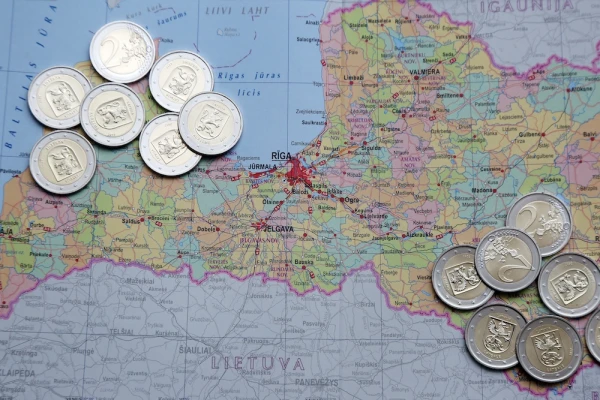
In the context of high fuel prices, one of the ideas that has emerged in the public space of Latvia is the introduction of a tax on excess profits for fuel traders, as they allegedly earn too much from the price increases due to the crisis in the Middle East.
"The tax on excess profits is a path to communism. It's that simple. And as a result, it gives nothing to either the entrepreneur or the consumer, even with price caps in place," stated Liga Lejtane, a lecturer at the Faculty of Economics and Social Sciences at the University of Latvia, on the TV24 program 'The Price of Money', as reported by nra.lv.
Thus, Lejtane supports the Polish approach. According to her, Poland has applied it repeatedly in recent years — both during the Covid-19 pandemic and after the start of the war in Ukraine: the excise tax and value-added tax (VAT) were reduced from different positions, which provided a short-term effect 'here and now'.
"And if we now introduce a tax on excess profits, which will go to the budget (in a year). And then what?" noted Lejtane.
"The example of Poland shows that there are governments that respond quickly to crises. In turn, in Latvia, we first scare people, then try another option, and then wait for everything to somehow sort itself out," added Kaspars Gorkshs, the CEO of the Latvian Confederation of Employers.








Leave a comment