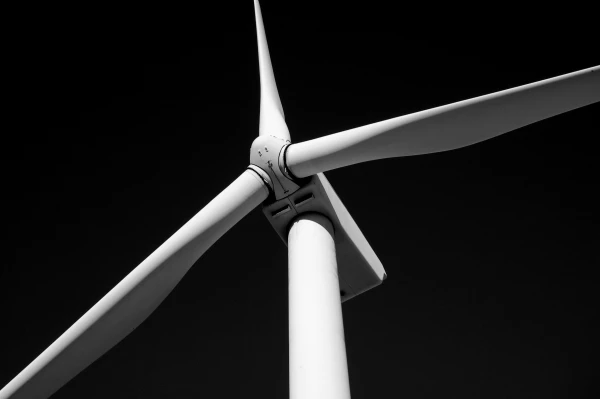
Wind farms are a matter of national security and part of the response in case of a possible attack on Latvia's energy infrastructure, said former European Commissioner for Energy and current representative of Latvia in the support group for Ukraine's EU accession Andris Piebalgs in an interview with the LETA agency.
"The lack of wind farms is important not only in terms of utilizing renewable resources but also in terms of the ability to diversify energy resources in case the energy system of Latvia comes under attack," noted Piebalgs.
He emphasized that it is important to consider the experience of Ukraine. Russia attacked Ukraine in four waves, and the last wave was a massive missile and drone attack with a clear priority on destroying the country's energy system. The vulnerable elements in this case were thermal power plants and electrical transformers.
"If we compare it to Latvia, our infrastructure is even more vulnerable, as our hydroelectric plants and gas stations can also be very easily destroyed. Therefore, our conclusion is that the EU must think about how to protect itself in this regard. In the case of Ukraine, we were unable to do this because the Russian attacks were too massive. Ukraine's energy sector survived because Russia did not touch the nuclear power plants, which could continue to generate electricity. Additionally, Europe showed great solidarity and sent everything it could to Ukraine," said Piebalgs.
Speaking about the possibilities of diversifying Latvia's energy sector, he noted that, for example, building a nuclear power plant takes a very long time, and small modular reactor technologies have not yet appeared on the market. Therefore, wind farms remain, which can help diversify Latvia's energy balance.
Piebalgs added that even from the combat actions in Israel, it is evident: even the best defense system does not guarantee that a missile or drone will not reach its target. Therefore, Latvia should assess the resilience and security of its energy system against such attacks, and wind farms, in his opinion, are part of the solution.
Speaking about Russian attacks on Ukraine's energy infrastructure, Piebalgs acknowledged that, unfortunately, the next winter does not look more favorable, so it is necessary to prepare a sufficient amount of materials for the restoration of power grids and the operation of heating plants already now. Currently, there are no such reserves, so the EU must think about how to help Ukraine while ensuring its own security.
"If Europe cannot produce what is necessary right now, it needs to look for where it can be purchased. It may be necessary to reconsider already concluded contracts for the supply of these materials to other countries, as priority should be given to Ukraine. This needs to be done before autumn because the Russian attacks will not change. The only way for people to survive the winter is to restore the energy infrastructure," emphasized Piebalgs.