Prime Minister: it is necessary to invest in demographics, security, healthcare.
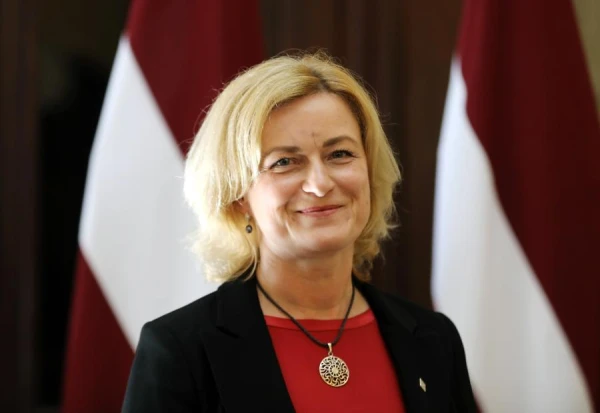
Latvia needs to continue investing in security, healthcare, demographics, and energy, said Prime Minister Evika Silina (New Unity) while reporting to the Saeima on the results of the Cabinet of Ministers' work and upcoming tasks.
Silina noted that the government had to work under challenging conditions influenced by elections, the war in Ukraine and the Middle East, and the changing international and economic situation. Together with coalition partners, specific tasks were identified, and with the support of the Saeima, much has been done to strengthen the security of the state, improve the education and healthcare systems, and support families.
The Prime Minister emphasized that the priorities outlined in the government's declaration—state security, economic development, improvement of education and healthcare, and more effective governance—have been translated into concrete decisions necessary for long-term development, especially in the field of education.
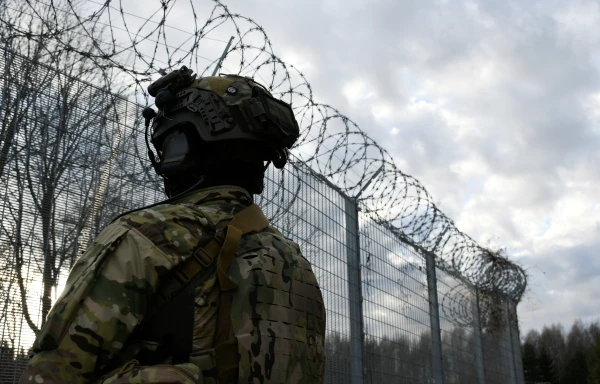
The main task of the government is to strengthen the security of the state. The government has made important decisions in response to Russian aggression in Ukraine, including record defense funding, strengthening the presence of allies, and developing military infrastructure. Significant work has also been done to strengthen the eastern border, noted Silina.
The country's readiness for crises has been enhanced—a Crisis Management Center has been established, shelters are being created, and a notification system has been introduced to inform the public. Salaries in the internal affairs system have been significantly increased, and support for Ukraine continues at military, economic, and political levels, the Prime Minister emphasized.
Speaking about the economy, Silina noted that reforms aimed at reducing bureaucracy, attracting investments, and developing regions are being implemented. State governance has been modernized, including the digitization of services and the establishment of an artificial intelligence center.
Important reforms have been implemented in education—a new funding model for teacher salaries has been introduced, and changes in higher education have been implemented. In healthcare, the restructuring of the hospital network has begun, the pricing model for medicines has been changed, and the range of innovative medications has been expanded.
The Prime Minister emphasized the need to continue investing in security, healthcare, demographics, and energy, as well as to utilize opportunities for cooperation with Ukraine and international partners. She expressed determination to continue working to ensure that the country is safe, developed, and strong.
Earlier, while presenting a report to the government, the Prime Minister pointed out that to date, more than half of the goals of the National Development Plan (NDP) for 2021-2027 have been implemented or progressed towards.
In the report, the Prime Minister reminds that during the implementation of the NDP, Latvia experienced the Covid-19 pandemic, which significantly affected the country's development, societal well-being, and progress towards achieving the set goals. After the pandemic, in 2022, Russia's invasion of Ukraine began, creating a new geopolitical situation that has a significant impact on Latvia.
The Prime Minister's report notes that these circumstances significantly affect public sentiment in Latvia, economic activity, and foreign economic relations.
"Therefore, progress in achieving the NDP goals cannot be assessed solely mathematically—it is necessary to take into account that external factors have significantly influenced and continue to influence their achievement," the document emphasizes.
Overall, as the head of government indicates, 51.4% of the NDP goals have either been achieved or show progress towards achievement. In 8.2% of cases, implementation is stagnating, in 7.5% it has a negative trend, and trends for 21.3% of the goals completely contradict the intended result.
The Prime Minister indicated that in the future, special attention should be paid to achieving goals in areas such as healthcare, education, family policy, capital and business environment, nature and the environment, societal cohesion, and law and order, where the most negative development trends have been recorded.
In addition to the mentioned areas, it is also necessary to focus on improving productivity, innovation, and exports, as achieving goals in this area is a prerequisite for sustainable growth and the effectiveness of other areas, the Prime Minister's report states.