Today at 10:00, the Constitutional Court (ST) will continue the consideration of the case initiated by the deputies of the factions of the Saeima from the National Alliance and the "United List" (AS) regarding the provisions of the Law on Public Electronic Media and their management concerning the use of minority languages in public media.
It was previously reported that, according to the applicants, the contested provisions requiring public electronic media to create a certain volume of radio and television programs in minority languages undermine the value of the Latvian language as the only state language in a democratic society and pose a threat to national security. Therefore, in their opinion, these provisions do not comply with the preamble of the Constitution, which establishes the provision "the Latvian language as the only state language," as well as Article 4 of the Constitution.
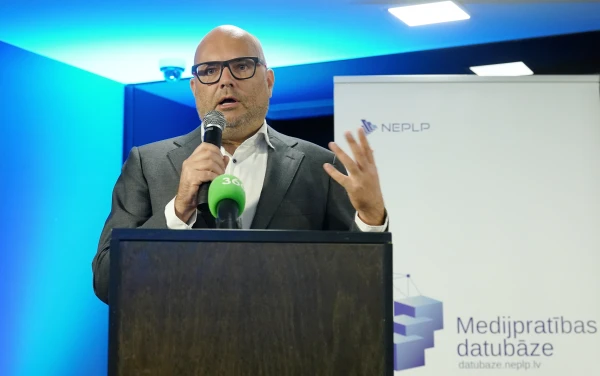
The Chairman of the National Council for Electronic Media (NEPLP), Ivars Abolins, stated during the meeting that the council shares the applicants' position that the contested provisions impose an obligation, rather than a choice, on public media to create content in minority languages. He emphasized that the state is not obliged to follow audience requests, as in this case public media would be forced to create pro-Kremlin content, which is unacceptable.
Abolins noted that there is a distinction between content in Latvian and Russian in public media, which, in turn, divides the citizens of Latvia by language. In his opinion, language alone should not be the only criterion for shaping the information space; however, the contested provision restricts the freedom of action of public media by requiring them to create content in minority languages. He believes that the state must respect minority languages but is not obliged to finance content in these languages, as such content is widely represented in commercial media and social networks.
The Chairwoman of the Council of Public Electronic Media (SEPLP), Sanita Upleja-Egermane, pointed out that identical content in Latvian and Russian would pose a risk of bilingualism, which was one of the reasons for the cessation of Latvijas Radio 4. Currently, the volume of content in Russian in public media has been reduced, and decisions regarding its volume are made based on data and research.
The Head of the Legal and Administrative Support Department of SEPLP, Ina Poriiete, emphasized that the law should not establish specific criteria for creating content in minority languages, as this pertains to the realm of editorial freedom of the media. She noted that a complete ban on creating content in the languages of historical minorities, including Jewish, Romani, and Russian, would contradict the Constitution.
Board member of the Latvian Public Media Holding (LSM), Ieva Aile, noted that the main task of public media is to create content in the state language; however, their main value is the audience and the obligation to address all residents of Latvia. Refusing to create content in Russian, she said, would deprive public media of the opportunity to reach a wider audience.
The differences in content between the Latvian and Russian versions of the LSM portal are explained by the need to adapt materials to specific target audiences, and the choice of content is an editorial decision. Currently, 70% of the content in the Russian-language version of the portal consists of translations from the Latvian version, while the remaining 30% are materials created with the audience's needs in mind, Aile reported.
The ombudsman of SEPLP, Edmunds Apsalons, noted that the current provisions of the law grant public media the right, rather than the obligation, to create content in minority languages or foreign languages. He emphasized that the provisions themselves do not have legal deficiencies; however, their placement in the law may create a misleading impression of their mandatory nature. Excluding these provisions from the law would deprive public media of the right to create content in minority and foreign languages, complicating their work in producing in-demand content.
Apsalons suggested that the discussion may not be about the content of the provisions per se, but rather dissatisfaction with how public media practically exercise their right to create content in minority languages.