
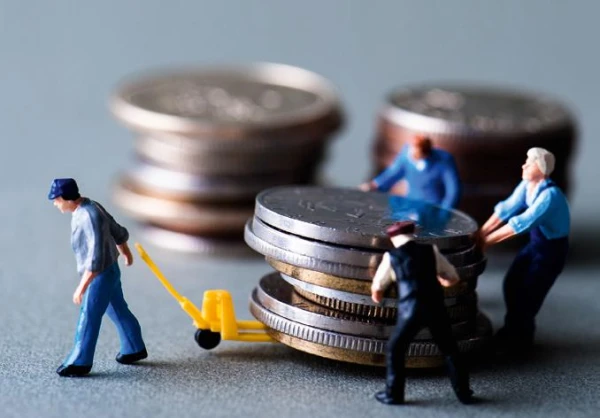
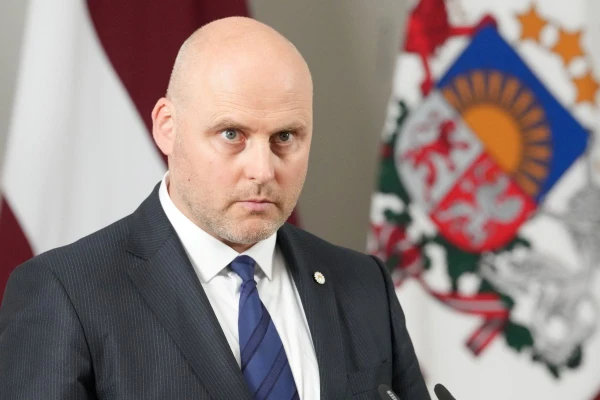
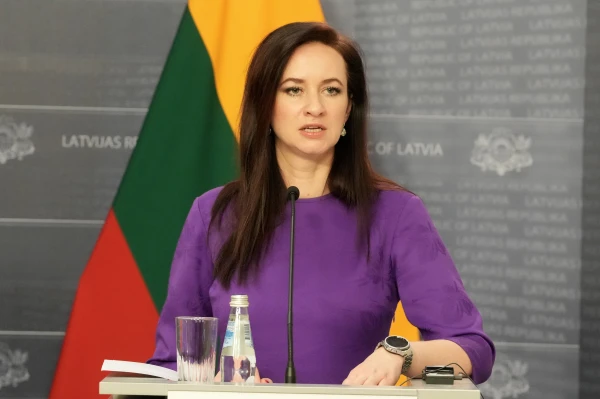
Former Minister of Culture Agnes Logina appeared on TV24's program "Preses Klubs." The conversation discussed the most likely steps of the authorities in the field of taxation.
Logina said that she would not name a specific option as a fact because she does not have information and she "really does not know." But she outlined her principled position: it is important that any changes in taxes do not become a blow to socially less protected people. According to her, tax decisions "should not be such that we protect those people less" who are already vulnerable. Logina emphasized that changes should be "targeted and smart again" — that is, precise and justified, based on the reality in which the country finds itself, and aimed at improving the quality of life for the majority.
She then described the political context quite emotionally: in her opinion, government management constantly lives "in spasm" because there is too little time when politicians dare to take unpopular actions. She called it "madness" and described the cycle: "for two years we will be sprinting," and then again — "caviar, champagne, and elections," when during the holidays everyone will be "treated and given balloons." The idea is that there is currently a limited period when there are no elections and it is possible to make tough decisions, but it is necessary to ensure that this is not done at the expense of those who really need state assistance — families living below a normal standard of living.
Then, during the discussion, a suggestion was made about the most likely step. The logic of the transfer boiled down to the fact that the first to be raised is likely to be P1 (VAT): the increase can be "packaged" under a formulation like "alignment/approaching." At the same time, the interlocutors acknowledge that this decision will directly affect specific social groups. There was a thought that P1 is often perceived in politics as the "last tax," but it is still "ultimately taken on" because it is the most direct and understandable way to quickly generate revenue.
At the same time, the idea of possible compromises was discussed: for example, to reduce the burden in certain sectors — the conversation included an example about restaurants and those whose "survival is almost dead" (that is, businesses that are barely holding on) — and for the rest to apply some uniformly "aligned" solution, conditionally under the general framework "as in the Baltics uniformly." This sounds like a hypothesis: to redistribute the burden so that part of the vulnerable sectors is not "finished off," but at the same time collect money through a broader base.
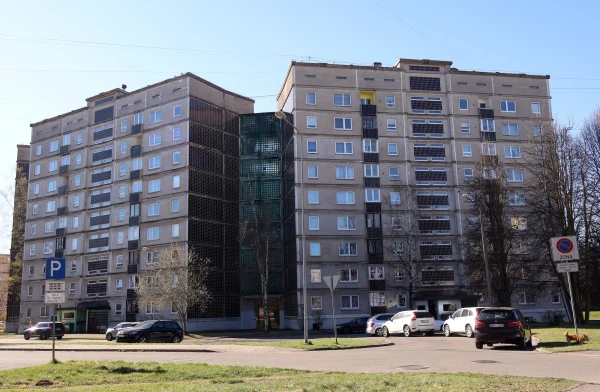
The conversation then turned to another potential source of income — property tax. It was called a "hidden reserve" that can be "activated" at some point. The essence is: there are new assessments/universal values, and if they are used as a base (fiscal value) for calculating the tax, then municipalities will actually find themselves in a situation where they need money, and resistance will be difficult. At the same time, a warning was sounded: society may be shocked because for some people the increase in payments may be very significant. This was described in the conversation as a possible scenario that could lead to a sharp increase in the tax burden on certain property owners.
In the end, the interlocutors return to the forecast: the first step will likely be P1, and the question of property tax may arise later — as a topic for which preparatory steps have already been taken at the regulatory level, and therefore it may become next if the authorities need additional resources.



Leave a comment