
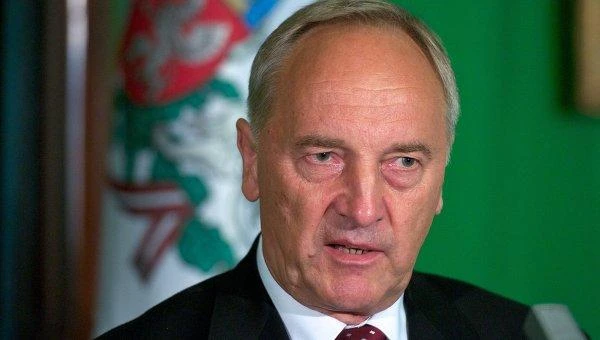
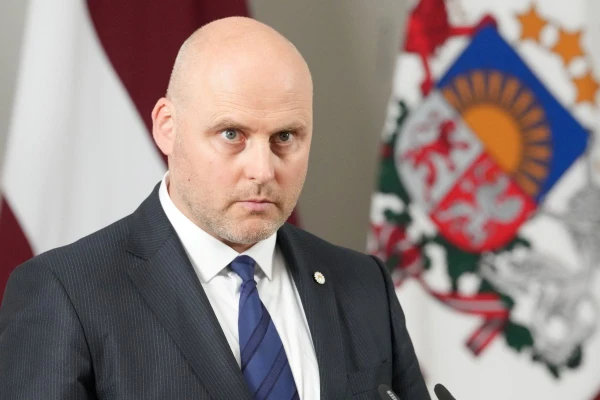
Russia's war against Ukraine may lead to a global economic crisis, and the current borrowing policy and priorities of the Latvian authorities are destroying the country's future. This was stated by Andris Berziņš in an interview with Elita Veidemane from nra.lv.
According to Berziņš nra.lv, over the years of war, not only has people's attitude towards what is happening changed, but also their internal state.
"People have become more closed off. Most do not believe in anything or anyone. Many do not see a future and expect nothing from it. It feels like we are at a crossroads. And not just Latvia — the whole world," he said.
Commenting on international efforts to end the war, the former president noted that numerous high-level meetings have not yet yielded tangible results.
"High-ranking officials are constantly meeting, but whether this will lead to anything is hard to say. Russia is bombing Ukraine with the same intensity," emphasized Berziņš.
He admitted that, despite not having a tendency towards pessimism, the current developments cause serious concern.
"I have never been a pessimist, but seeing how everything is developing, I believe: this war will lead to a global economic crisis. Innocent people are dying. The economy is collapsing. Any sanctions destroy life, the future, the desire to do anything," stated the former president, adding that sanctions cannot "patch up" the world.
Assessing the internal situation in Latvia, Berziņš sharply criticized the rise in public debt and the budget deficit.
"Every resident of Latvia owes 10,200 euros. If each person personally owed such an amount — what would life be like then?" he questioned.
According to him, borrowing tens of billions of euros is unjustifiable.
"Of course, one can borrow 20 billion euros against the future, but this completely destroys the future," believes Berziņš.
As an example of ineffective investments, he cited the Rail Baltica project.
"It is already clear that there will be no return from it. Looking at the population and age structure — who will travel on this train? It’s a road to nowhere," he said.
The former president also assessed the large military investments skeptically, noting that they will not bring economic profit in the future.
Separately, Berziņš commented on the dismantling of railway infrastructure at the border with Russia, calling what is happening "an ironic anecdote."
"One anecdote has already been built — that is the border. Anyone, except for wild animals, can easily cross it. You take some wire cutters — snip and go! It’s hard to imagine a more hopeless investment," he stated.
Speaking about energy, the former president expressed doubts about the effectiveness of wind farms and pointed to possible long-term risks.
"Huge capacities and infrastructure are needed to distribute unstable energy — especially from wind. This will create additional problems," said Berziņš.
At the same time, he mentioned an alternative direction that, in his opinion, could change energy in the future.
"There is a type of energy that could capture Latvia within ten years. This is neutrino energy (cosmic radiation)," he stated, noting that in this case, complex distribution networks would not be required.
Touching on the topic of double standards, Berziņš pointed out the contradiction between supporting Ukraine and continuing trade with Russia.
"It’s like buying Russian oil products through other countries, paying three times more," he said, adding that he always pays attention to the country of origin of goods.
In response to a question about society's fatigue from the war, the former president emphasized that the key task is to achieve its end.
"The world has reached a point where there is no one who can stop this war," stated Berziņš.
In his opinion, the Western world today demonstrates serious contradictions and an inability to make strategic decisions, including on the issue of Ukraine and European security.
Criticizing the agenda of the Latvian authorities, Berziņš noted that attention is paid to secondary topics, while strategic issues remain unresolved.
"The world can be easily deceived: right now the main 'trend' is the Epstein files. It’s much easier to talk about the past than about the future," he said.
In conclusion, the former president outlined the areas that, in his opinion, should become priorities for the state.
"Investments in healthcare and education are necessary because the entire business relies on this. We need to seek a path, not enemies," emphasized Berziņš, adding that without reducing debt and reforming the governance system, it will be difficult for Latvia to survive as a state.


Leave a comment