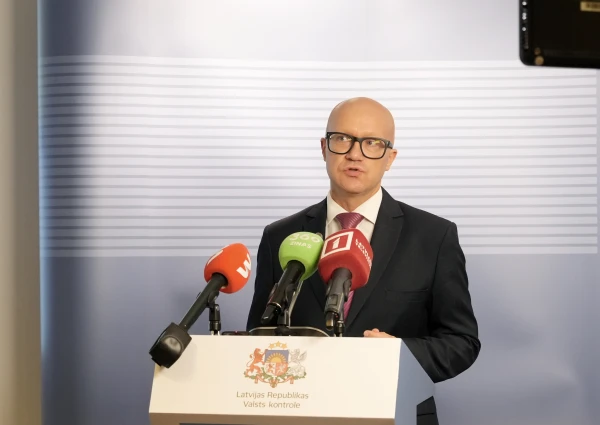
Edgar Korchagin is awaiting concrete decisions from politicians.
“A recently conducted audit by the State Audit Office has shown that the system of bonuses, allowances, and monetary rewards in public administration is formally legal, but in practice often generates inequality and injustice,” said State Auditor Edgar Korchagin in an interview with TV-3.
The head of the State Audit Office explained that the goal of the remuneration reform in public administration was to create a clear and competitive wage system, but this has not been fully achieved. “This has been discussed for decades — about the injustice between the wealthiest and less wealthy public institutions,” noted Korchagin.
The audit concluded that salaries for those in the same positions across different institutions can differ by as much as 30%. “If employees have the same classification, then they should also have equal pay,” he emphasizes, noting that the differences often lack objective grounds.
The audit found that in some institutions, allowances for achieving strategic goals are paid year-round and to more than half of the employees, which “degrades any meaning of this allowance.” Performance evaluations are also often overly favorable — in some places, up to 90% of employees receive the highest rating.
The State Auditor emphasizes that such a system contributes to employee turnover between institutions and internal competition. “There are institutions where turnover reaches up to 40% per year,” he noted. The greatest injustice arises in situations where some institutions “maximize bonuses, allowances, and super ratings,” while others cannot afford this.
To change the situation, unpopular political decisions and a reassessment of the remuneration budget are necessary. “Nothing happens there without politicians,” said Korchagin, adding that responsibility also lies with the heads of institutions, who must ensure a fairer and more transparent wage system.