
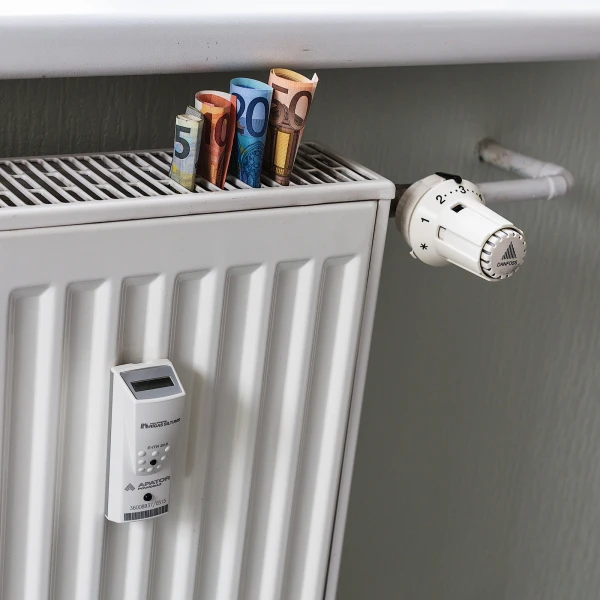
The pre-election months promise us an attraction of unprecedented generosity. Government agencies are considering "Possible Solutions for Paying Increased Heating Bills," prepared by Minister of Economics Viktors Valainis.
Winter of Our Anxiety
According to aggregated data from the Latvian Environment, Geology and Meteorology Centre, negative temperature records were set in the country in January-February, with temperatures dropping to minus 30 degrees Celsius in some areas – it was the harshest winter in 15 years. At the same time, electricity consumption significantly increased in the first two months of 2026 — in January, according to the transmission system operator AS Augstsprieguma tīkls, it rose by 15% to 780 GWh, the highest figure since January 2010.
The Ministry of Climate and Energy reports that the increase in electricity consumption in Latvia and neighboring countries was due to a significant drop in air temperature, resulting in more electricity being used for heating. "The rapid growth in energy consumption and unusual weather conditions also contributed to the rise in wholesale electricity prices (in January 2026, the average electricity price in Latvia increased to €153.43 per megawatt-hour, which is 83% higher than in December), thus further increasing the burden of electricity consumption costs for those residents who purchase electricity under a trading contract linked directly to the wholesale electricity price."
Overall, according to the Public Utilities Commission, such variable price contracts were used by 16.18% of households at the end of last year.
Two Options
In Latvia, two types of payment for heating services have formed:
-
Some households pay the companies providing heat directly. "This method of payment is more popular in cities or regions with fewer houses and more active participation from residents (for example, Ventspils, Jelgava, partially Liepaja)."
-
Indirect payments mean that apartment owners transfer payment for the services received to the property manager or another authorized person, who then pays the service provider. In this case, one bill is issued for the entire building, which is then distributed to the individual accounts of each apartment owner based on the established order for determining, calculating, and accounting… through the property manager or another authorized person. Payments mediated by the manager dominate in Riga, where direct payments occur only in a small number of buildings.
Daugavpils Tariff
The municipal capital company AS Rīgas siltums announced a moratorium on payment delays in January of this year. The capital's utility providers were joined by regional colleagues. In particular, in the Sigulda region, Siltums KIM and Adven Sigulda do not apply penalties; in the Ogre region, winter bills can be paid without penalties in the summer to the companies Ogres Namsaimnieks, Ikšķiles māja, Lielvārdes Remte, Ķeguma Stars. Rēzeknes siltumtīkli received a similar proposal from the municipality.
The municipality of the state city of Daugavpils went further than others: a local energy crisis was declared, and Daugavpils siltumtīkli was instructed to reduce the temperature in buildings by 4 degrees.
The Daugavpils tariff is one of the lowest in Latvia and is more than €10/MWh lower than the average price of thermal energy in other cities in Latvia. Thus, in the country's second city, "very high costs for thermal energy… are not expected."
Latvenergo Waits Until the End of March
This month will be crucial for settlements with the generating company, which is still showing "flexibility" and has not disconnected delinquent users. At Latvenergo, as stated in the Ministry of Economics document, "they are closely monitoring customer reactions and feedback on payment practices."
A similar approach is being implemented by other systemically important enterprises. "Rīgas namu pārvaldnieks has stopped applying penalties for late payments, establishing a moratorium until May 2026. Under normal conditions, when sanctions are in effect, late fees are charged at a rate of 0.01% of the overdue amount for each day of delay. This seems quite merciful – only 3.65% per annum.
A similar moratorium on the application of late payment interest has also been established by SIA Rīgas ūdens."
Becoming a Protected User
In accordance with the Electricity Market Law, a protected user receives a benefit of up to €25 per month. According to the State Construction Control Bureau, the following companies are currently reducing payment amounts: Latvenergo (Elektrum), tet, ENEFIT, Latvijas dzelzceļš, Virši Renergy, and others.
As a result of amendments for protected users, support is expected to be established from March 1, 2026, to March 31, 2026, in the following amounts:
-
For a needy or low-income household (individual) – €40;
-
For a family (individual) with a child with a disability – €40;
-
For a person with a Group I disability or their caregiver – €40;
-
For a large family – €75.
According to the protected user data information system (ALDIS), in January 2026, the total number of protected users receiving support was 91,777, with a total support amount of €2,028,723, including:
-
33,806 large families, with a total support amount of €851,329;
-
33,387 needy and low-income individuals, with a total support amount of €669,794;
-
24,584 individuals with Group I disabilities, their caregivers, and families with a child with Group I disabilities, with a total support amount of €507,600.
Who Saw the Biggest Increase in Bills
On average, for a 2-room apartment (45 m²) of the "Lithuanian project," the potential bill for heating and hot water at the beginning of 2026 increased by 75% – from €95 in December to €166 in January.
But what about the touted insulation? The Ministry of Economics notes that "the cost per square meter has significantly increased in both renovated and unrenovated apartment buildings (approximately 1.7-2 times). However, in renovated buildings, the bills remain significantly lower, and in cold weather, the increase in expenses in unrenovated buildings becomes even greater."
The ministry sees the solution in the population's request for housing benefits. The Ministry of Economics will report to the government on the results of the heating season by April 30.



Leave a comment