Very soon, 2026 will come into its own. Let us summarize the results of 2025 - highlighting the brightest moments in the political and economic life of Latvia. Moreover, the burden of unresolved problems from 2025 will fall on our country in the coming year.
Unsinkable Government
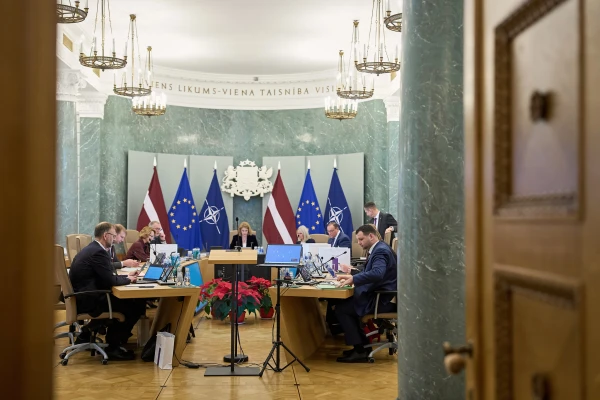
The outgoing year has shown that even if the government breaks all records for unpopularity, even if all ministers have negative ratings, even if the ruling coalition has a minimal majority in the Saeima, and even if there is a split and discord within the coalition... this is still not a reason for a government crisis! As long as the partners in power are not ready to give up this power, the government continues its work.
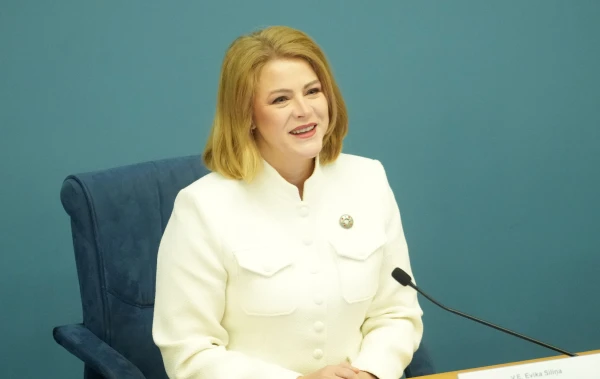
At the end of last winter, specifically in February, Prime Minister Evika Silina announced a sort of restart of the government, which manifested in the replacement of three ministers and the proclamation of four main priorities:
- external and internal security,
- demography,
- economic breakthrough,
- combating bureaucracy.
With this clever political move, the Prime Minister killed two birds with one stone: she prevented a government crisis (the “Progressives” refused to “change” the Minister of Transport Brishkens unless one minister from each of the two other coalition parties was dismissed) and, with the help of “new” priorities, somehow made the voters “forget” that there are actually many more problems facing the government than those stated in the restart plan!
Defense, Children, and Bureaucrats
To be fair, it should be noted that decisions were made regarding the stated priorities in the context of the 2026 budget. Thus, nearly half a billion euros were additionally allocated for defense and internal security – mainly funded by loans, that is, credit funds.
Almost 95 million were additionally directed towards demography – however, only two types of benefits will be increased: for childbirth and for childcare in the first one and a half years of life. Will these limited measures of support for families contribute to an increase in birth rates? That seems doubtful...
Meanwhile, the birth rate this year continued to set anti-records – in the first 10 months of this year, 9,900 children were born, which is 10.1% less than in the same period last year. Thus, by the end of the year, the birth rate will amount to just over 11,000 children. For comparison: exactly 20 years ago, 21,879 children were born in a year, and 10 years ago – 21,979 children.
The rapid decline in the birth rate began in 2020, and new anti-records have been set every year since. Last year, 12,887 children were born, meaning that over the past 10 years, the birth rate has nearly halved!
The fight against bureaucracy has also begun – however, everything is happening at a snail's pace. And should we be surprised if until recently, the fight against bureaucracy was carried out by the bureaucrats themselves! Now, however, at the initiative of the Prime Minister, the banner of the fight against bureaucracy has been taken up by a representative of the business community – one of the leaders of the Chamber of Commerce, Janis Endzins.

As for the economic breakthrough, well... the steam has gone into the whistle. Yes, at the end of the year, the economy showed signs of some movement, but the level of economic growth in Latvia is one of the lowest in the EU – in Lithuania, for example, growth is twice as high!
Problems on Land and in the Air
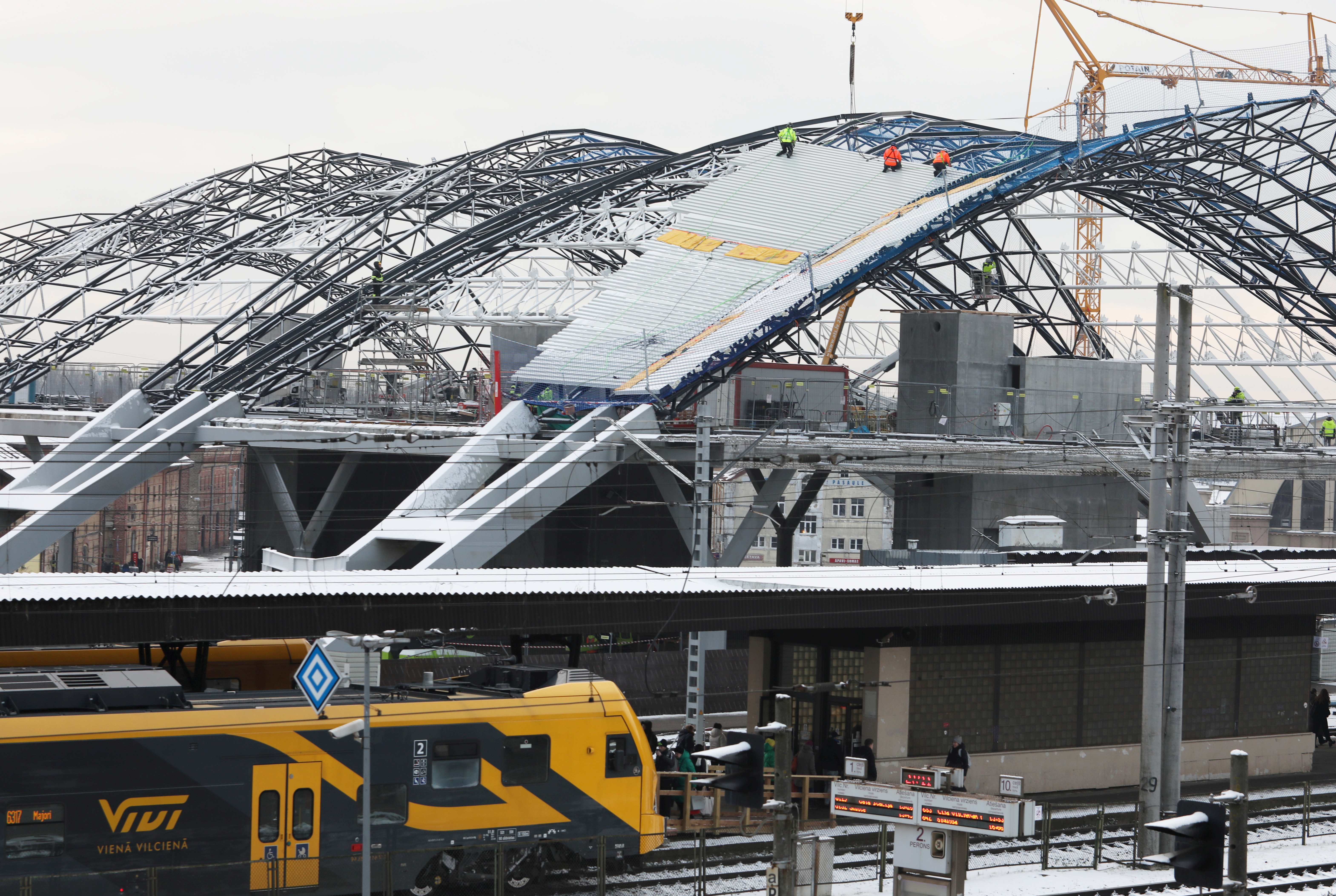
In the “shadow” of the priorities, two mega-problems in the transport sector have remained – on land (Rail Baltica) and in the air (airBaltic). Over the year, the government has not managed to solve the issue of funding sources for the implementation of internal Rail Baltica projects (connections with the railway station and Riga airport), nor has it increased the efficiency of the project's implementation.
LETA
If we talk about airBaltic, then over the year, the promises to list the airline's shares on the stock exchange and stabilize its financial situation remained just promises. Now the Prime Minister has already started talking about the need for some alternative development options for airBaltic. It is clear that all the problems of the national airline will smoothly flow into 2026.
By the way, regarding the listing of shares on the stock exchange. This year, a real bombshell was caused by the government's information message analyzing the possibilities for the privatization of strategically important enterprises, including “Latvenergo” and “Latvijas valsts meži”. If this was a probe of public opinion, it was clearly unsuccessful – a scandal erupted, and the authorities hastily abandoned the idea of listing the shares of large state-owned enterprises.
The capital authorities also quickly shelved the plan to privatize the largest municipal enterprise “Rigas namu parvaldnieks” (RNP) with a “blitzkrieg” approach. However, it is not difficult to guess that next year attempts to sell the controlling stake in RNP will continue.
Taming Prices
The government's attempt to “tame” food prices also ended in failure. Recall: at the end of summer, a memorandum was signed between the Ministry of Economics and representatives of retail chains to create baskets of products with the lowest price in each segment and a mechanism for informing consumers online about product prices (special portals with prices). And although indeed, in stores, one type of cheaper oil, eggs, or milk has appeared, it is clear that this “trick” could not stop the price increase process.
It was precisely the rise in food prices throughout the year that maintained a high level of inflation in Latvia. Only at the beginning of December did food prices stabilize, and inflation, albeit slightly, decreased – to 3.9%. The Bank of Latvia predicts inflation at 3% next year, which is already, in principle, not bad.
Istanbul Syndrome
Despite all the prerequisites, the Silina government did not collapse in the outgoing year. Even the scandal surrounding the Istanbul Convention did not topple it, but merely rocked the governmental boat.
Recall: in early autumn, the right opposition initiated the process of Latvia's withdrawal from this convention. The “Green Farmers” coalition unexpectedly joined this initiative. The two ruling parties remaining in the minority on this issue – “New Unity” and “Progressives” – could not slow down the adoption of the corresponding bill in parliament, and it was passed.
However, the right opposition and the “Green Farmers” did not even have time to uncork champagne on this matter – Rinkevics came to the aid of his former party members, who for the first time in 2.5 years as head of state returned the bill back to the Saeima with a recommendation... not to consider this law in the current parliamentary session!
Then something politically inexplicable happened: the opposition United List and National Alliance, together with “New Unity” and “Progressives”, supported the president's recommendation, and the bill was effectively buried. The “Green Farmers” decided not to participate in the vote at all!
How such a sharp change of position, or what many consider a betrayal of voters by the three right-wing parties, will affect the election results – we will see in October 2026. For now, we can observe the “rating” consequences – a public opinion poll in November showed a decrease in support from citizens for both the LR and the “Green Farmers” and representatives of the National Alliance.
It is clear that the National Alliance will now try to restore voter trust through “routine” language issues and the introduction of various initiatives in the spirit of wartime. Already at the end of the year, the National Alliance proposed to dismantle the rails towards Russia and to prohibit employers from posting job advertisements in any language other than the state language.
Recall that the National Alliance had previously issued a Declaration before the municipal elections, which essentially provided for a ban or restriction on the use of the Russian language in the public sphere. However, the Declaration was sent to the long-term shelf, like most other provocative initiatives of the National Alliance. Although it cannot be ruled out that some radical projects – for example, the proposal “from the people” to deprive citizenship and deport disloyal individuals – may be advanced closer to the elections in the relevant Saeima committee.
Latvia Surprised All of Europe
The proximity of the elections is evidenced by the completely unprecedented decision of the authorities... to mix tax policy with language policy! Yes, we are talking about an amendment to the Value Added Tax Law, which deprives the preferential VAT rate of 5% for periodic publications (newspapers and magazines) in the Russian language, as well as books in Russian and electronic subscription publications in Russian. For these “foreign language” publications, a rate of 21% will be established from January 1, which means an increase of 16 percentage points!
At the same time, along with the state language, the preferential rate is retained for periodicals and books in other official EU languages and the languages of EU candidate countries, as well as the Organization for Economic Cooperation and Development.
Nothing like this exists in the European Union! How can a tax rate be dependent on... the language of the publication! Moreover, Latvian companies that pay taxes and participate in free competition – as is customary in the European Union – have been deprived of the preferential VAT.
The Coup That Did Not Happen
It should be noted that 2025 was the second year of a three-year period of continuous elections – the year before there were elections to the European Parliament, in 2026 we are expecting Saeima elections, and in the outgoing year, citizens of the LR elected local governments.
A kind of mini-sensation was the elections (or rather their consequences) in Riga. Contrary to predictions, no coup occurred in the city council: the winning party – “Latvia First” – remained in opposition, and after a break, a representative of the “Progressives” returned to the mayor's chair in Riga. The new ruling coalition almost completely replicated the coalition at the beginning of the previous term of the Riga City Council.
Whether Mayor Kleinbergs and his associates will remain in power until the next municipal elections, that is, until 2029, is hard to say. This will largely depend on the political landscape after the parliamentary elections in October 2026 and on how the disputes in the coalition regarding the aforementioned issue of privatizing the Riga Housing Management will end.
Elections Without “Saviors of the Homeland”
As for the upcoming parliamentary elections, President Rinkevics is absolutely right – the election campaign has started unusually early. This is explained by fierce competition – both on the left and right flanks.
However, the attempt to play the story of the savior of the homeland failed. Recall: two months ago, the well-known director Alvis Hermanis came out with a loud initiative to create a movement for revolutionary changes in the electoral system. He and a group of less well-known like-minded individuals launched the project “Without Parties”. The proclaimed goal was to achieve the actual abolition of parties and to switch to electing all deputies from single-member districts.
It is difficult to say what exactly Hermanis expected – enthusiastic cheers from the workers, a queue to join his movement, or a throng of sponsors ready to invest in this project, but ultimately nothing of the sort happened in 2 months. And the director lost his nerves – he recently stated that he was disappointed in Latvian society, which is passive and does not want to fight for a better Latvia.
Hermanis not only eventually left the “Without Parties” movement, but also effectively sank it by stating that this movement was a project of politicians associated with “New Unity” – former advisor to Silina Armands Broks, Saeima deputy Anda Chaksha, and former party secretary Artis Kampars were named. From this, one can conclude that the attempt to create a new party again for the elections, which would “capture” the votes of the protest electorate (similar to the parties of Kaimiņš and Gobzems), has failed.
Hoping for the Best
However, even without Hermanis, the 2026 election campaign promises to be very dynamic and heated. It is unlikely that anyone can predict the election results today.
But it is clear that populism will be off the charts, and the outgoing parliament can be expected to produce many legislative surprises, not always with a “plus” sign. However, let us lift our spirits and hope for the best!