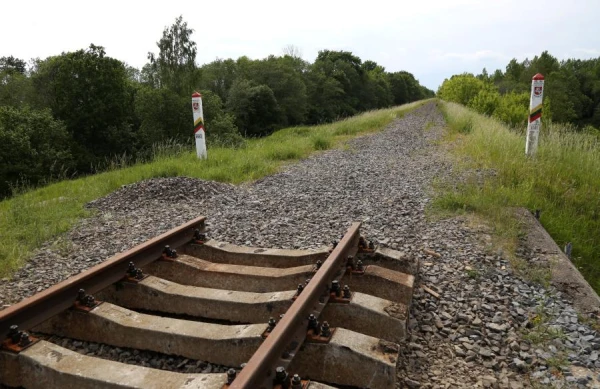
A year ago, the government instructed the Ministry of Transport to work with the companies implementing the "Rail Baltica" project to reduce overall expenses and present a report on the maximum allowable funding by July of this year, public media report.
Such a report has not yet been considered by the government, although politicians and officials have repeatedly spoken about optimizing costs for "Rail Baltica."
Information available to the Latvian Television program "What is Happening in Latvia?" indicates that savings of several hundred million euros could be achieved by reducing the construction of noise barriers, road overpasses, tunnels, and embankments; however, this still represents only a small part of the missing funding, which is measured in billions. Moreover, rising prices and other risks, instead of optimization, could lead to even greater cost increases for the project.
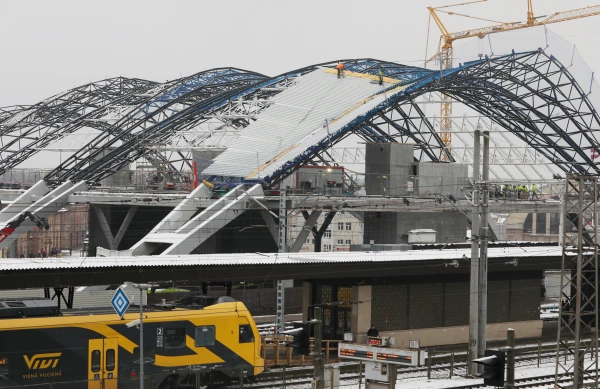
Last week marked a year since the government approved the construction scenario for the "Rail Baltica" railway corridor, stating that the first phase of the project must include the construction of a route from the border with Lithuania to the border with Estonia, stations in the center of Riga and at the airport, their connection, and at least four regional stations. Last summer, the State Audit Office published a report indicating that the costs for the "Rail Baltica" project in Latvia could reach €9.6 billion—almost five times more than previously anticipated. In December of last year, the costs for the implementation of the first phase were estimated at nearly €6.5 billion, including the connection to the capital, while the costs for connecting with neighboring countries, or the main route, were planned at €4.55 billion.
No matter how you calculate it, none of these figures correspond to the 20% cost reduction requested by Prime Minister Evika Silina. It remains unclear what the basis is for requesting such a volume of savings. Available public information and data held by the program suggest that at the expectation level, the cost reduction for the main route is estimated at about 15% of the previously planned amount, but without accounting for its increase due to inflation.