

The Cabinet of Ministers on Tuesday conceptually supported the proposals developed by the Ministry of the Interior (MoI) to improve the regulations regarding the stay of third-country nationals in Latvia, however, corresponding amendments to the legal acts need to be prepared for their implementation and then approved by the government and the Saeima.
The proposals included in the report, which the government reviewed on Tuesday, concern the areas of education, employment, tax, and immigration control. All agencies responsible for implementing the measures outlined in the report will have to report to the Ministry of the Interior on the progress of their implementation by March next year, and the ministry will present a comprehensive report on progress to the government by September 2026.
Among the planned measures, first-year students from third countries at all universities will be required to make a financial security contribution, which will cover the costs of returning the foreigner to the country from which they arrived in the event of visa or residence permit cancellation.
The Ministry of the Interior notes that this condition will encourage applications from students genuinely interested in studying in Latvia, rather than, for example, in working. The contribution will confirm the seriousness of the students' intentions and ensure coverage of their expenses during their stay or return in case of discontinuation of studies. Thus, this condition may become an important tool for reducing the risks of abuse of entry and stay rules.
In addition, for students from third countries, it is planned to revise the list of organizations conducting English language proficiency testing equivalent to a state examination. This is necessary to prevent cases where citizens from third countries with very low or virtually zero language proficiency are accepted into Latvian universities for studies in English.
To minimize the risks of abuse, the proposals for students from third countries plan to change the existing procedure and exclude the possibility for universities to simultaneously invite family members of undergraduate and graduate students.
The right to family reunification is not provided for in the European Union Directive regulating the entry and stay of third-country nationals for research, study, internships, voluntary work, participation in school exchanges, or educational projects, as well as for guest nanny work. The possibility of inviting family members is planned to be retained only for doctoral students to attract highly qualified specialists from third countries to the Latvian labor market.
Furthermore, the Ministry of the Interior proposed amendments to the Cabinet of Ministers' regulations requiring foreign students, except for first-year students, to confirm the availability of sufficient financial resources for the last six months or prove it through the payment of the relevant financial security contribution to the educational institution.
According to current immigration legislation, third-country nationals - foreign students - must confirm the availability of sufficient financial resources to obtain a residence permit. In practice, there are often situations where an individual does not have such resources, and various circumvention methods are used to obtain the necessary certificates. For example, a foreigner may borrow the required amount, open an account in a credit institution, deposit these funds there, obtain a balance certificate, and then withdraw the money from the account and repay the loan; similar schemes may be used by other candidates for study.
The Ministry of the Interior has information that certain educational institutions practice implementing a financial security system by depositing the student's financial resources into a financial security account, from which the student is issued a corresponding amount monthly.
Since such a practice helps prevent the dishonest use of someone else's funds as proof of the student's financial viability, it is advisable for the Cabinet of Ministers' regulations to stipulate that a certificate from the educational institution confirming that the student has deposited the necessary amount into the financial security account administered by that institution will be considered sufficient proof of financial resources.
Specific measures are provided regarding the employment of third-country nationals, including a ban on enterprises providing labor supply services from inviting foreigners for employment.
Many of these agencies simultaneously obtain employment licenses in Latvia and in other EU countries, often employing citizens in various EU/European Economic Area states. According to the Ministry of Foreign Affairs, this increases the risks of illegal migration and human trafficking.
To minimize these risks and ensure that workers invited through agencies actually come to Latvia to work for a specific employer, it is planned to establish the following: employers will still be able to select workers through agencies, but the employers themselves will be required to issue an invitation to the selected worker, thereby taking full responsibility for them, rather than relying on the agency to provide the worker.
The summarized information from the Ministry of Welfare indicates that in 14 EU countries, legal regulation does not allow employment agencies to invite third-country nationals.
Furthermore, in light of the aforementioned risks and the findings of the report, it is planned to assess and revise the procedure for granting permission to attract third-country nationals for work in simple professions. Various options are being considered in this assessment, including a complete ban on the admission of third-country nationals in this category, as well as the possibility of linking the right of an enterprise to invite workers to the tax payer rating in the State Revenue Service. However, these restrictions will not apply to seasonal workers.
Amendments to the immigration law are planned to be developed, which will prohibit members of the board of a commercial enterprise from inviting foreigners, including in cases of registering a new commercial entity.
According to the current immigration law, a commercial enterprise that violates the rules for employing foreign nationals may be banned from attracting foreigners for up to three years. In practice, there are cases where a board member of such an enterprise registers a new commercial entity and continues similar violations.
The Ministry of the Interior explained that to prevent such situations, it is advisable to include a provision in the immigration law stating that the ban on inviting foreigners applies to all commercial enterprises where a board member already subject to such a ban operates.
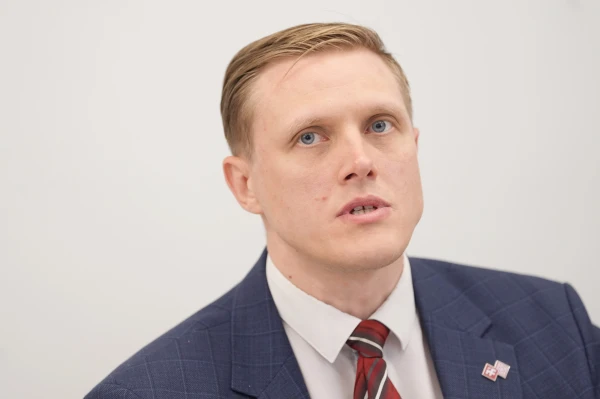
Minister of the Interior Rihards Kozlovskis proposed to supplement the protocol decision with a provision that the implementation of the proposed measures will not worsen the situation for students from NATO countries.
Justice Minister Inese Lībiņa-Egnere, who chaired today's meeting, noted that the exception should apply not only to students from NATO countries but also to workers from various sectors of the economy from these countries. The minister called for a solution on this issue, and other government members did not express objections.
Economy Minister Viktors Valainis noted that immigrants must comply with regulations and be held accountable for violations, but it is also important to consider their significance for the development of the economy. He urged approaching these issues with regard to the specifics of each sector.
Overall, the ministers approved the prepared proposals, although some members of the government expressed objections to certain ones.







Leave a comment