The deputies in the Saeima will surely 'struggle' with the budget-2026 and the package of bills accompanying it. But what next? Will the government address other equally, if not more important problems and challenges?
And will we have the Silina government after the budget, or will there be an 'expected' government crisis, and the chaos in power will become even longer and deeper? There are no answers to these questions. While waiting for answers, let’s analyze the situation in which Latvia finds itself — in the context of the 'interim' (or perhaps already final) results of the work of the government of Evika Silina.
The Ability to Borrow
We have already expressed our opinions about next year’s budget multiple times, so let’s summarize briefly. First — the budget-2026 has solidified the course of all recent Latvian governments… towards living on credit — the borrowing rates are such that even those Latvians who do not 'suffer' from financial literacy and have accumulated an incredible amount of loans would envy them. According to the most optimistic forecasts, by 2028, the external debt will approach 55% of GDP! Already next year, Latvia will pay almost 700 million euros for debt servicing, and by 2030, more than 1 billion euros will be spent annually on debt servicing!
No radical cuts in administrative expenses have occurred; moreover, the budget does not foresee either freezing salary growth in public administration or even establishing a ceiling on salary growth. However, the ceiling set this year — at 2.6% — is still ineffective: in reality, expenditures on remuneration in budgetary institutions have increased by almost 7%!
The planned expenditures in the budget-2026 exceed possible revenues by almost 2 billion euros! The saddest thing is that during the budget discussions — both in the government and in the Saeima committees — there were no proposals on how we will actually earn, how, through what means, the budget revenues will grow. If it is only through raising certain taxes, excises, and duties, then practice has shown that such a system does not work — the sharp increase in the capital gains tax rate this year (25.5% instead of 20%) had the opposite effect — revenues from this type of tax only decreased!
Breaking is Easier than Building
We have not yet learned to create, but politicians have plenty of ideas for destruction! Just consider the 'fresh' initiative… to cut or dismantle the tracks in the direction of Russia! The pretext is that eliminating the railway track in the eastern direction will improve our security and it will be more difficult for a potential aggressor to deliver military equipment and other cargo. Following this logic, we should also dismantle or blow up the road surface in the direction of the RF and RB, since cargo, including military, can also be delivered by trucks!
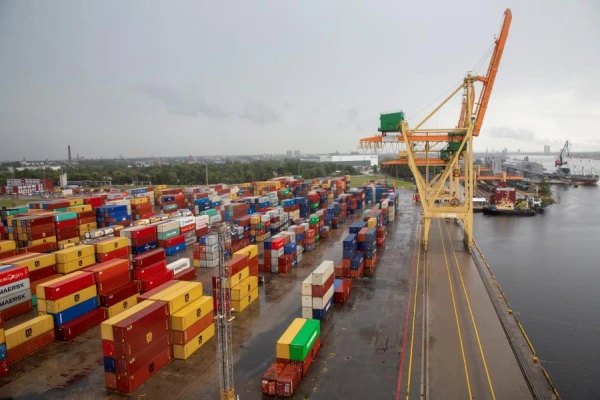
Probably, those who propose such a 'smart' idea completely do not understand that a railway is not just 'sleepers in some direction,' but important arteries without which ports cannot function properly. Moreover, this is not just the Latvian railway, but a transit corridor from West to East (and this is not only and not so much Russia) and back. Not to mention that everything in this world changes: if the war, including sanctions, eventually ends and the process of international trade involving the RF and RB resumes, what will we do then? Delegate all business to Lithuania and Estonia, while we continue to live on loans?!
After all, if events go according to the worst-case scenario at some point, even the experience of the Second World War shows that it is much easier to destroy a railway than to restore it. Dismantling certain sections of the road can be done in the shortest possible time.
It is amusing to hear conversations about how we no longer need a 'broad gauge railway,' since soon there will be a new gauge — narrow, which will connect the south and west, and cargo will go precisely in that direction: from west to south and from south to west. Firstly, it is still unclear what exactly cargo we will be transporting, and secondly — it is unclear when Rail Baltica will be built and put into operation. The deadline of 2030 already looks unrealistic.
By the way, amendments to the law on the implementation of the project of the century have been submitted to the Saeima, which designate the responsible ministries for the implementation of Rail Baltica and outline the stages of construction. However, the acceptance of these amendments will not bring money for this project into the budget.
Failure, More Failure...
The Silina government has not demonstrated particular effectiveness in its 2.5 years of work. Judge for yourself. Alongside the complete inability to effectively control and implement Rail Baltica, the government has also failed to bring the national airline to the stock market, the promise to activate stock transactions in the country and thereby attract investments has remained just a promise, and the struggle of the Silina government… with rising food prices has ended in complete failure. 'To the surprise' of politicians, in a market economy and under the dictate of retail chains, the government’s 'medicines' for inflation do not work.
Due to disagreements within the coalition, the port reform has 'frozen,' and now the power partners have also quarreled over the issue of writing off the debts of the Ventspils port management...
This list of 'successes' of the Silina government could go on and on. But one thing is clear — the executive power of Latvia has nothing to boast about. Neither in terms of boosting the economy and increasing budget revenues, nor in terms of implementing mega-projects, nor in general in terms of creation.
Maybe It's Time to Stop Suffering?
'Isn't it time to end this agony,' you may ask, referring to the Silina government. But, as practice shows, the fate of the government depends little on the effectiveness of its work — it depends on the ability of coalition partners to… 'live in harmony' and ensure the necessary majority in the Saeima. The Silina government also has big problems with this.
However, everything will soon be clear: after the budget is adopted, the three coalition parties intend to sit down at the negotiating table and decide whether they are ready to continue working together or… it is time to end the suffering and allow another government (another ruling coalition) to govern the country, as there are still 10 months until the elections.