Even those of my acquaintances who are not interested in politics at all recently couldn't help but ask: "What is this Istanbul Convention and why is there so much noise about it?"
For more than two weeks, the entire political agenda has been focused on this unfortunate convention. Against this backdrop, everyone has already forgotten about the key issue for the government — the budget-2026.
And will violence reign everywhere?
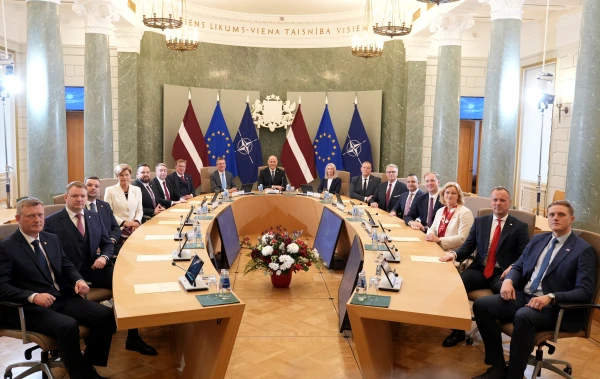
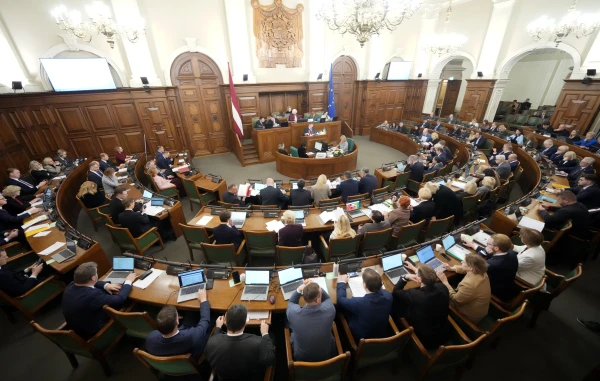
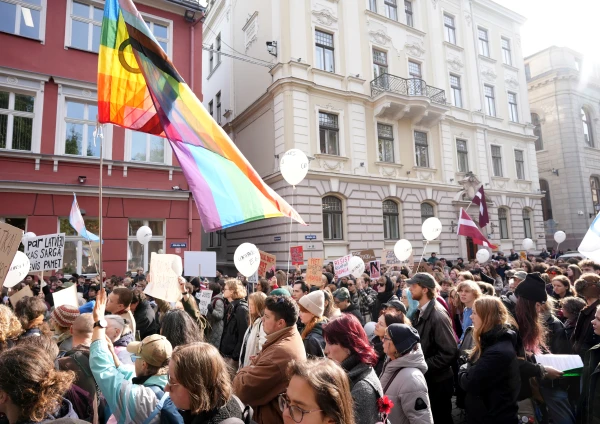
The attempt to initiate Latvia's withdrawal from this convention nearly led to a government crisis (by the way, the danger of such a crisis has not yet passed), leftist activists have already rushed to the foot of the Saeima shouting "No to withdrawal from the convention," while other (or perhaps the same?!) activists initiated a petition on the portal manabalss.lv addressed to the parliament against withdrawal (denunciation) from the Istanbul Convention. In just three days, nearly 9,000 signatures have already been collected! Let us remind you: if at least 10,000 signatures from adult citizens of the Republic of Latvia are collected, then such an initiative must be considered by the Saeima.
Political supporters of the convention, represented by figures from "New Unity" and especially the "Progressives," are doing their utmost to prove that withdrawal from this convention would be akin to the end of the world — violence will reign throughout the country, primarily against women.
"The government of Latvia and the parliament should continue to ensure that our country is part of this international agreement, which helps prevent and reduce violence and protects victims," the authors of the mentioned initiative in defense of the convention on the portal manabalss.lv assure.
What will happen without the convention?
It is hard to say what audience these scare tactics are aimed at. Any law student will tell you that, with all due respect to conventions and other "external" documents, the legal framework in the country is primarily formed by the Constitution and laws. The presence or absence of a convention — in this case, the Istanbul Convention — does not change anything from the perspective of Latvian laws! Does anyone seriously think that the cancellation of the Istanbul Convention will lead to the decriminalization of violence, including domestic violence, and that those who beat or threaten a woman — within or outside the family — will not be held criminally or administratively accountable, but rather praised and rewarded?!
The tightening of responsibility for violence, including even psychological violence, in Latvia did not occur because of the convention, but after the well-known tragedy in Jekabpils, when one rapist, Rusinsh, killed his ex-wife in front of their child.
No, no one is saying that the Istanbul Convention must necessarily be denounced — that is more of a political question. However, if politicians are so eager about the presence of a particular convention and its implementation, then the question arises: why are politicians only concerned about the fate of this one convention? Are we doing fine with the de facto implementation of other conventions?
Are we fine with other documents?
Let's take, for example, a convention that is actually intended to protect the main part of our readers. Yes, we are talking about the Framework Convention for the Protection of National Minorities. This convention, excuse me, has a status no lower than that of the Istanbul Convention, and its compliance is just as important as compliance with the Istanbul Convention for the prevention of violence. And how does Latvia comply with it?
In the spring of this year, the Committee of Ministers of the Council of Europe (representatives of all member states of the Council of Europe) adopted a resolution on Latvia's compliance with the Framework Convention for the Protection of National Minorities.
In this resolution, Latvia was given 18 recommendations, five of which are for immediate action. It is worth reminding today the main ones - they were posted on his social media page by the well-known human rights expert Alexey Dimitrov.
-
Taking into account that the Latvian language is one of the most important aspects of societal integration, expand its approach to societal integration beyond promoting the use of the Latvian language, placing greater emphasis on intercultural dialogue and minority rights, thereby strengthening the sense of belonging to Latvian society among all, including persons belonging to national minorities, while ensuring the expression and encouragement of minority identities;
-
Regularly assess the demand for education in minority languages. If the demand is sufficient, ensure at all levels of education adequate opportunities to study minority languages and acquire sufficient competence in them, as well as provide necessary financial and other resources and materials, guidance, and training for teachers;
-
Within its education system, ensure the right of persons belonging to national minorities to establish and manage their own private educational institutions that provide opportunities for learning the language of their minority or receiving education in that language;
-
Monitor and assess the impact of the decision to transition to full education in the Latvian language on access to quality education for children belonging to national minorities. Special attention should be paid to the impact of these measures on the learning outcomes of children, especially at preschool and primary levels, as well as for children with special educational needs. Authorities must ensure that appropriate support is provided to relevant students when necessary, including by developing appropriate educational materials, teaching methods, and teacher training.
As is known, we no longer have the opportunity to even partially receive education in national minority languages — neither at the state level nor at the private level. Yes, it is possible to study the native language of the minority optionally (at will), but this all takes place outside the framework of formal (official) education, without assessment of learning outcomes and without evaluation.
The elimination of education in national minority languages has become just one link in a whole chain of uprooting primarily the Russian language from public space. Let us also recall the introduced ban on political advertising in the media in Russian during the official pre-election campaign period, the ban on the use of the Russian language in information in ATMs, and the necessity for patients to ensure translation themselves when receiving medical assistance...
Hypocrisy reigns here
When you read this issue, the government will surely have approved amendments to the Value Added Tax Law for further consideration by the Saeima. The amendments establish the tax rate on literature and periodicals (newspapers, magazines, including electronic ones) depending on the language!
Simply put, books, newspapers, and magazines published in Russian will be deprived of the preferential VAT rate. This is a greeting to a third of the country's population! As they say, nothing personal — just such a "way" to generate additional income for the budget. Ironically, the author of these amendments is the Ministry of Culture. And this is, of course, no discrimination!
The Ministry of Culture is headed by a representative of the "Progressives" party — yes, the same one that is so concerned about the fate of the Istanbul Convention and is practically shouting about the end of the world if Latvia withdraws from this convention. Hypocrisy reigns here.