If urgent measures are not taken regarding the burial of the deceased, in 10 years funerals in Riga will become extremely difficult. In general, we are only catching up in this regard with the large and ancient cities of Europe, where the living space for the dead is increasing in price at a pace as frantic as real estate for the living.
We Are Leaving, We Are Leaving, We Are Leaving…
The population of our city, which still lives today, is about 600,000 people, while the number of burials listed by name on the digital resource cemety.lv is 800,000. Of course, this is far from the total number of graves in Riga – at the same Great Cemetery, which emerged as a result of the plague epidemic in the 18th century and existed until World War II, 160,000 people were buried. Data about them, as well as about many now-liquidated church necropolises, is absent. And let’s not forget the unaccounted mass graves of Holocaust victims… In total, there are definitely over a million!
Currently, the Cemetery Management, which is part of the Department of Housing and Environment of the State City of Riga, oversees 22 cemeteries. In a recently reviewed – albeit without much interest (there were no debates at all!) – package of documents, a number of problems threatening the capital's burial sites were pointed out…
Experts noted the insufficient territory of Riga for traditional burials; limitations of financial resources and a deficit of municipal subsidies; and a lack of solutions for the use of closed cemeteries.
We still know very little about who is buried in Riga: the quality of data about the cemeteries is insufficient; the cultural and historical values are not fully understood; and the quality of digitized data is low.
The author of this piece confirmed this by entering his name into the cemetery system search… Due to family tradition, I was named after my grandfather – and my father had the same name. I received an impressive list of 11 Nikolai Kabanovs, buried at different times in different cemeteries. I found my dad in the computer database right away, there it was, the Rainis Cemetery, but my grandfather, who lived from 1917 to 1989, simply wasn’t there. Well, what can I say, Ivanovo Cemetery – is the digitization really that bad?
Forgotten About the Living
The Riga City Council has also noted the deterioration of the physical condition of the cemeteries: overgrowth with forest and the constant emergence of critically damaged trees; insufficient maintenance and restoration of cemetery paths; issues with the upkeep of neglected graves; and the maintenance of common areas in cemeteries.
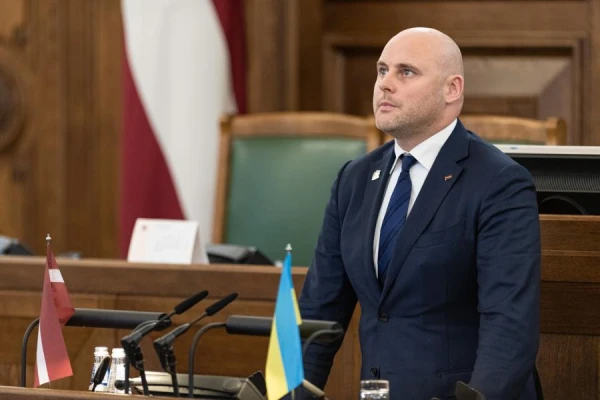
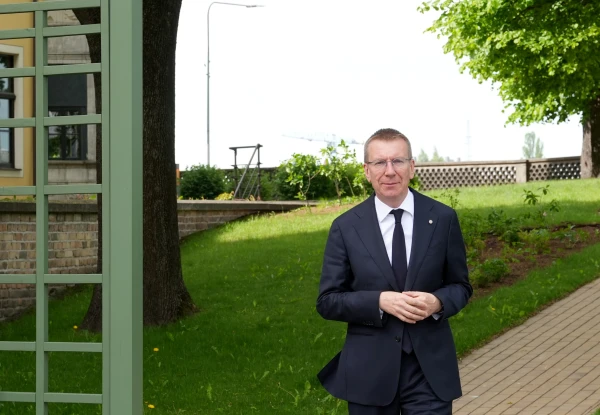
Regarding the latter – I found it possible to approach a high-ranking official, Vice Mayor Edvards Ratnieks (National Alliance), and bother the father of the city with such a simple question. Repair work is constantly being carried out at the Brothers’ Cemetery, but the capital toilet near the entrance has remained closed since winter until summer. No word, no sign. Well, of course, there are bio-toilets for the builders. But how are visitors to the nearest cemeteries supposed to wash their hands and faces after cleaning, in the June dust? We used to have a fountain in the I Forest area, but it wasn’t resumed this spring. And in general, the Brothers’ Cemetery is a national symbol, it’s not good…
The municipal document also mentions shortcomings in regulatory regulation – there is no unified grading of fees for graves; reactivation of abandoned sites for new burials is not ensured; and it is unclear how and who can use family cemetery plots.
They Will Expand
Evaluating various cemeteries in Riga from geological and hydrological perspectives, specialists concluded that the territories of the current necropolises can indeed be expanded:
-
On the left bank of the Daugava, the "challenge of insufficient area" will be addressed by adding specific plots of land with cadastral numbers to the Bolderāja and Old Bolderāja, as well as the Lāčupes cemeteries;
-
On the right bank, the sizes of the I and II Forest Cemeteries, Rainis Cemetery, Plavnieki Cemetery, and Sarkandaugava Cemetery will be increased.
By the way, the latter was supposed to be expanded back in 2018, but then the repair of the railway infrastructure began, followed by a shuffle in power… In general, they forgot for 8 years.
"Fire Burials" – And Those Who Bury Their Heads in the Sand
Unfortunately, I have to visit the farewell hall of the Riga crematorium on Varonyu Street more and more often. A majestic building, which was erected in 1938 according to the designs of the famous architects Osvalds Tilmanis (author of the buildings of the Academy of Sciences and RTU) and Sergey Antonov (the first Riga "skyscraper" on Dzirnavu and the "Riga" hotel). There was a whole movement for "fire burials" in Latvia, led by the famous lawyer, senator Augusts Leberts. But the war interrupted it – and only in 1995 was the appropriate equipment installed, and cremations began. Today, Riga residents say goodbye to 35% of the deceased in this way. Experts estimate that in the next decade, this level needs to be raised to 65%. In my opinion, it will be necessary to introduce a requirement for urns made of biodegradable material in the future – thus the remains will completely merge with nature…
Regarding cremation, however, there is a peculiar negative connotation – likely related to echoes of Nazi concentration camps. This was the tone of a hysterical campaign by one of the local political parties several months ago. In reality, the leaders of this hysteria are unlikely to be ready to provide the numerous plots of land they own for the burials of Riga residents as an alternative. Otherwise, it results in absurd neglect of the common question – where to bury?
It turns out that in Sarkandaugava, where the nearest apartment buildings are in direct view of the crematorium, it can operate – but not in Imanta. Here, politicians cynically played on the fear of death, on the instinctive unwillingness of people to acknowledge – we will all be there.
Is Privatization Possible?
The document of the Riga City Council states that the area of managed cemeteries is 452.35 hectares, of which only 2 are open, 15 are partially open (sub-burials in family graves are allowed), and 5 are completely closed.
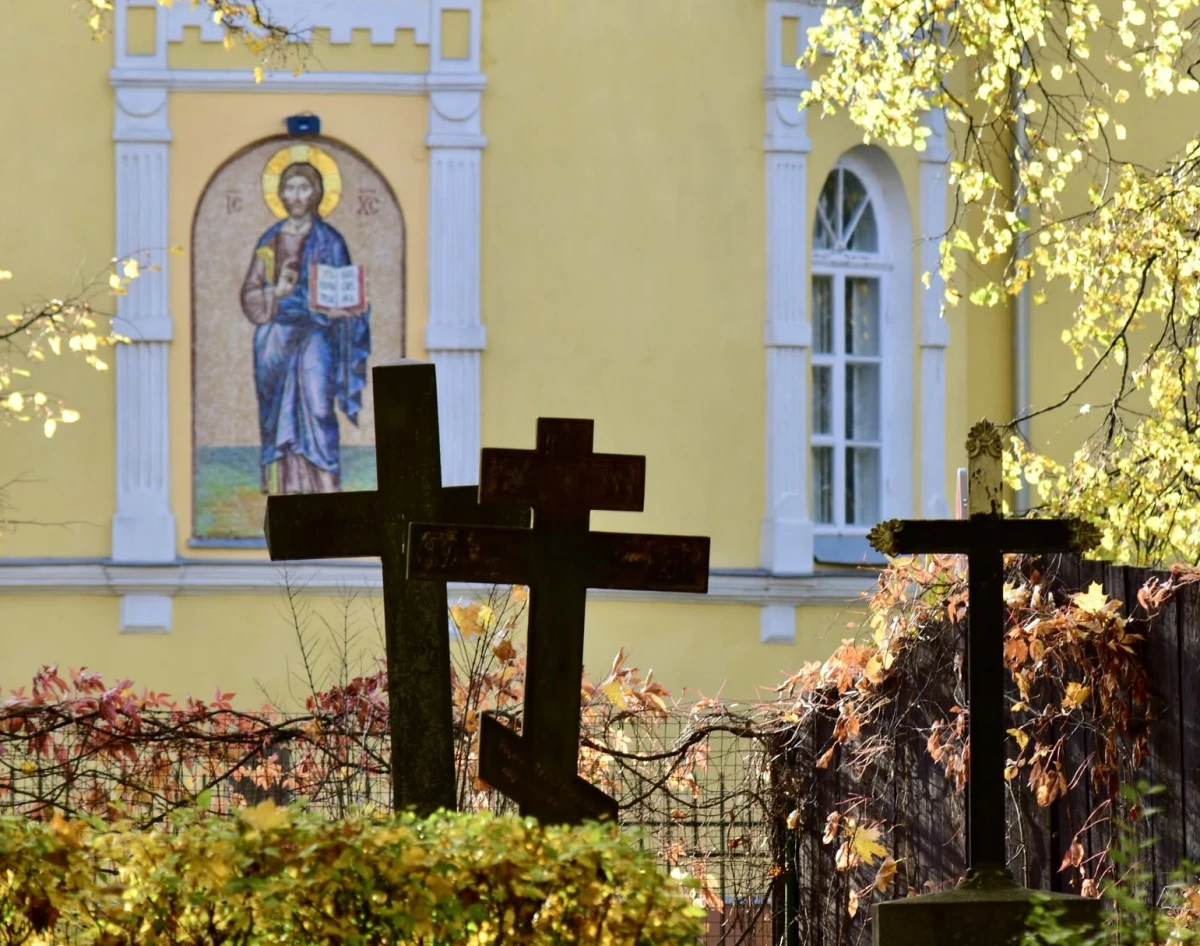
Regarding the latter, it could certainly be argued – wouldn’t it be more expedient to transfer the management of cemetery affairs to private enterprises? After all, there is an example in Riga of quite decent management of the ancient Orthodox Pokrov Cemetery, where many historical burials are preserved, and our contemporaries have found peace, for example, Vija Artmane. At Pokrov Cemetery, there is also our family burial site. Nearby is a huge slab of gray granite with a bas-relief. Here rests a Russian intellectual from the 1930s. And still, well-tended, live flowers grow. This means someone comes, relatives, or simply concerned people.
On the other hand, unfortunately, one has to see at the same prestigious First Forest – completely overgrown, abandoned places. Undoubtedly, life can be unpredictable – people move away, leaving their native lands and graves. In such cases, by the way, remote care for graves becomes in demand. Coordinates are sent, workers provide the service – they clean, trim bushes; they send photos to the client and receive payment. As they say – this is needed not by the dead, but by the living!